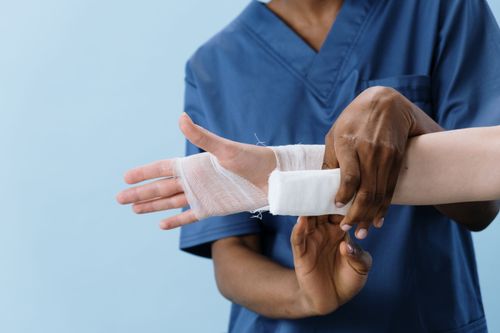
The first days after a parent's fall set the tone for how well an older adult recovers, both physically and emotionally. A fall in an older adult is a medical event that always deserves a same-day evaluation, not just first aid for whatever injury is visible. What a family does in the hours and days that follow can affect healing time, the odds of a second fall, and whether staying at home is still realistic.
What Should Happen in the First Hour After a Fall?
In the first hour, check for injury before moving the person, call 911 if there is any sign of head trauma, hip pain, or trouble standing, and stay close until help arrives or the person is steady. Do not assume a fall is minor just because the person can talk normally and seems embarrassed rather than hurt.
- Check before moving: Look for bleeding, swelling, or a leg or hip that looks oddly positioned before helping anyone stand.
- Call for help early: Dial 911 if the person hit their head, cannot bear weight, or seems confused, even briefly.
- Note the details: Write down what led to the fall, the time it happened, and any symptoms that followed, since a doctor will ask.
Even a fall that looks minor can hide a fracture or a head injury that takes hours to show symptoms. Older adults taking blood thinners face a higher risk of internal bleeding after a bump to the head, so a same-day check makes sense even without obvious signs of injury, according to the CDC.
When Does a Fall Require an Emergency Room Visit?
A fall requires an ER visit any time there is head trauma, visible deformity, inability to walk, severe pain, or confusion that wasn't there before. When in doubt, urgent evaluation is safer than waiting at home to see if symptoms improve on their own.
- Head impact: Any hit to the head warrants evaluation, since bleeding inside the skull can develop slowly over hours.
- Hip or leg pain: Pain when bearing weight, or a leg that looks shorter or turned outward, often signals a fracture.
- New confusion: Sudden disorientation after a fall can point to a concussion, low blood sugar, or another urgent problem.
- Blood thinner use: Anyone on a blood thinner should be seen after a fall with head contact, regardless of how they feel afterward.
Some injuries, like a hairline hip fracture, don't cause the dramatic pain people expect. A parent may still be able to shift position while seated but unable to stand or walk normally, and that distinction matters more than how much pain they report out loud.
Talk to a Local Advisor
Free help comparing communities and current pricing in your area. No cost, no pressure.
What Questions Should Families Ask at the Hospital?
Ask what caused the fall medically, not just what injury resulted from it, since a fall is often a symptom of something else, such as a medication side effect, an infection, low blood pressure, or a vision problem. Treating only the visible injury misses the underlying cause.
- Cause, not just injury: Ask what medical factors may have contributed, including medications, blood pressure, or blood sugar levels.
- Medication review: Ask whether any current prescriptions raise fall risk or interact poorly with one another.
- Discharge instructions: Ask exactly what activity is allowed at home and which symptoms should prompt a return visit.
- Follow-up plan: Ask who to call with questions during the first week, since problems often surface after discharge.
A thorough workup looks at heart rhythm, blood pressure changes when standing, vision, and footwear, in addition to X-rays. Falls rarely have one single cause, and a careful medication management review at this stage can catch a contributing factor that gets missed in a busy ER.
How Do You Manage the Days Right After Coming Home?
The days right after a fall call for closer supervision, a temporary increase in help with daily tasks, and a follow-up appointment already on the calendar, even if the person insists they feel fine. Recovery often looks different from what the discharge paperwork suggests.
- Increase supervision: Plan for someone to check in multiple times a day for at least the first week.
- Adjust the home: Clear walking paths, add nightlights, and move frequently used items within easy reach.
- Watch for pain changes: Bruising and stiffness often peak two to three days after a fall, not immediately.
- Confirm the follow-up: Schedule or reconfirm a primary care visit within a week, even after an ER discharge.
This is also a reasonable time to consider short-term help, whether that means a family member staying over, hired home care, or a short stay somewhere with more supervision. Occupational therapy and physical therapy can rebuild strength and confidence faster than rest alone, and a therapist can flag hazards a family might not notice.
What Warning Signs Mean It's Time to Call the Doctor Again?
Call the doctor again if pain worsens instead of improving, if a bruise spreads rapidly, if the person becomes more confused, or if they seem afraid to move at all, since fear of falling again carries its own health risk. None of these should be written off as normal soreness.
- Worsening pain: Pain that increases after the first two days, rather than gradually easing, needs a second look.
- Spreading bruising: A bruise that grows larger or feels increasingly firm can point to ongoing internal bleeding.
- Increased confusion: New or worsening confusion in the days after a fall should be treated as urgent, not expected.
- Fear of moving: An older adult who stops walking out of fear can lose strength quickly, raising the risk of a future fall.
Fear after a fall is common and understandable, but avoiding movement altogether tends to backfire. Muscle weakness sets in within days of reduced activity in older adults, so gentle, supervised movement is usually safer than complete rest.
Prefer to talk it through? A local advisor can answer your questions and compare current pricing, free.
(385) 200-2175How Can a Family Reduce the Risk of a Second Fall?
Roughly one in four adults over 65 falls each year, and a first fall roughly doubles the chance of a second one, according to the CDC, so reducing risk after a fall matters as much as treating the injury itself. Prevention works best when it targets more than one cause at once.
- Review medications: Ask a pharmacist or doctor to review all prescriptions and over-the-counter drugs for fall risk.
- Check vision and footwear: Update eyeglass prescriptions and replace worn, slippery shoes with supportive, non-skid footwear.
- Address home hazards: Secure loose rugs, add grab bars in bathrooms, and improve lighting on stairs and in hallways.
- Build strength safely: A physical therapist can design an exercise plan that improves balance without overexertion.
Some falls also reveal that a home is no longer a safe fit, even after modifications. Families in that position sometimes start comparing assisted living, not because one fall means someone can't live at home, but because it raises honest questions worth exploring calmly rather than in crisis mode.
When to Talk to a Local Advisor
A fall is often the first clear sign that a home no longer matches an older adult's needs, even when the injury itself heals well. A local senior living advisor can walk a family through the options, from added in-home support to a move to a more supervised setting, at no cost, and can help sort through what actually changed versus what just felt scary in the moment. For more background, the senior care assessment checklist and fall prevention articles cover related ground in more depth.
This article is informational only and is not medical, legal, or financial advice. Confirm details with the relevant professional or agency before acting.