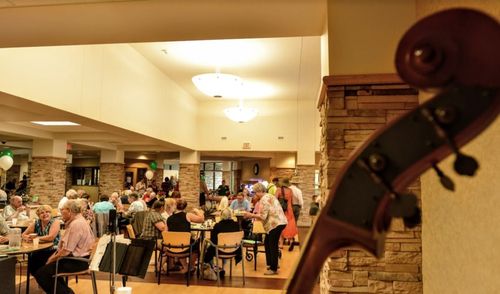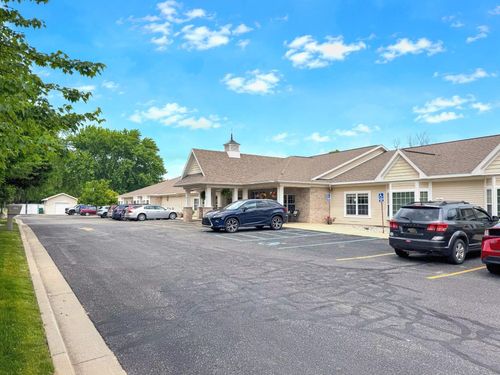
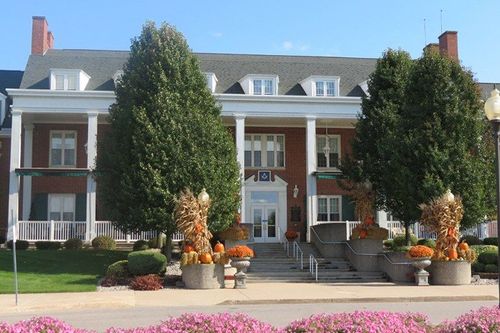
The hospital and the largest senior living campus in Alma stand next to each other, which is a piece of geography that quietly shapes everything about care in this town. MyMichigan Medical Center Alma sits directly adjacent to the Michigan Masonic Home, so a resident who needs an assessment, a therapy course, or an unplanned admission is not being driven anywhere.
That proximity is unusual outside a city, and Alma has the clinical depth to make it count, with an inpatient rehabilitation unit, a geriatric psychiatry service, and a designated trauma emergency department in a hospital of a hundred and seven beds. Across the 2 local addresses, which range from about sixty-two residents up to a hundred and fifty, one participates in Medicaid and one takes respite guests.
What Living Next to a Hospital Changes
Most assisted living conversations treat healthcare access as a drive time on a map. Here it is closer to a working relationship, since a resident whose blood pressure has been unstable for a week can be seen without a car journey being organized, and a building can raise a concern early rather than waiting until it justifies an ambulance.
The day-to-day support is what it is anywhere, meaning medicines handled by staff, help with washing and dressing set by an assessment, meals, laundry, housekeeping, and transport. What changes is the threshold for acting on something. That is worth asking each address about directly: how quickly can they arrange a review, do they escalate early or late, and what is the process when a resident comes back from a hospital stay needing more than they did going in.
Orientation on What This Costs
One local address publishes a starting figure of $4,100 a month for 2026, while the other assesses and quotes each resident individually rather than working from a rate card, which is a common arrangement at mission-founded campuses. Detailed comparison belongs in a longer conversation with each of them.
The more useful fact for planning is that one Alma address participates in Michigan's MI Choice waiver. That program pays toward the care a resident receives rather than the rent and the meals, and it requires both a clinical review placing somebody at nursing-facility level of need and a household financial test, but for a family whose money has a horizon, a participating building changes what a long stay can look like. Applications sit in a queue, so starting early matters more than qualifying quickly.
A County Town That Draws the County In
Alma and neighboring St. Louis together function as the service center for Gratiot County, so the senior living here is used by households from Ithaca, Breckenridge, and the farm townships as much as by people inside the city.
That produces steady demand against a very short list of options, which means availability behaves less like a market and more like a queue. Families who have completed an assessment and settled their funding move when something opens; those who begin the process that week generally do not, and the single local respite option is what fills the gap in the meantime.
Why the Search Rarely Leaves Town
Leaving Alma means Mt Pleasant, Midland, or Saginaw, each of them far enough that a weeknight visit stops happening. For a county where families have often farmed the same ground for generations, that is not a trade anybody makes willingly.
Alma College gives the town more going on than its population suggests, with concerts, lectures, and a walkable center that a resident who still gets out can actually use. Combined with a hospital in walking distance of the largest campus, it makes staying the straightforward answer rather than the sentimental one.
Two Addresses, Two Very Different Front Doors
The practical complication in Alma is that the local options do not work the same way. One operates on a published rate and a fairly standard assessment; the other runs a mission campus with its own intake process, its own way of pricing, and its own criteria. A family approaching both the same way tends to get a clear answer from one and a confusing one from the other.
An advisor's contribution is knowing how each front door actually opens: what each needs to see before it will commit, how the Medicaid-participating address handles an application and how long that takes, whether the respite option can bridge a wait, and which will accept a resident whose needs are heavier than a first phone call suggested. A short conversation before either approach is made usually saves a household weeks of talking past people.
The Alma directory continues to grow as we evaluate providers for quality and alignment in 2026. Start the conversation about assisted living in Alma, or scan the buildings we cover at your own pace.