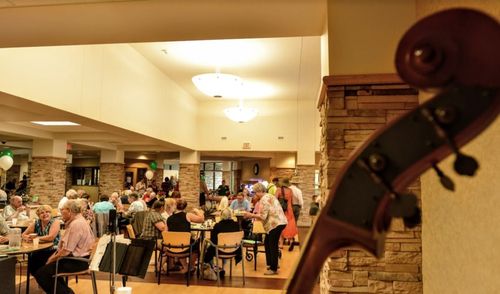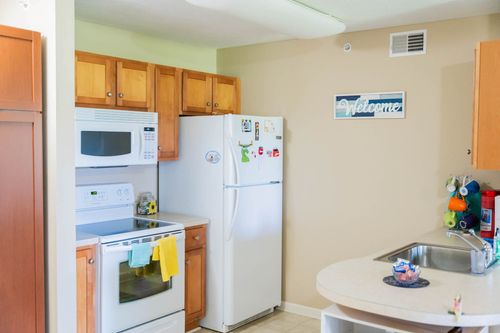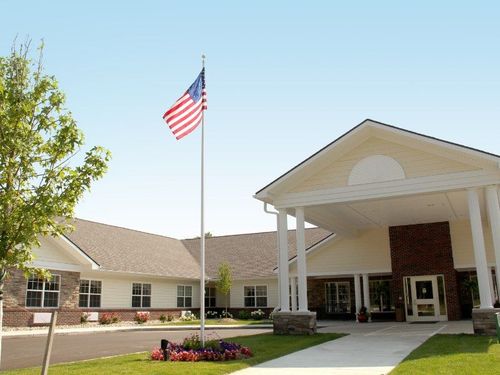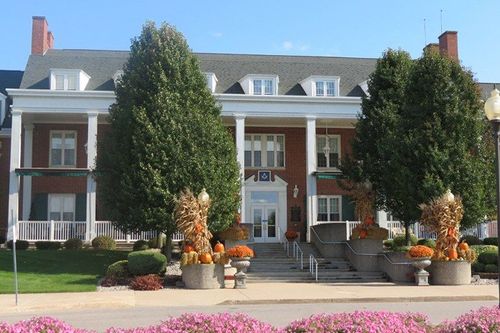
One Alma address accepts Medicaid, and because the Michigan Masonic Home on Wright Avenue is a continuing-care campus carrying independent apartments, assisted living, memory care and a nursing wing on one property, the useful question is not whether Medicaid is accepted in Alma but which level of care it reaches. The answer changes as a resident moves along that ladder, and it changes inside the same building.
Households arrive at the Medicaid question from the same place: care costs have run past what income and savings can hold, and somebody needs to know what the program actually pays for. Gratiot County counts 7,403 residents past sixty-five, a smaller base than the bed count in town, so Alma's senior living already serves a catchment reaching well beyond the county line and its Medicaid inventory is worked hard.
What Medicaid Reaches Inside an Alma Campus
Michigan runs two distinct routes into long-term care, and they behave differently. Under the MI Choice waiver, someone who meets nursing-facility level of need and clears the program's financial rules can have personal care and support paid for at home, or inside a licensed community running assisted living or memory care. It does not pay the housing portion of the bill, so a resident contributes toward the room from income even after approval, and enrollment is limited rather than automatic on qualifying.
The nursing route inverts that arrangement, because for a resident who needs licensed nursing care Medicaid pays for the stay itself rather than for the care alone, so housing is not billed as a separate line the way it is under the waiver. Independent living sits outside both: it carries no care need, and no Medicaid program in Michigan funds an independent apartment. On a campus like the Wright Avenue one, all three of those answers apply at different points on the same corridor.
The Money Picture Behind an Alma Application
Long-term-care Medicaid is means-tested on both income and countable assets, and the figures move each year, so the practical work is establishing where a household actually stands rather than assuming. Applicants above the asset limit are usually looking at a spend-down, and money or property signed over during the years preceding an application comes under a look-back review, which is why gifting a house to a relative shortly beforehand tends to create the very problem it was meant to solve.
Two clocks then run at once and neither waits for the other. The financial determination and the assessment of care need are separate processes, and approval requires both, so an application started when a room is already needed is starting late. Medicare, for its part, contributes nothing here: it pays for short skilled rehabilitation and for hospice, not for living in an assisted living or memory care setting.
Narrowing the Question in a One-Address City
With a single Medicaid-accepting address in Alma, the search is not about comparing buildings, and it is worth saying so plainly. What replaces it is sequencing: which care level a resident needs now, whether the program that covers that level is open to them, and how long the paperwork will take against the date the household is working toward.
Acceptance is also not the same thing as an open room, since a community that participates may hold only a limited number funded that way at any moment, and it may take a resident privately first and support the change later, which is a common and entirely ordinary arrangement rather than a barrier. Those two facts, which rooms are funded and on what terms a change is possible, are where a household's real answer sits, and neither is published anywhere.
What a Local Advisor Brings to an Alma Medicaid Search
Most of what decides an Alma placement is current rather than documented. Whether a Medicaid-funded room is open on the campus this month, what the community's practice is on residents moving from private payment onto the waiver, how the assessment and the financial review are running in Gratiot County at the moment, and where a household's numbers put them before an application is filed: a local advisor tracks that as a matter of routine.
The sequencing is the other half, because starting the financial review at the right moment relative to the level-of-care assessment saves weeks that families rarely have to spare. If Medicaid is likely to be part of the plan in Alma, a short conversation early is worth far more than the same conversation once a room is needed.
Our directory for Alma continues to grow as we evaluate providers for quality and alignment in 2026. Start the conversation about medicaid in Alma, or look through the buildings we cover at your own pace.