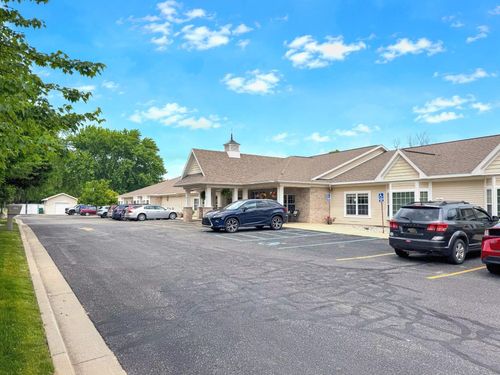
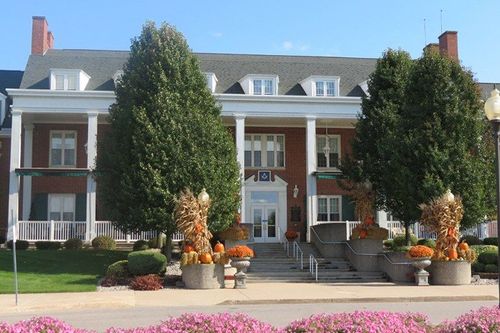
Alma carries something most towns its size do not, which is a real choice on the day a diagnosis changes the plan. Both addresses offering secured dementia care are multi-level places rather than standalone memory care houses, Arbor Grove Assisted Living & Memory Care on Pine Avenue and the Michigan Masonic Home on Wright Avenue, and each runs several levels of care under one roof.
That shapes the decision in a specific way. The question here is rarely which building has a secured side, because both do, but how far into the disease each will carry a resident before the arrangement has to change again.
Secured Care Inside a Multi-Level Campus
Secured dementia care in Alma sits inside larger organizations rather than in a converted house, and the depth that comes with that is the point. A campus running several levels of care keeps staff awake through the night as a matter of course, runs a kitchen already handling pureed and mechanical-soft meals, and carries enough people on the roster that one caregiver's vacation does not reshape a resident's week.
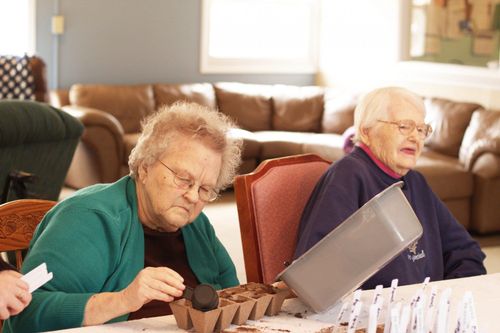
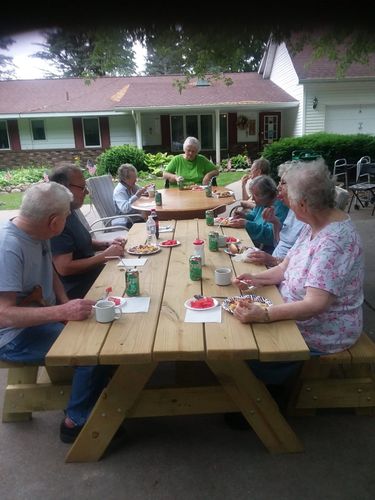
The day itself is built on repetition. Exterior doors are secured and the outdoor space is enclosed, help with dressing, bathing and the bathroom is available at any hour instead of on a visit schedule, and the afternoon is deliberately structured because that is when confusion tends to rise. What differs between the two Alma campuses is texture rather than service: how each spends the late afternoon, how it reports a hard week back to a family, and which changes in condition it would consider past what it can hold. Those are the answers worth having in writing.
The One Published Number, and What Moves It
Alma publishes a single figure, the $4,100 a month listed at Arbor Grove Assisted Living & Memory Care in 2026. Secured care is otherwise quoted from an assessment rather than from a rate card, because what a household is buying is night coverage, hands-on help with dressing and bathing, and staff time through the hours when a resident is most unsettled.
Comparable numbers only come from a comparable question. Hand both campuses the same written picture of the resident, covering the diagnosis and its date, what a good day looks like and what a bad night involves, and ask each to price exactly that. One Alma address participates in Medicaid, worth resolving before any other comparison for a household whose savings have a horizon, since an arrangement that survives the funding change spares a resident a move at the worst possible moment.
An Older County, and Finite Secured Rooms
About 7,500 Gratiot County residents are 65 or older, a little over eighteen percent of the county and a higher share than Michigan's urban counties carry. The county is rural, and families drive into Alma from Ithaca, St. Louis and Breckenridge rather than the other way around.
The practical consequence is that secured rooms are finite in a town this size. Neither campus can conjure a bed, so the families who start at diagnosis rather than at crisis are the ones who get to choose between the two instead of taking whichever has space.
Why Gratiot Families Stay in Town
Distance does more damage in dementia care than at any other level, because the visits are half the treatment. A resident living in Alma sits minutes from MyMichigan Medical Center Alma, the 97-bed hospital that has served Gratiot County since 1955 and carries a Level III trauma center along with a family medicine residency, so a change in condition does not begin with a highway drive.
Staying local also protects the ordinary things: the same church, the same faces from forty years of the same streets, an adult child who can stop in on the way home rather than setting aside a Saturday. For someone whose memory is thinning, familiarity is not sentiment, it is the thing that keeps a person oriented.
What a Local Advisor Brings to Alma
The choice in Alma is between two very different institutions, and what decides it is not size but what each will do as dementia advances. An advisor who knows both can say which currently has a secured room, which will take a resident who is still physically strong, and how the Medicaid-participating address handles the transition once private funds run down.
Timing is the other half of it. Starting at diagnosis rather than at crisis turns a placement from an emergency into a decision, and one written picture of the resident, priced at both campuses, is usually enough to settle which fits. If that is the stage you are at, reach out and get the comparison done while there is still room to prefer one.
Our directory for Alma continues to grow as we evaluate providers for quality and alignment in 2026. Start the conversation about memory care in Alma, or scan the buildings we cover at your own pace.