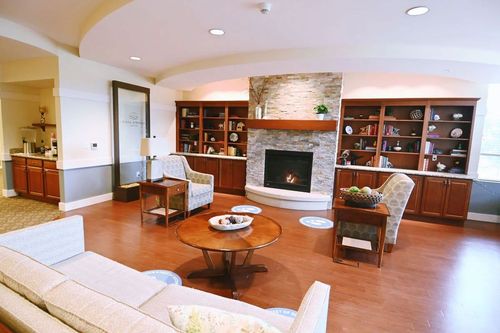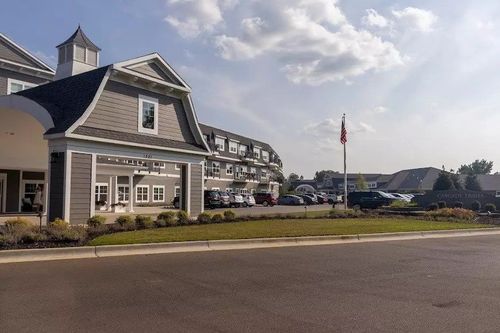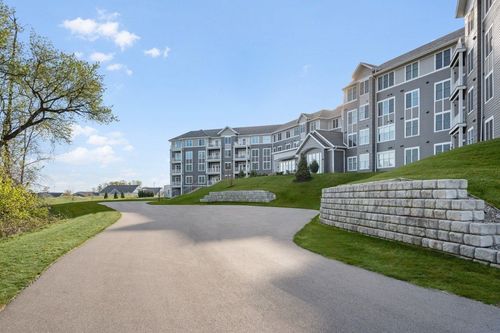
The Oaks at Belmont on West River Drive is the village's only senior living address, it welcomes a resident's pet, and it runs apartments, assisted living, secured memory care and nursing on one property. For an owner that combination matters more than the count suggests, because the animal question is answered once for the whole ladder rather than reopened every time the level of care changes.
That is the opposite of what most owners fear, which is that a move now means giving up a cat and a second move in three years means giving it up anyway. On a campus covering every level, a resident who arrives with an animal at the apartment stage is not parted from it when daily help becomes necessary. Kent County holds close to 106,000 residents past sixty-five, and along its northern edge this is the address that question runs through.
What Keeping an Animal Here Actually Involves
Welcoming pets is a policy with terms rather than an open invitation, and the terms are the part worth reading. The community fixes an upper limit on animals per resident, a ceiling on a dog's weight, sometimes a short list of breeds its insurer excludes, and a health condition covering vaccination records and, in most cases, a settled temperament. Cats and small dogs clear those conditions almost everywhere; a large dog is the case that needs a conversation rather than a form.
The condition owners least anticipate concerns responsibility for the animal itself. Feeding, walking and cleaning up after a pet stays with the resident or with somebody they name, and a written plan is expected for the days an illness or a hospital admission makes that impossible. Communities help around the edges, with staff who will let a dog out or an arrangement with a local walker, but no building takes over ownership of an animal, and the honest version of that is worth hearing before a move rather than during a crisis.
What the Animal Adds to the Belmont Bill
Assisted living at the campus starts at $4,546 a month, and the pet sits outside that figure. Expect a one-time deposit at move-in, refundable in part at some communities and not at others, and a recurring monthly charge for each animal on top of the rent. Neither is large against the base rate, but on a fixed income the monthly charge is the one that compounds quietly over years.
An assistance animal belongs to a different legal category altogether. Neither a trained service dog nor a documented assistance animal counts as a pet for fair housing purposes, which takes the deposit, the recurring charge and the size and breed rules out of the conversation, while leaving the resident answerable for how the animal behaves and for anything it damages. Federal guidance in this area has been shifting, and the determination in a specific case rests with the community applying the law as it currently stands.
Working Through the Question at a Single Campus
With one address in the village, the practical work is fitting the animal to the building rather than shopping policies against each other. Weight is the first test and the likeliest to bite, since a dog well above a standard ceiling turns the question into whether an exception is possible. Species is the second and usually simpler, as cats, small dogs, birds and fish rarely need a discussion.
Care level is the third and the one that matters most on a campus like this. A pet in an independent apartment and a pet inside a secured memory care neighborhood are different decisions, because the secured setting turns on whether a resident can still manage the animal and what happens when they cannot. West River Drive runs along the Grand River north of Grand Rapids, so the walking is genuinely pleasant, and the nearest veterinary care sits a short drive down the corridor toward the city.
What a Local Advisor Brings to the Pet Question in Belmont
The written policy and the lived one are rarely identical, and the gap is where the useful information sits. Where the weight ceiling actually stands this year, whether a second animal has ever been permitted, how much of a deposit is returned, what is arranged for a resident who can no longer manage the daily walk, and how the secured neighborhood treats a cat: a local advisor holds those by asking the community regularly rather than by reading a brochure.
Honesty about fit matters more than usual here, since there is no second policy to compare against and a household deserves a straight answer about their particular animal. If the pet is the thing holding up a decision in Belmont, reach out and we will find out properly.
Our Belmont directory keeps expanding as we evaluate providers for quality and alignment in 2026. Start the conversation about pet friendly in Belmont, or look through the buildings we cover at your own pace.