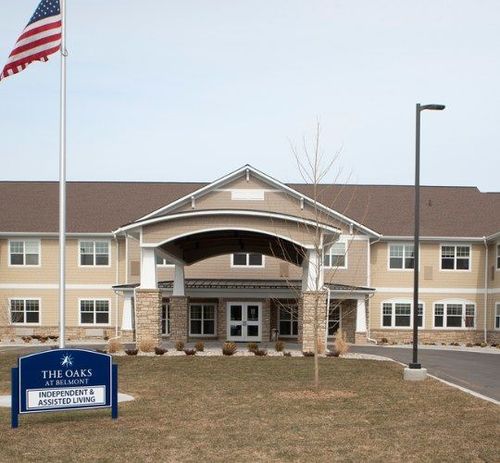
Two quite different kinds of resident share a skilled nursing licence, and at The Oaks at Belmont on West River Drive both of them live on a campus that also runs apartments, daily help and a secured dementia neighbourhood. Knowing which of the two applies is the first thing a household should settle, because almost everything else follows from it.
The short-stay resident arrives after a hospital event and is aiming to go home. The long-stay resident needs licensed nursing presence permanently, because a single condition requires it or because medical complexity has outgrown what any residential setting can safely hold. The therapy, the funding and the definition of a good outcome all differ, and a family working from the wrong assumption ends up planning for something that was never on offer.
Recovery, and What It Asks of a Resident
A recovery stay is intensive by design, with physical, occupational and speech therapy on most weekdays aimed at restoring enough function to manage at home, and the gym is the busiest room in the building through the working day. Licensed nursing is present on every shift, rounds fall to a physician or a nurse practitioner, and medicines are administered by licensed staff, intravenous therapy included.
Long-stay care runs at another tempo on the same licence, with lighter therapy and the emphasis on comfort, stability and complex nursing needs such as wound care, among residents whose stay is counted in years rather than weeks. On a campus like this one a long-stay resident may well have arrived at the apartments a decade earlier, which changes the experience of the nursing tier considerably.
Two Funding Routes, and When Each Applies
Skilled nursing prices unlike anything below it, and the route depends on which population a resident belongs to. Recovery stays lean on Medicare, which pays in full for a fixed count of days after a qualifying admission and then asks for a co-payment; a household needs the date that switch happens.
Permanent stays run on savings until those hit the state's cut-off, after which long-term care Medicaid carries them. It is not the waiver families meet lower down the ladder, and the difference matters, because that waiver stops short of a nursing bed. This campus participates in Medicaid, which in a village where it is the only senior living means a resident whose funds run down stays in Belmont rather than moving to wherever a bed can be found.
One Campus for a Stretch of the County's Northern Edge
Kent County holds a very large older population, and Belmont sits on its northern edge along the river. A single campus covering every level serves that stretch, which puts considerably more weight on one building than most towns place on three.
The practical read is about capacity rather than choice. Where a discharge sets the timeline, the question is whether the nursing tier has a bed on the date required; where a long stay is being planned, being known to the campus beforehand improves the position materially.
Why Families Keep a Parent in Belmont
Belmont sits close enough to Grand Rapids that family arrive without planning a trip, and far enough that the village keeps its quiet. A resident keeps the few miles they have shopped and worshipped in for years, which counts as much at the nursing tier as anywhere, since visitors are what make a long stay bearable.
The hospital position is strong and runs south along the river road. Grand Rapids carries the region's deepest capability, including the only regional burn centre in West Michigan and its top-level trauma team, with two further substantial hospitals nearby, one of them a teaching hospital with roots in the nineteenth century. For a nursing resident the relevant part is that a transfer, when one is needed, is short.
What a Local Advisor Brings to Belmont
Nursing decisions are made faster than any others, and usually with a discharge planner waiting on an answer. A Local Senior Advisor covering Kent County knows what the nursing tier currently has open, how long an assessment takes here, and which of the two populations the notes are describing.
That last judgement is the one worth having early, because it determines the funding conversation and the realistic length of stay at the same time. Where the answer is a recovery stay, the useful work is making sure the plan has a target for going home rather than drifting into permanence; where it is a long stay, the useful work is the Medicaid sequence and what has to be in place beforehand. Either way it is a short conversation, and it is far better had before a discharge date than on one.
The Belmont directory continues to grow as we evaluate providers for quality and alignment in 2026. Reach out for a conversation about skilled nursing in Belmont, or look through the communities we have vetted at your own pace.