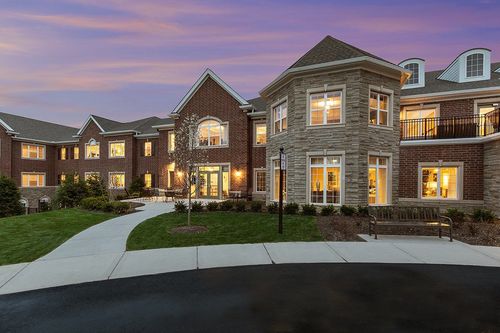
Skilled nursing in Bloomfield Hills is delivered from a continuing-care campus rather than from a standalone nursing home, and for a resident whose admission follows a hospital discharge that distinction shapes everything that comes next. Recovery is rarely a clean line back to where somebody started, and a campus can absorb an incomplete one in a way a single-purpose building cannot.
That is the whole argument for the 1 local skilled nursing option. Somebody admitted for rehabilitation who regains most of their independence moves to an apartment or to daily support on the same grounds, while somebody who regains less stays where the clinical cover already is.
What the Clinical Side Covers
Skilled nursing means licensed cover around the clock, and the work is medical before it is domestic. Therapy runs to a schedule set by what a resident is recovering from, wound care and intravenous treatment happen on site, medication is managed clinically rather than prompted, and a physician oversees the plan rather than visiting it.
Most admissions follow a hospital stay: a fracture, a stroke, a cardiac event, or a slow recovery from surgery needing more supervision than a household can give. The aim in those cases is discharge rather than residence, and the therapy schedule is built backwards from it. Where recovery is incomplete the same licence supports a longer stay, and this address takes short respite bookings and permits pets, neither common at this level.
What It Costs and How It Is Paid For
Skilled nursing is priced differently from the levels beneath it in 2026, and the figures published for those levels do not describe it, so a household should ask the campus directly for the skilled rate rather than reason from anything else it has seen. Getting that number in writing at the outset avoids the most common misunderstanding at this level of care.
Funding is different in kind as well, since Medicare covers a defined period of skilled nursing after a qualifying hospital admission, which is what most rehabilitation stays run on, and the days are finite. Beyond that the cost falls to private funds or, for residents who qualify financially, to traditional Medicaid long-term care rather than to the MI Choice Waiver, which is a separate programme covering care in assisted living and similar settings. Confusing the two is the mistake families most often make.
A Thin Tier in a Deep Market
Oakland County counts about 250,500 residents past 65, and Bloomfield Hills holds several senior-living addresses across a small city. What that depth conceals is how narrow the top of the range is, because the great majority of the local capacity sits at assisted living and memory care rather than at nursing level.
Skilled nursing here is therefore less something a household shops for than something it needs identified in advance, because discharges run on days and a family working out where nursing care exists at that point has started far too late.
Why the Campus Setting Matters
For a resident who may not go home, the ordinary version of this story is a nursing home placement followed, months later, by another move once it becomes clear that the level of care no longer fits. A campus removes the second of those, and it does so without changing the address, the staff or the visiting routine.
The medical depth around it is exceptional, with the county's Level I trauma verification, its transplant work and its proton-therapy programme all at Royal Oak a short drive south, and substantial hospitals in several directions inside a quarter of an hour, so a resident whose recovery stalls or reverses is never far from the capacity to deal with it.
What a Local Advisor Adds Here
At this level the advisor is working against a clock rather than a shortlist. A Local Senior Advisor covering Bloomfield Hills knows whether the campus has a skilled bed, what the rate actually is, and how a discharge from Royal Oak or the surrounding hospitals sequences into an admission.
The more valuable work happens before that, because understanding where Medicare's covered period ends, what the campus expects after it, and whether a resident is likely to move down a level rather than home is planning that cannot be squeezed into the forty-eight hours a discharge usually allows. Families do far better to reach out when a hospital stay begins than when it ends.
We keep expanding our Bloomfield Hills coverage as we evaluate providers for quality and alignment in 2026. Reach out for a conversation about skilled nursing in Bloomfield Hills, or look through the communities we have vetted at your own pace.