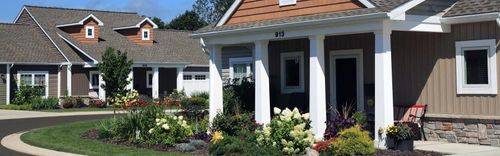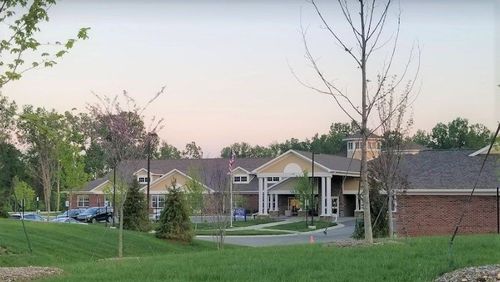
The geography of a skilled nursing discharge in Livingston County changed this spring. Trinity Health Livingston left its Howell campus on 19 April 2026 for a new hospital at 7575 Grand River in Brighton, and the county's skilled nursing sits one address in each town: Caretel Inns Of Royalton - Dover in Brighton, and The Willows at Howell in the county seat.
For families arranging a stay that used to run hospital to building inside one town, that is a practical change rather than a headline. Brighton is now the address beside the hospital, and Howell is the one a resident travels to, which matters on the day of a transfer and again on every follow-up appointment after it.
What the Stay Is Meant to Achieve
The clinical description of this tier is straightforward enough: licensed nursing cover round the clock, a physician directing the plan, and therapy scheduled against a recovery target rather than offered as something to do. Intravenous medication, wound care, oxygen and complex pain management all continue in a residential setting instead of tying up a hospital bed.
The part families underestimate is the destination, because a skilled stay is aimed at a house, and whether it succeeds depends on what happens to that house while the resident is away: whether somebody has assessed the stairs and the bathroom, whether equipment has been ordered and delivered, whether anybody will be there in the first fortnight. Ask each community who does the home assessment, when in the stay it happens, and what they do when the honest answer turns out to be that going home is not realistic.
The Daily Rate, and What Happens at the End of It
Skilled nursing is quoted by the day and funded rather than bought. Medicare opens most stays after a qualifying inpatient admission, covers a capped run of days with the opening stretch free of charge and a daily contribution afterwards that a Medigap policy will often absorb, and stops as soon as a resident stops making measurable progress rather than when the days run out.
What happens next is the planning cliff, and Livingston County handles it better than most. Both local skilled addresses sit on campuses that also carry assisted living and memory care, so a resident who no longer needs skilled care but is not safe alone can frequently step down without a second search or a second move. A few of the county's skilled addresses also accept Michigan Medicaid, which is the route a genuinely long stay eventually takes.
Demand in a County That Grew All at Once
Demand at this tier follows hospital activity rather than the local age profile. The new Brighton campus carries fifty-six acuity-adaptable beds alongside eighteen short-stay beds, and every discharge from it that is not quite ready for home lands on the same short list of skilled beds.
The county's own numbers still matter underneath that, since around 42,000 residents here are past 65, a share ahead of the state's, and a population that arrived along US-23 in a single wave is reaching this tier in one too. Availability moves week to week and is never posted anywhere.
Why the Eight Miles Matter
Eight miles sounds trivial until somebody is driving it twice a week for two months. A resident recovering in Brighton is beside the hospital that treated them, which simplifies follow-up appointments, imaging and a readmission if one is needed; a resident in Howell is closer to the county's western half and the families who live there.
Neither is the right answer in general, only for a particular household. The question worth asking honestly is who will actually be visiting, from where, and on what days, because a recovery that runs for weeks depends on somebody visiting often enough to spot a shift in mood or appetite before the notes do.
The Call That Beats the Discharge Clock
Skilled nursing decisions get made inside a few days, and the compression is what produces the placements families later regret. A local advisor can say which of the two has a bed on the target date, whether a resident's clinical profile sits inside what each will accept, how therapy is staffed at both, and which accepts Medicaid if the stay turns long.
The step-down question deserves settling at the same time rather than later. Knowing what each campus charges at its assisted living or memory care level, whether a transfer within the campus is guaranteed or depends on availability, and roughly when Medicare coverage is likely to end turns a cliff into a plan. None of that takes long to talk it through, and doing it before a discharge date exists is what separates a plan from a scramble.
Our Livingston County directory keeps expanding as we evaluate providers for quality and alignment in 2026. Reach out for a conversation about skilled nursing in Livingston County, or look through the communities we have vetted at your own pace.