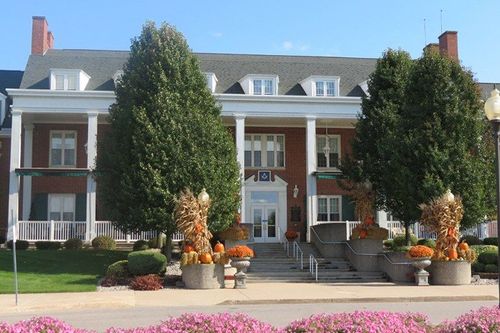
Pinecrest Farms on North Homer Road is the Midland address that accepts Medicaid, and it is an assisted living community rather than a nursing home, which settles most of what this page has to explain. Only one Medicaid route reaches an assisted living resident in Michigan, and it is not the one that covers a nursing facility stay in full. Residency here starts at $3,500 a month for a household paying privately.
Most Midland families arrive at this question along the same path. Private savings have been carrying the cost for a year or two, the arithmetic now has a visible end point, and somebody wants to know whether a parent can stay where they are rather than moving again when the money runs out.
The Route That Applies to an Assisted Living Address
Michigan funds care in an assisted living setting through a home and community-based waiver. Once a person is assessed as needing nursing-facility level of care and their income and assets fall inside the program's limits, the waiver takes on the cost of the care services they receive: help with bathing and dressing, medication management, supervision and the rest of the daily support.
What the waiver does not take on is the housing. A resident contributes toward rent and meals from their own income, and that share of the bill stays with them for as long as they remain in the building, which is the single most misunderstood part of the arrangement. Waiver participation is also capped by the state, so qualifying and receiving a funded place are two separate events with two separate timelines. And because Midland's Medicaid-accepting address is assisted living rather than a nursing home, the fuller institutional coverage that pays for a nursing facility stay is a different conversation about a different kind of building.
What Households Actually Pay
The private starting figure at Pinecrest Farms is $3,500 a month, and that is what a household covers on its own until waiver funding is approved and in place. Long-term care Medicaid applies both a monthly income ceiling and a limit on countable assets, and Michigan resets those figures annually, so any number found online should be checked against the current year before a plan is built on it.
Not everything a person owns gets counted toward that limit. The house someone lives in, a single vehicle and ordinary possessions usually sit outside the calculation, and a husband or wife who stays at home is protected by rules written for exactly that situation. Transfers made in the five years before an application are reviewed, which is why giving money or property to family in advance so often backfires. Spending down to the limits is legitimate; doing it without advice is where households lose what they could have kept.
Where the Timing Goes Wrong
The financial review and the level-of-care assessment proceed on separate schedules, and either can stall the other. Households that begin the paperwork when a room is already needed usually find themselves several weeks behind the point at which an answer would have been useful.
The second local reality is that acceptance of Medicaid at an address does not mean every resident is funded from the day they arrive. A period of private payment is sometimes expected first, and the number of waiver-funded places at any community shifts as the circumstances of current residents change. That is not a criticism of anyone; it is simply what decides whether a plan that works on paper still works in the month it is needed.
Sequence Matters More Than Selection Here
With one Medicaid-accepting address in the city, the useful knowledge is about sequence rather than selection: what has to be assessed, what has to be documented, and in what order, so an application is not sitting incomplete while a family is trying to arrange a move.
Someone covering Midland County follows how these applications are running at present and can line the paperwork up against a realistic date rather than an optimistic one. If the money is the reason this decision keeps being put off, reach out early, because in this process a head start is worth more than almost anything else.
We keep expanding our Midland coverage as we evaluate providers for quality and alignment in 2026. Start the conversation about medicaid in Midland, or scan the buildings we cover at your own pace.