Almost everything written about pets in senior living is written about dogs, and the majority of animals that actually make the move are cats. That imbalance matters in Rochester Hills, where Mercy Bellbrook/Frances Warde is the address accepting residents who arrive with an animal, because a cat raises an entirely different set of questions from a retriever and gets far less attention in the answering. No weight limit troubles a cat, and nobody has to be found to walk it at seven on a February morning. What a cat asks instead is about litter, about a door that opens onto a corridor, and about who notices if it stops eating.
The Questions a Cat Actually Raises
The practical requirement is litter, and it is more consequential than it sounds. Somebody has to change a tray several times a week, and where a resident's mobility or memory has begun to slip that somebody is a named relative rather than an assumption. Communities notice this quickly, because a tray left too long is a housekeeping and odor problem in a shared corridor, and it is the most common reason a cat arrangement becomes strained rather than any dramatic incident.
The second question is containment, and it is the one buildings ask about first. An apartment door in a senior building opens onto a corridor other residents use, and a cat that slips out is both a distressed animal and a hazard to somebody using a walker. How strictly a building treats that varies, and it is worth asking rather than assuming. The third is veterinary logistics, since a resident who no longer drives cannot get a carrier to an appointment alone, and cats need attention just as dogs do. None of these is a reason not to bring the animal. They are simply the things that decide whether it works, and they are worth settling before a move rather than in month three.
What the Animal Costs
Locally the published figure is $4,619 a month, and it is a statement about the apartment and the care tier rather than about any animal. No Michigan community raises what it charges a resident on the grounds that a cat lives there.
Where the animal does show up is on two lines of its own. One is taken at move-in and never appears again, and whether it comes back at the end varies from building to building, which is a difference worth several hundred dollars and therefore worth having in writing. The other is small and recurs every month for as long as the animal is there. Both are charges on pets in the strict sense of that word. An animal trained up to perform tasks for a person with a disability is not a pet under fair housing rules, and neither is one documented against a disability-related need, so the deposit and the monthly line simply do not arise for either.
Living With an Animal in Rochester Hills
Oakland County handles dog licensing and requires current rabies paperwork; cats are treated differently, though a current rabies vaccination is expected by communities regardless of what the county requires. Beyond that, this is a comfortable town for an animal. The Clinton River Trail runs through Rochester Hills with flat, paved stretches an older walker can manage with a small dog, and the quieter residential streets off Avon and Rochester Road are pleasant and safe.
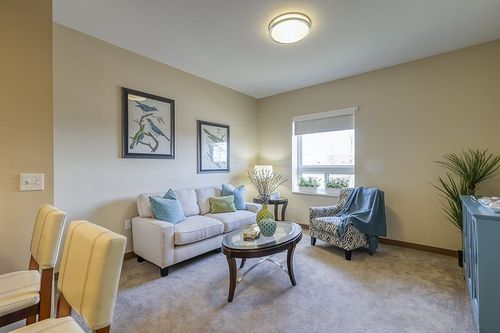
For an indoor cat, though, the local geography is largely irrelevant and the building is everything. What matters is whether the apartment gets a window with a sill wide enough to sit on, whether the layout allows a litter tray somewhere that is neither the bathroom doorway nor the middle of a small room, and whether housekeeping staff are comfortable working around an animal. Those are small things that determine daily life, and they are visible on a visit if somebody thinks to look.
Establishing the Conditions in Advance
With one address in town, the value is a current and specific answer rather than a comparison. A published pet policy and what a community will actually agree for one particular animal are not always identical, and terms of this kind get revisited whenever the underlying insurance does.
An advisor covering this part of Oakland County can establish where things stand, including whether the building has taken cats before and what it expects on litter and containment, so a household is not discovering the conditions after a deposit has been paid. If something about the arrangement will not work, hearing it early leaves room to plan properly, and it is worth a few minutes to talk it through.
We keep expanding our Rochester Hills coverage as we evaluate providers for quality and alignment in 2026. Start the conversation about pet friendly in Rochester Hills, or look through the buildings we cover at your own pace.