
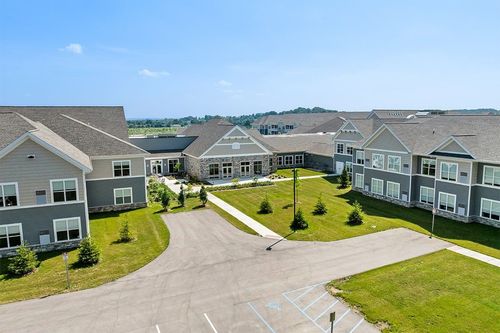
Traverse City, MI

Pet-Friendly Senior Living in Traverse City

Compare 2 pet-friendly communities in Traverse City, MI — with free, unbiased guidance from local advisors.

2
Communities
2
Pet Friendly
$5,155
Avg. Monthly Pricing

Explore Pet-Friendly Senior Living in Traverse City

2 pet-friendly communities, sorted alphabetically.

View all communities in Traverse City

What to Expect From Pet-Friendly Senior Living in Traverse City

  • Pets welcome: All 2 communities welcome pets.
  • Setting mix: 2 community in the matching set.
  • Price range: $3,800 - $6,510/mo across the matching set.

For a Traverse City household where the dog gets walked twice a day, the question of where to move is really a question about that walk. Boardman Lake Glens: Highlander sits beside Boardman Lake, where the paved loop trail runs the whole way around the water and links into the wider Traverse Area Recreation Trail network, so the daily route is a few steps from the door rather than a drive away. Meadow Valley is the other pet-welcoming address in the city, and at a considerably larger scale.

Those two also sit at opposite ends of the local market, $3,800 a month at Boardman Lake Glens: Highlander against $6,510 at Meadow Valley, which is a useful reminder that welcoming a pet is not a feature of the expensive end of Traverse City senior living.

What Pet-Friendly Actually Means Here

Pet-friendly is a spectrum rather than a yes or no, and every building draws its own lines. The usual ones are a limit on how many animals a resident may keep, which is commonly one, a weight ceiling on dogs that most often falls somewhere in the twenty-to-forty-pound range, a list of breeds a building's insurer will not cover, and a requirement for current vaccination records before move-in.

The condition families overlook is the one about care. Feeding, walking and cleaning up after the animal stay the resident's own job, or the job of somebody they name, and buildings usually want a written plan for what happens to the pet during a hospital stay. That question is the one most likely to end a placement later, and it is much easier to answer honestly at the outset than to improvise in an emergency.

What It Costs to Bring a Pet

Costs come in two layers on top of the monthly rate. There is usually a one-time pet deposit, sometimes refundable and sometimes not, and often a monthly pet fee charged for each animal. Both vary widely between buildings and neither is standard across Traverse City, so they belong in the budget conversation rather than as an afterthought at signing.

Grand Traverse County also requires a dog license, renewed annually through the county and issued on proof of a current rabies vaccination, which is Michigan law rather than a building rule. A senior moving from a house they have owned for decades has usually kept that current already, but it is worth confirming, because a community will ask for the records before the animal arrives.

Which Animals the Local Rules Actually Allow

Size settles more of this than anything else does. A cat or a small dog will fit almost anywhere in the city that takes pets at all, while a large dog cuts the list down sharply, and that is the first thing to establish before touring anywhere. The second is the care level a resident needs, because a building can welcome animals in its ordinary rooms and still not allow one in a secured memory care setting, for reasons of resident safety rather than dislike of pets.

Scale matters too, in a way that is easy to miss. Boardman Lake Glens: Highlander is a small building where a dog will be recognized by everyone within a week, while a community the size of Meadow Valley has more ground, more corridor to cross and more residents who may not want an animal near them. Neither is better; they suit different animals and different people.

Sorting Out Which Traverse City Building Fits the Animal

Policies are the part of this that a listing never carries accurately, since weight caps get revised, breed lists follow whatever the insurer requires that year, and a building that took a second cat in the spring may not this fall. An advisor working Grand Traverse County confirms the current rules building by building, with the actual animal in mind rather than a general question about pets.

If the dog or the cat is the thing making a Traverse City move feel impossible, talk it through before anyone assumes the two cannot be arranged together.

We keep expanding our Traverse City coverage as we evaluate providers for quality and alignment in 2026. Start the conversation about pet friendly in Traverse City, or scan the buildings we cover at your own pace.
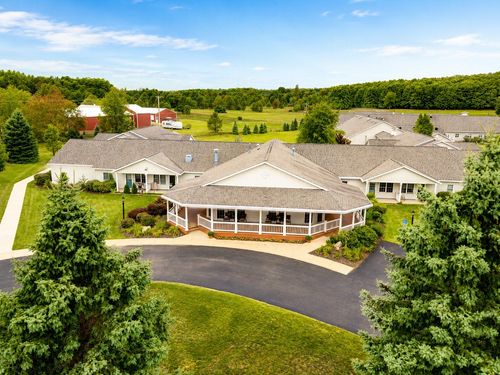
Advisor Insight on
Pet-Friendly in Traverse City

Boardman Lake Glens: Highlander sits beside the Boardman Lake loop trail, which puts a dog walk at the door rather than a drive away, and the two pet-welcoming addresses in Traverse City sit at opposite ends of the local price range. Weight ceilings and breed lists are set by each building's insurer and get revised more often than published policies suggest.

Compare 2 Pet-Friendly Communities in Traverse City

Compare pricing, care availability, and key differences across 2 pet-friendly communities in Traverse City, MI.

4.3 (6)
Starting price
$3800/mo
Care types
Assisted Living
Total beds
20
Medicaid
Not accepted
Pet friendly
Yes
Housing type
Community
View this community

Meadow Valley

Traverse City, MI

4.5 (16)
Starting price
$6510/mo
Care types
Independent Living, Assisted Living, Memory Care
Total beds
110
Medicaid
Not accepted
Pet friendly
Yes
Housing type
Community
View this community

Pet-Friendly Senior Living Near Traverse City

Pet-Friendly communities within 50 miles of Traverse City.

Frequently Asked Questions About Pet-Friendly Senior Living in Traverse City

Which Traverse City senior communities allow pets?

Two Traverse City communities welcome them: Boardman Lake Glens: Highlander, a smaller building beside Boardman Lake, and Meadow Valley, which is considerably larger. Welcoming pets in principle is not the same as accepting a particular animal, though. Each building sets its own limits on the number of pets, the weight of a dog and the breeds its insurance will cover, and those rules change more often than a directory listing does. The useful question is never whether a Traverse City community allows pets but whether it will take this specific animal on the dates in question.

Is there a weight limit for dogs in Traverse City senior living?

Almost always, though the exact number differs from building to building. A ceiling somewhere between twenty and forty pounds is the most common shape of the rule, which means cats and small dogs fit nearly everywhere while a retriever or a shepherd narrows the options considerably. Some buildings will make an exception for an older, calm dog that is well below the energy of its breed, and some will not budge because the limit comes from an insurance policy rather than from the building itself. Anyone moving with a large dog should establish this first, since it filters the list faster than price or floor plan does.

What does it cost to keep a pet in a Traverse City community?

Two charges are typical on top of the monthly rate. The first is a one-time pet deposit, which may or may not be refundable when the resident leaves, and the second is a recurring monthly pet fee charged for each animal. Neither is standardized, and the spread between buildings can be wide enough to matter in a budget. There is also the annual dog license required by Michigan law and issued through Grand Traverse County, which is a modest cost but a genuine requirement, and any building will want to see current rabies paperwork before the animal arrives.

Are service animals and emotional support animals treated as pets?

No, and the distinction is a legal one rather than a courtesy. A service animal is a dog trained to perform specific tasks for a person with a disability, and under fair housing rules it is not a pet: pet deposits and monthly pet fees do not apply to it, though the resident remains responsible for any damage it causes. Assistance animals that ease a disability-related need without task training have historically been accommodated under the same law, but the federal guidance in this area is changing and is genuinely contested at the moment. No community can promise in advance that a particular animal will be accepted under those rules, and no page should promise it either; the determination belongs to the building under current law.

What happens to the pet if the resident goes into hospital?

This is the question Traverse City buildings ask at move-in, and the one families are least prepared for. A resident is expected to care for their own animal or to name someone who will, so most communities want a written backup plan covering a hospital admission, a rehabilitation stay or a decline in the resident's own health. The plan is usually a family member, a neighbor or a boarding arrangement, and having it agreed in advance is what stops a short hospital stay turning into a decision about rehoming an animal at the worst possible time.

More Senior Living in Traverse City

Get Help Finding Pet-Friendly Senior Living in Traverse City

Our local advisors know every pet-friendly community in Traverse City personally. Get free, unbiased recommendations tailored to your family's care needs, budget, and location preferences.

Free service · No obligation · We only recommend what's right for you