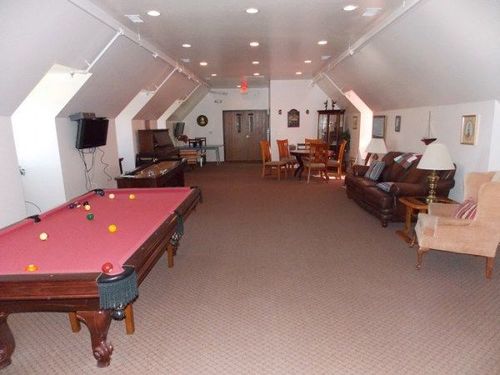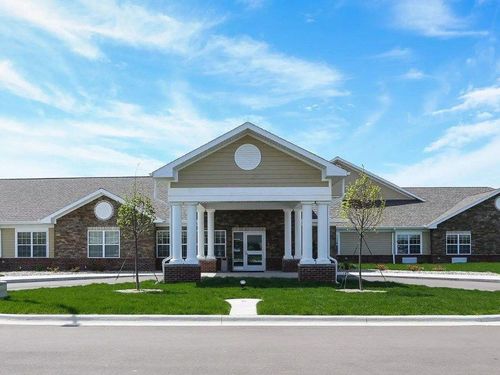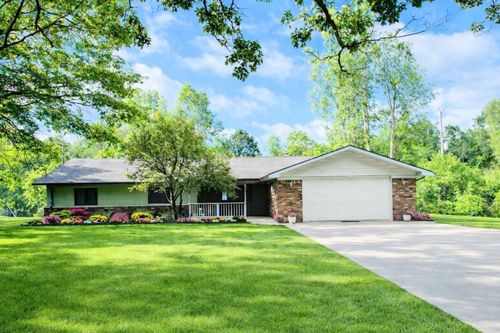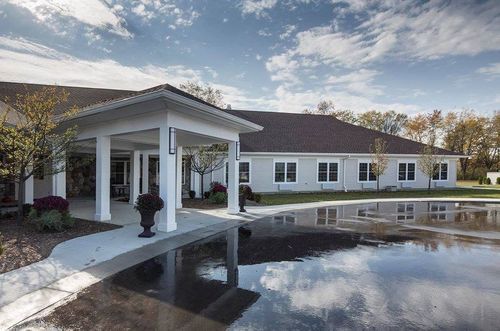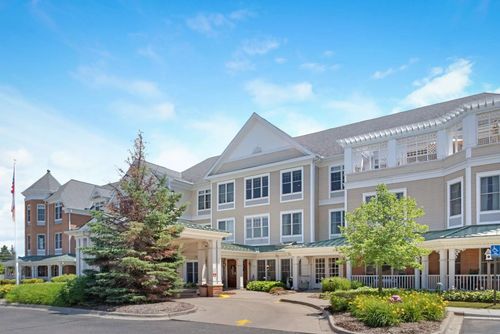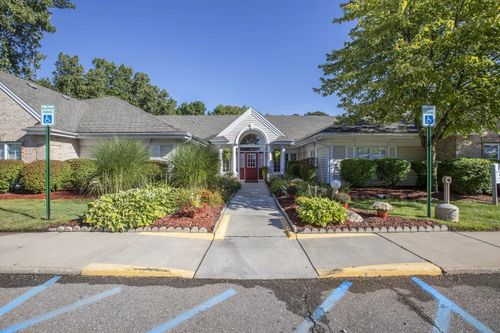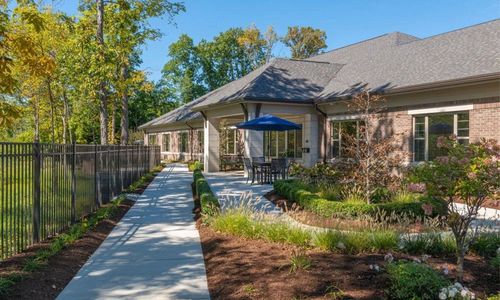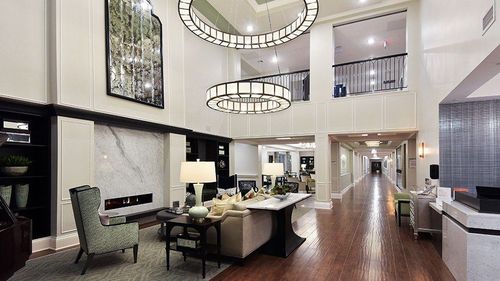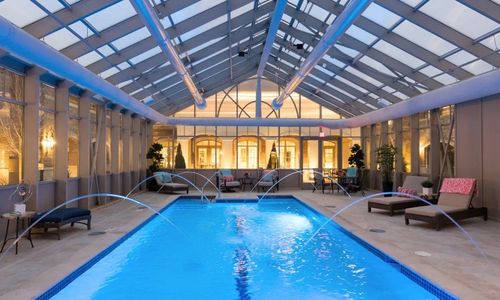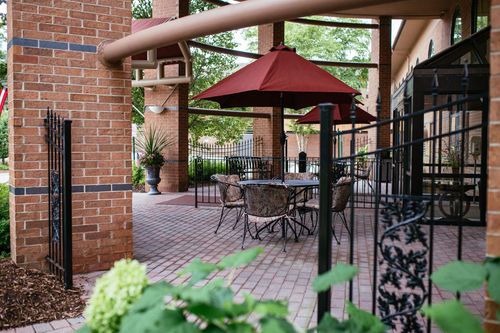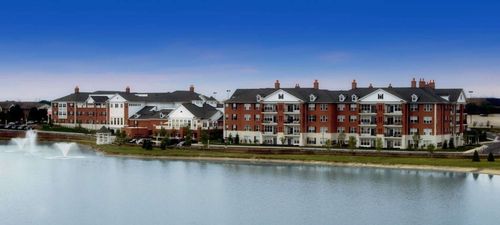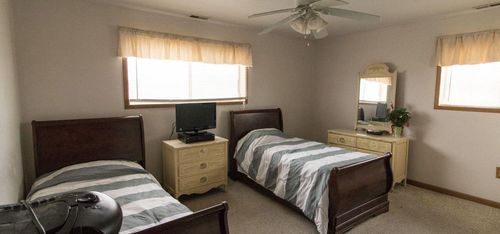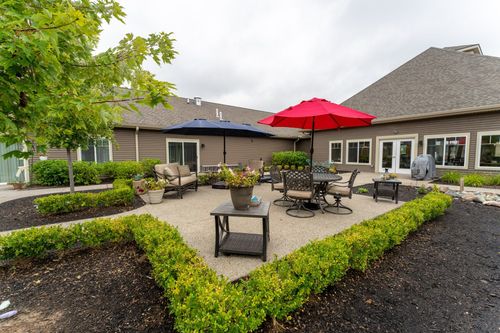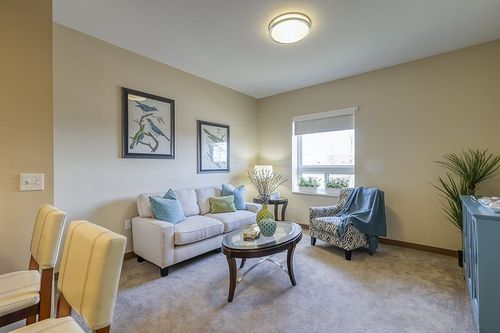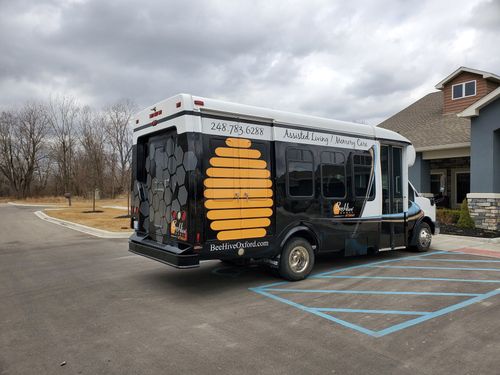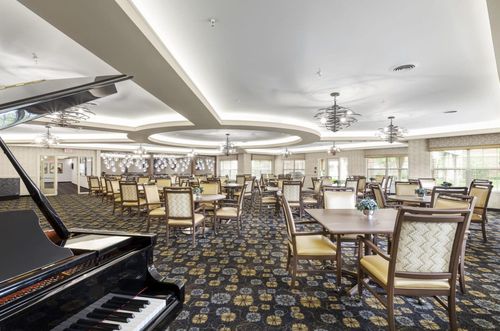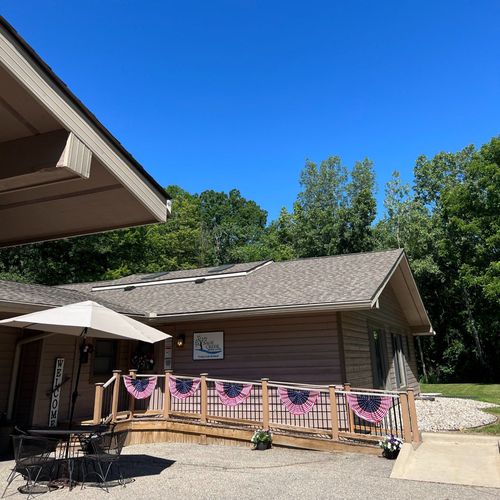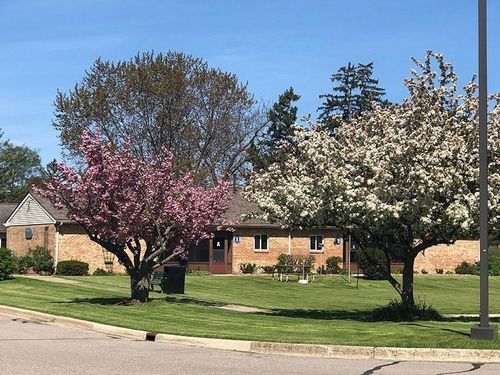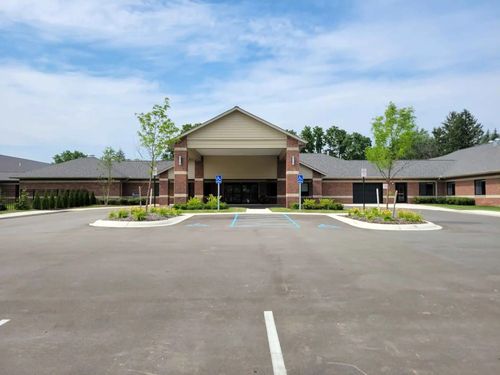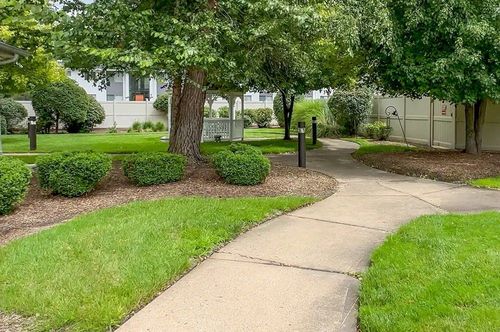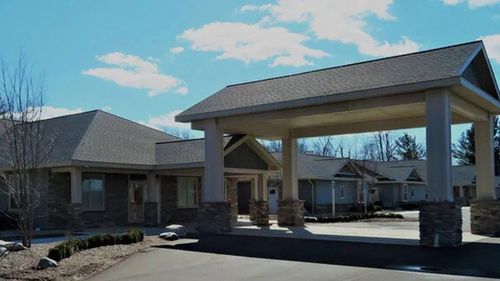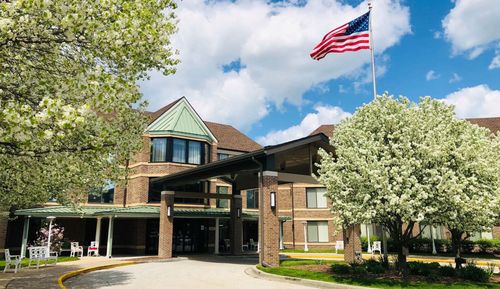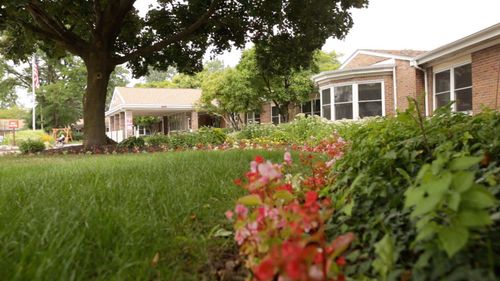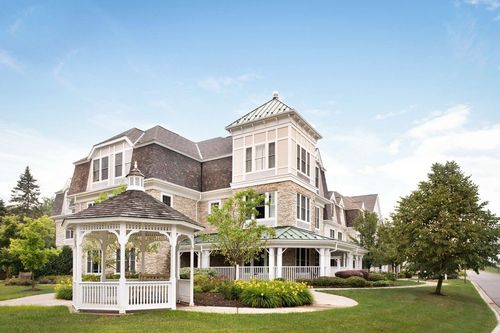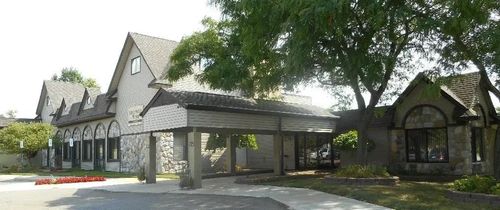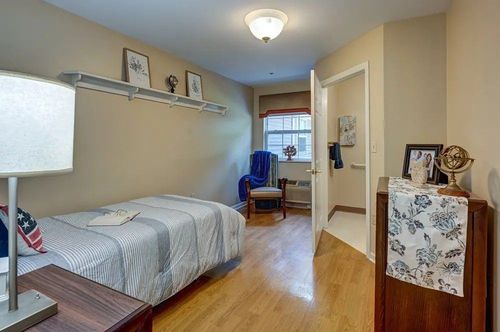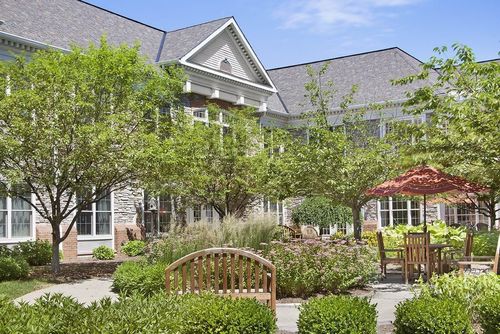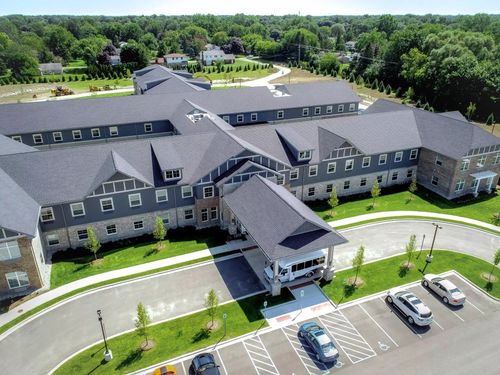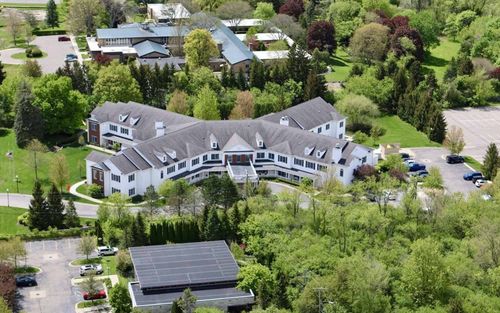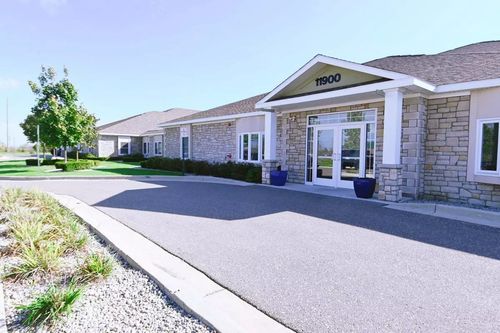
Washington Township's senior living is one small community divided almost exactly in half, with as many secured beds as open ones. Vista Springs Washington Place - Spring Cove on Vista Springs Boulevard is unusual in that respect, because most buildings treat dementia care as a wing bolted onto a larger operation and this one treats it as half the business.
The practical value of that balance is easy to underestimate. It means a household arriving at either level knows the other is a corridor away rather than another search conducted under pressure, and removing that fear is what stops families making premature decisions or delaying necessary ones.
Half a Building, Built for This
Secured care here provides the expected foundation: the exits stay locked, the outdoor area is enclosed, help with washing, dressing and eating comes when a resident needs it rather than on a schedule, food is reworked as chewing and appetite shift, and the overnight staff stay awake.
What an even split changes is culture rather than services. When half the residents live with memory loss, dementia is not an exception the building manages around; it is ordinary, and staff move between the two sides as a matter of routine rather than as a specialism. A resident crossing from the assisted side is therefore met by people who already know them, which matters more at that particular transition than at any other. The limit worth pinning down is where a small secured setting stops, so ask what physical needs it can hold, what behavior would prompt a conversation, and what warning a family would be given.
One Rate Now, One to Anticipate
Vista Springs Washington Place - Spring Cove sets assisted living at $4,680 a month for 2026, and prices its secured rooms above that after an assessment. For a household arriving with a diagnosis the secured figure is the number that matters, since it is the one a multi-year plan has to survive, and it should be established before rather than after a move.
The community does not bill Michigan Medicaid, so this is private money at both levels. Michigan's MI Choice waiver reaches the help and leaves the housing, so approval never removes what a community charges for a room and its meals, and its funded places are rationed. Pets are accepted, which in a township with one address matters more than it would in a city, because a pet policy elsewhere frequently eliminates the only local option a family has.
Twenty Beds for a Growing Township
Washington Township sits at the northern edge of Macomb County, where subdivisions built over the past few decades run out into farmland. Its older population is largely made up of the households that arrived when those subdivisions were new, which produces steady local demand rather than the transient kind.
Ten secured rooms against that background do not sit empty. There is no queue in any formal sense, so availability is a matter of what happens to be free the week a family calls, and the households already known to the building are the ones in a position when something opens.
Why Northern Macomb Families Stay Close
Dementia turns visiting into something short and frequent, and this part of the county makes that easy to sustain. Adult children in Romeo, Shelby Township, Rochester and Utica are inside twenty minutes, so a call-in on the way home becomes routine rather than an excursion, and routine is what a fading memory holds on to longest.
Hospital access sits comfortably within reach of both Macomb County trauma centers. Henry Ford Macomb Hospital at Clinton Township holds Level II verification, with 361 beds covering stroke, cardiac and inpatient rehabilitation work, and a second Level II center serves the county from Mount Clemens. For a resident whose specialists are already in Macomb County, moving into the township changes none of those relationships.
What a Local Advisor Brings to Washington Township
With a single address serving the township, an advisor is useful for two things: accuracy about what is free, and candor about what fits. An advisor working northern Macomb County knows when secured rooms are expected, what the assessed figure has been for residents in a comparable state, and how the building has handled households whose needs moved faster than planned.
The second contribution is the longer view, which one-address townships make unavoidable. Dementia runs for years, and with nothing cheaper nearby to fall back on, a plan that stops at twelve months is not really a plan. Sketching that out takes a single sitting, and a short conversation early is worth more than three tours later.
Our Washington directory keeps expanding as we evaluate providers for quality and alignment in 2026. Reach out for a conversation about memory care in Washington, or look through the communities we have vetted at your own pace.