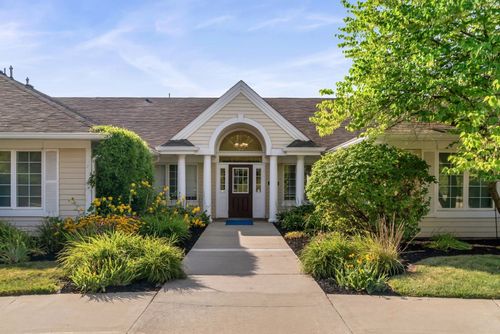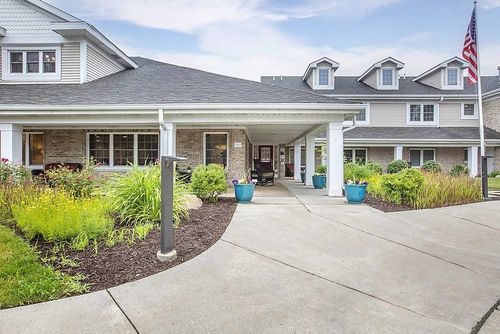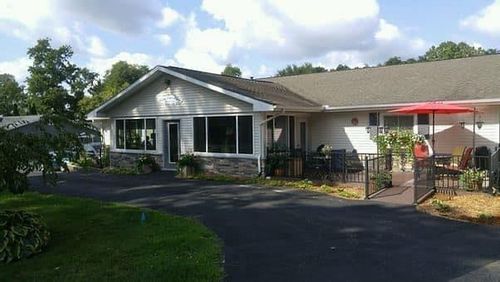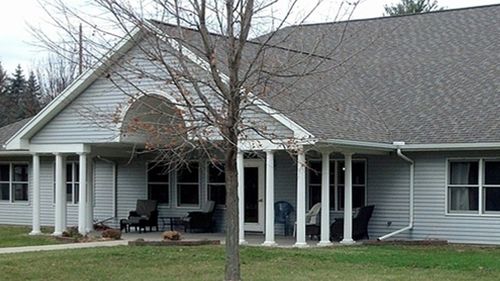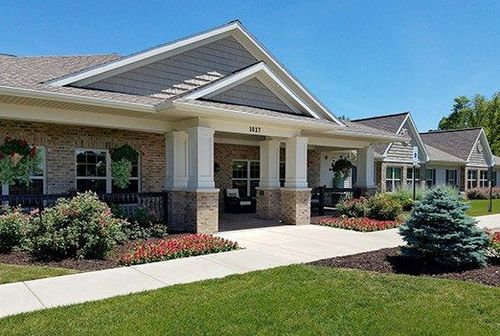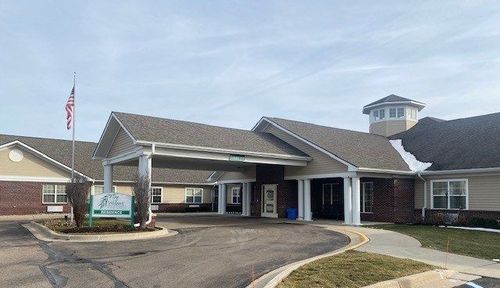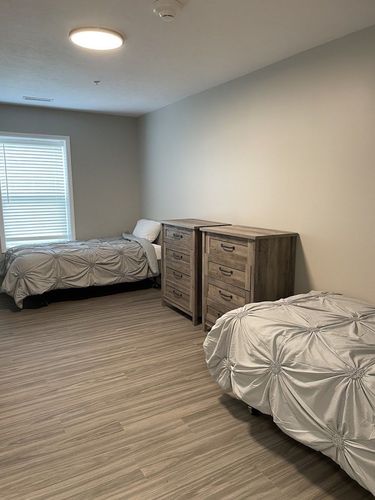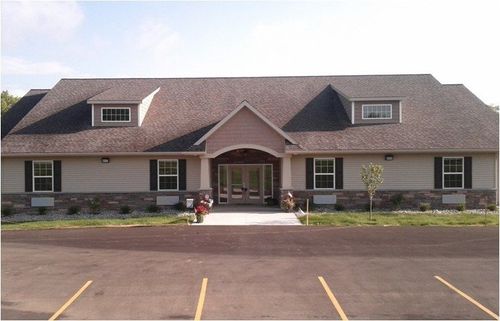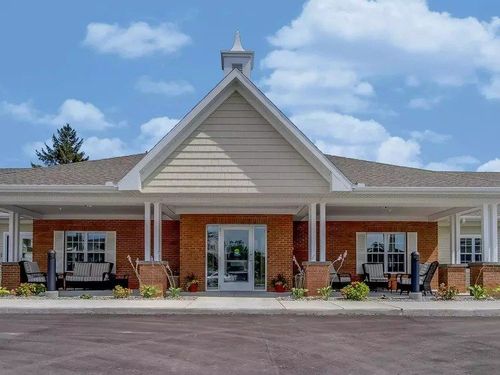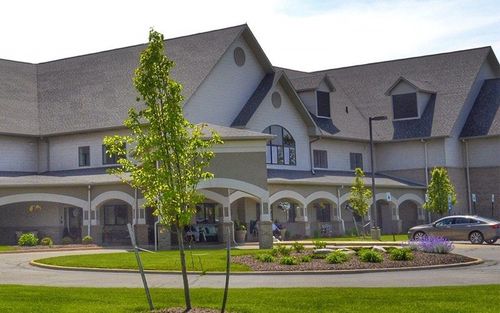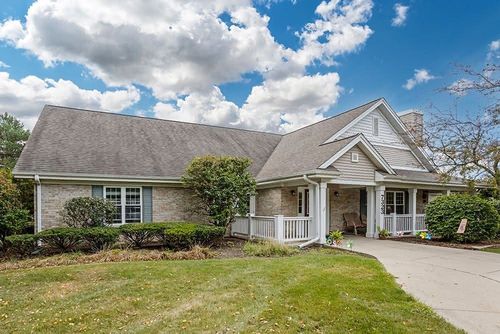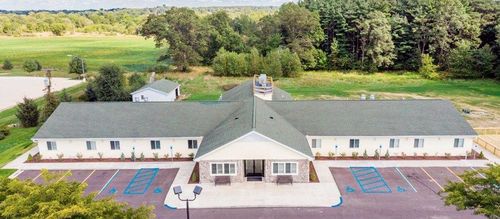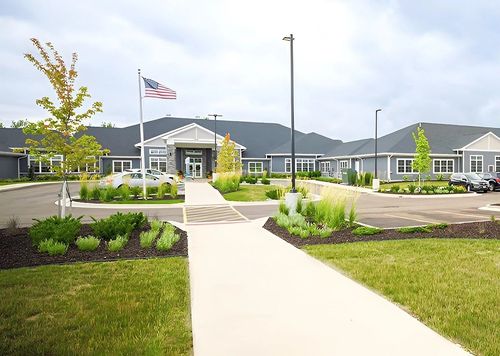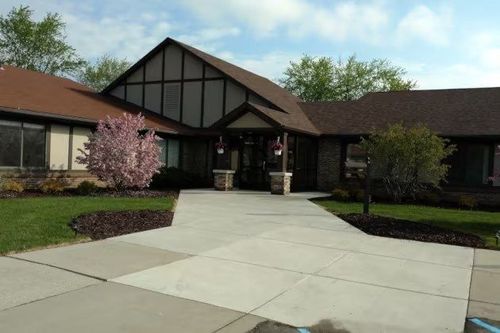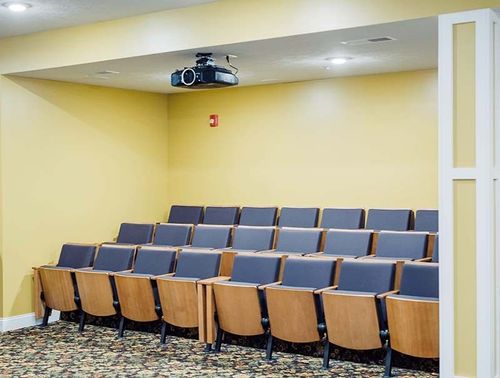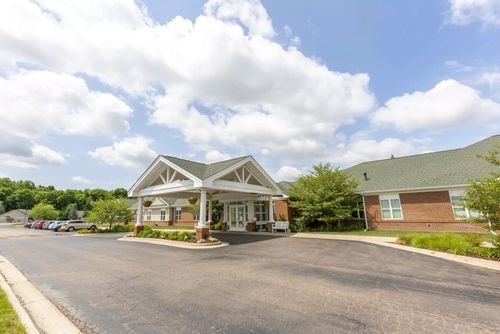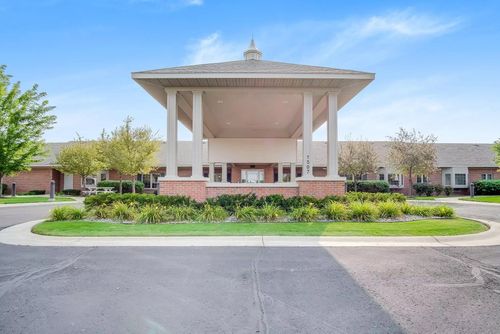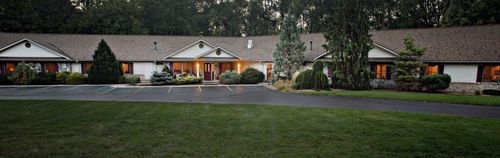
Assisted living in Williamston comes with a feature families almost never encounter: every bed on McCormick Street sits behind a secured door. Divine Nest Of Williamston is a small residential home built entirely around memory loss, and its assisted-living rooms are inside that secured envelope rather than alongside it.
That makes the town's assisted living a specialist product rather than a general one, and it sorts households quickly. For a person whose memory has begun to slip, it is close to ideal, because the environment already understands them and no later move is required. For someone with no cognitive change at all, a house where every neighbor is living with dementia is unlikely to be the right week-to-week life.
Support Inside a Secured House
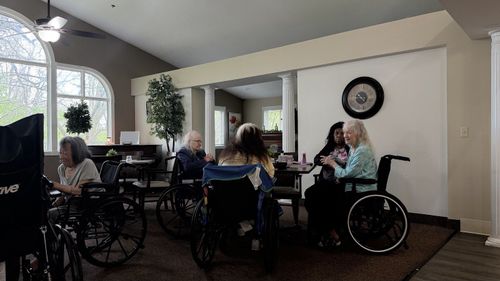
The daily substance is the assisted-living list delivered at household scale. Medication is given on schedule and signed for, help with washing and dressing arrives whenever it suits rather than on a round, one kitchen cooks and adjusts as appetites shift, the laundry and cleaning disappear from a family's list, and the night shift stays awake.
What the secured envelope adds is a set of assumptions rather than a set of services. Staff here do one thing, so the pace of the day, the noise level and the way a confused question is answered are all calibrated for memory loss instead of adjusted for it. A resident who becomes unsettled in the late afternoon is met by people who expected that, and nobody has to be moved when their needs change, because the door was already locked. The cost of those assumptions is variety: this is a quiet house, and it will not suit a resident who still wants a full calendar and a crowd.
One Rate on McCormick Street
Divine Nest Of Williamston is quoted at $4,200 a month for 2026 for an assisted-living room, with the secured memory-care tier priced above it. Both sit below what the campus-style communities in the Lansing area ask, which reflects the scale of a residential home rather than the work inside it.
The home bills no Medicaid, which makes a Williamston stay private pay. Michigan's MI Choice waiver covers the caregiving line alone and never what a house charges for living there, and it rations the places it funds. Because the town has one address, the terms rather than the rate are where a household has leverage: establish what the assessed figure covers, what event lifts it, and what notice precedes a change, and get those in writing rather than over the phone.
A Small Town That Kept Itself
Williamston keeps a working main street and a theater along the Red Cedar River, close enough to Lansing for anything the town lacks but far enough out that it never became a suburb of it. Households considering senior living here have usually been in that arrangement for decades and have no interest in trading it.
One small home serving that town means rooms open occasionally rather than predictably. Families who introduce themselves before there is any pressure are the ones who hear when something is coming free, and in a house of this size that introduction is worth considerably more than a comparison exercise.
Why Williamston Households Stay in Williamston
The town is genuinely walkable in the parts that matter and genuinely social, which is not true of every place its size, so a resident who moves within it keeps the shops, the church and the neighbors rather than swapping them for a quieter version of the same life.
Medical depth sits a short drive west, where University of Michigan Health-Sparrow Lansing runs 733 beds behind the region's sole Level I trauma verification covering adults and children together, along with the earliest comprehensive stroke certification issued anywhere in Michigan, and McLaren Greater Lansing adds a second full hospital nearby, so a resident keeps whichever specialists they already have.
What a Local Advisor Brings to Williamston
The first thing worth knowing here is not price or availability but whether a secured house is the right setting at all, and that question deserves an unsentimental answer. An advisor working eastern Ingham County can say which residents settle well in a house of this kind and which find it too still, and getting that judgment right the first time is what prevents a second move.
The second is timing and the map beyond it. An advisor knows when the home expects a room, what the assessed rate has been for comparable residents, and what the options look like in the county if the house eventually reaches its limit. If a diagnosis is in hand and the timing is still yours, reach out and the shape of the decision becomes clear quickly.
The Williamston directory continues to grow as we evaluate providers for quality and alignment in 2026. Start the conversation about assisted living in Williamston, or look through the buildings we cover at your own pace.