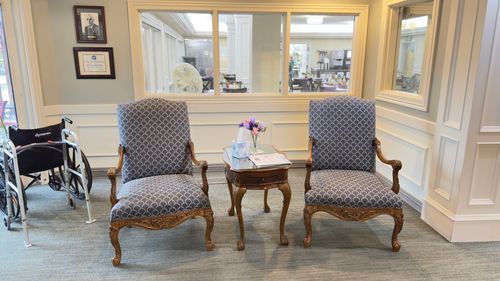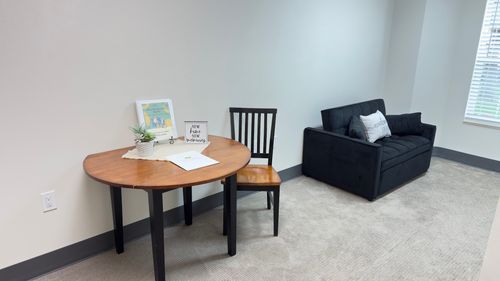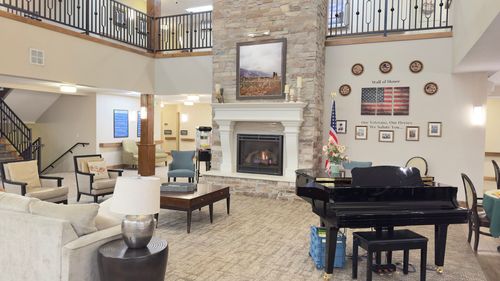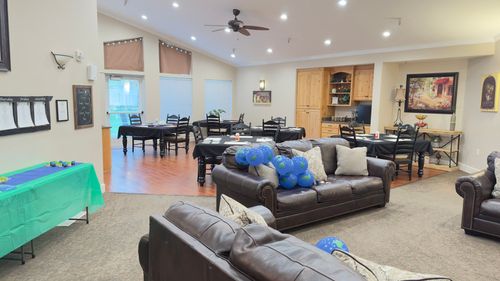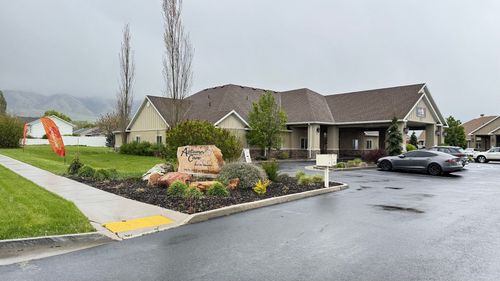

A dementia diagnosis in Hyde Park puts a family in front of a tight local-inventory question. Autumn Care Assisted Living on West 300 North is the city's only published address, and the dementia-care service runs at household scale across the small-residential setting rather than inside a structurally separate secured wing. Private rooms, a central kitchen, a shared living space, and a secure outdoor patio shape the daily setting.
For a Hyde Park household weighing memory care, the practical choice is between Autumn Care's household-scale dementia service and a fifteen-minute move south to the broader Logan and North Logan inventory, where dedicated secured neighborhoods at larger campuses sit alongside several waiver-participating addresses. Cache Valley Hospital five minutes south in North Logan handles the medical events common in dementia care.
How the Local Dementia-Care Setting Works
Autumn Care's dementia-care service runs across the building rather than partitioned into a structurally separate secured neighborhood. The day moves through home-cooked meals from the central kitchen, daytime activity blocks including walking paths and garden time on the secure outdoor patio, scheduled local transportation, and a quieter evening pattern that closes with a second medication pass. The household scale means caregivers know each resident by first name and recognize cognitive shifts early.
The fifteen-resident format reads differently than the 30-to-50-resident secured neighborhoods at larger Wasatch Front campuses. For an earlier-to-mid-stage resident who still benefits from a smaller social texture, the household setting is a natural fit. For a resident whose dementia has progressed to where behaviors call for awake-overnight licensed nursing and a defined perimeter design at a campus scale, the home's household model carries limits the conversation should name early.
Cost and Coverage
Autumn Care's dementia-care monthly rate in 2026 runs roughly $4,200 to $5,400, priced above the building's basic assisted-living rate to fund dementia-aware caregiver hours and the household-management features the daily structure requires. The figure tracks the Cache Valley range and sits below the larger Logan-corridor secured neighborhoods because the household format carries lower per-resident overhead.
Move-in fees fall $500 to $2,500 by room, a couple with similar care profiles sharing a room adds $400 to $700 each month, and respite stays on the dementia-aware side run $150 to $200 per night. Aging Waiver participation is not currently published on the building's public material; current intake should be verified before paperwork moves; the Logan-corridor inventory comes in when local intake cannot meet the financial picture.
A Quiet Cache Valley Demand Pattern
Hyde Park's population sits near 5,900 in 2026, with roughly 700 residents past sixty-five. The one-in-nine national dementia rate translates to a local caseload near 80 households at any given time, a small but steady demand the city's one fifteen-resident home holds the local share of.
Room turnover on the dementia-care side follows individual resident transitions rather than a steady monthly cadence, with wait times stretching when Cache Valley Hospital discharges or corridor-wide events surface multiple placements at once. The small scale means each opening reshapes availability visibly.
Why Families Choose Memory Care in Hyde Park
Familiar surroundings matter more in dementia care than in any other senior-living tier, because moving a person with cognitive impairment into an environment they cannot read amplifies the disorientation the disease is already producing. At Autumn Care, the resident keeps the quiet Cache Valley street pattern, the Bear River Mountains backdrop east, and the longtime ward and family connections that run through Hyde Park First and Second Wards.
The household-scale setting also keeps the visiting cadence easy. Adult children driving in from Logan, North Logan, Smithfield, and Providence reach Autumn Care in ten to fifteen minutes, which keeps the weekly visit rhythm realistic across the longer trajectory dementia care follows.
What a Local Advisor Brings to Hyde Park
Dementia-care calls into Hyde Park usually arrive after a season where overnight safety has stopped feeling reliable, behavioral shifts have outgrown what hired aides can manage, or the cumulative exhaustion of family-and-aide hours has begun to leave gaps the decline keeps finding. The advisor reads the resident's stage against the household-scale dementia service at Autumn Care, checks current room availability, and verifies waiver intake when Medicaid is part of the plan.
When Autumn Care's household format fits the resident's profile, the conversation moves into room specifics, the dementia care tier, and move-in coordination. When the resident's dementia has progressed past what a fifteen-resident setting can safely hold, the advisor pulls Logan and North Logan alternatives in including the dedicated secured neighborhoods at larger Cache Valley campuses. A planning conversation early keeps Autumn Care in scope rather than narrowed to whatever opens during a discharge week. Reach out for a planning call when memory care begins shaping the household calendar, or browse our directory for the broader Cache Valley context.