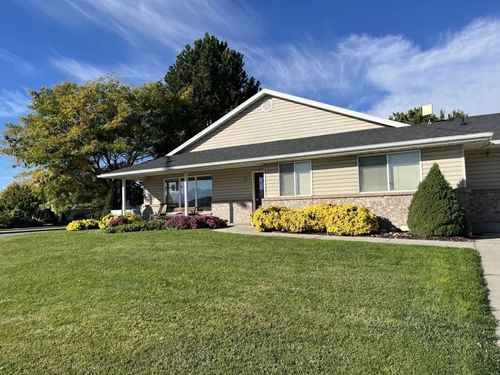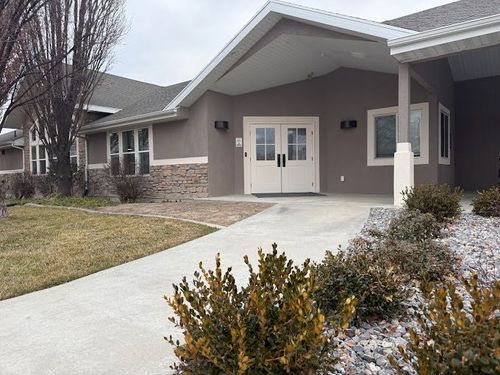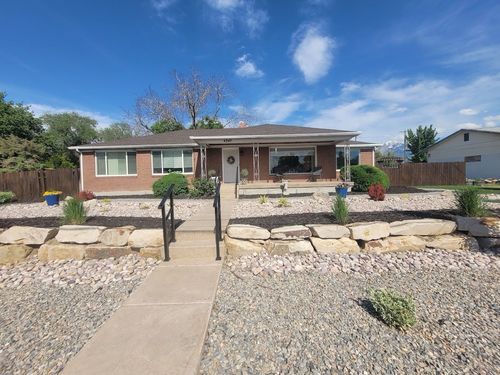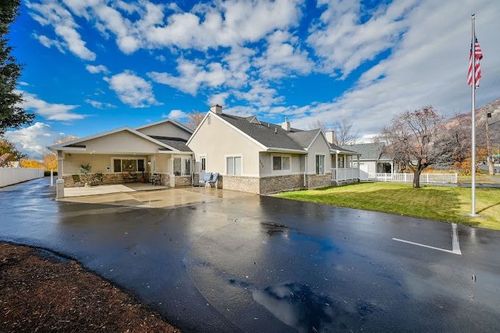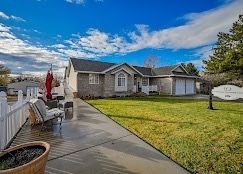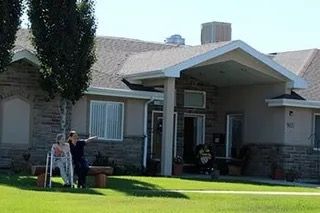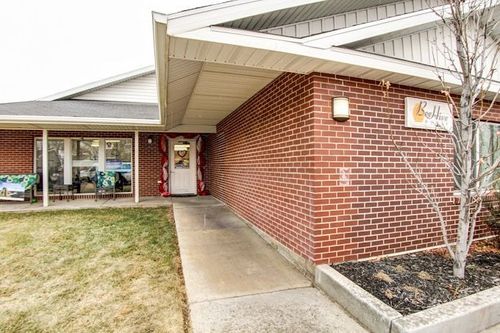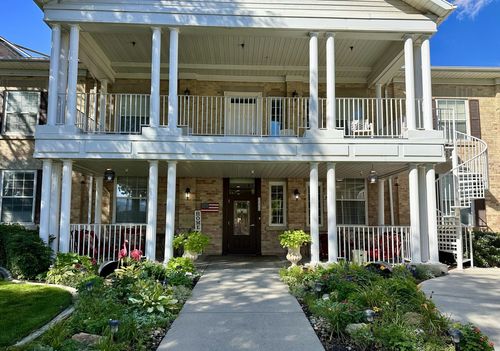

On 1500 North in older Lehi, a few blocks from the Jordan River, Abbington Manor is something less common than a general care home: a small house built only for memory care. It is a single secured residence for up to sixteen people living with Alzheimer's or another dementia, the kind of small setting families also know as a board-and-care or care home, here given over entirely to memory loss. Lehi's directory lists 1 home-style residential care home, and this is it.
A Lehi family looks for a house like this when a parent's dementia has reached the point that a regular apartment or a large building no longer keeps them safe or calm. A secured, low-key household of a few residents and a steady caregiving team can hold someone who wanders, repeats questions, or is unsettled by noise and crowds far better than a hundred-unit campus. That is the specific need Abbington Manor is built for, and it is why families run a search like this one.
A Secured House Built Around Dementia
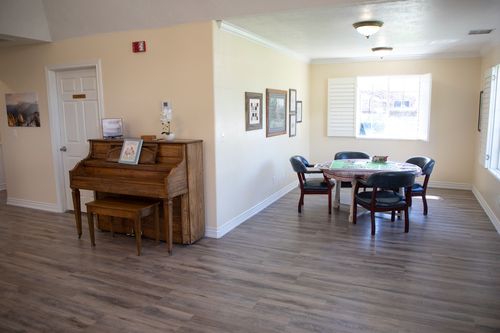
Everything about a memory-care house is arranged around dementia, and Abbington Manor is built that way through and through. It runs as a secured setting, with doors managed and a layout meant to keep a resident who wanders safe inside the home and its courtyard rather than out a front door. With up to sixteen residents, a small team can give the close, patient attention dementia asks for, often one caregiver to a few residents, and the day stays simple on purpose: home-cooked meals, help with bathing, dressing, grooming, and medications, and a calm, low-stimulation routine that does not overwhelm. What a small secured house does not have is the breadth of a large memory-care community: a bigger activity program, more staff on hand, on-site clinical backup. For some residents that scale is genuinely better; for others, especially someone anxious or easily lost, the quiet of a sixteen-person house is the kinder fit. One limit matters most: memory care here is custodial, not medical, so a resident who comes to need daily skilled nursing has reached a level a house cannot provide, and that step is worth planning for rather than discovering late.
The Cost of Small-Home Memory Care in Lehi
Memory care costs more than general assisted living, because it takes more staff time and a secured setting, and a small house is no exception. Across Utah, assisted living averages about $5,500 a month in current figures, and dementia care typically runs higher; a small secured home and a large memory-care community can land in a similar range, sometimes with the house a little lower for its leaner extras. Abbington Manor does not post a reliable all-in rate publicly, and the teaser prices that show up for memory care are rarely the real number, so the figure that matters is the one the home quotes for a specific resident's level of care. A family paying privately should ask for that full monthly cost, what it includes, and whether it climbs as dementia advances, since memory-care rates often rise with the level of supervision a resident needs.
Scarce Beds in Utah's Youngest Boomtown
Lehi is one of the youngest fast-growing cities in the country, with a median age under thirty and only about six percent of its roughly eighty-five thousand residents past 65. A place built around Silicon Slopes and young families simply does not hold many secured memory-care beds, and a sixteen-room house has only so many. The result is that openings in small-home memory care here are genuinely scarce, and dementia rarely waits for a convenient moment. Starting the search early, before a crisis or a hospital stay forces a same-week decision, is often the only way to land a spot in the right setting rather than the first one open anywhere.
Why a House Can Suit a Resident With Dementia
For a resident with dementia, smaller is often calmer, and that is the real case for a house like this. Fewer rooms mean fewer faces to track, less noise, and caregivers who learn one person's triggers and comforts within days rather than weeks. The familiarity of a normal Lehi house, with a kitchen that smells like cooking and a living room that seats a few people, can settle someone whom a large, busy building would agitate. Keeping the move close to home also lets family visit often, which matters more, not less, as memory fades. None of this means a large memory-care community is the wrong choice; its deeper staffing and fuller schedule of daily activities suit many residents well. The small secured house is simply the better fit for the resident who does best with quiet and a few familiar people, and telling those situations apart is the part worth getting right.
Getting a Dementia Placement Right in Lehi
Placing a parent with dementia is higher-stakes than a general assisted-living move, and it is where a local advisor matters most. The advisor who works Lehi placements knows whether Abbington Manor has an opening, what its real monthly rate runs for a given level of memory care, and how far its secured setting can carry a resident before skilled nursing becomes the need. For a family weighing a small secured house against a larger memory-care community, that read on fit and timing is what prevents a rushed move into the wrong one.
We keep adding Lehi homes and communities to the directory through 2026 as we review them. If memory care in a small house is what you're facing, start here and we'll talk through the fit, or look through the communities we've reviewed on your own schedule.