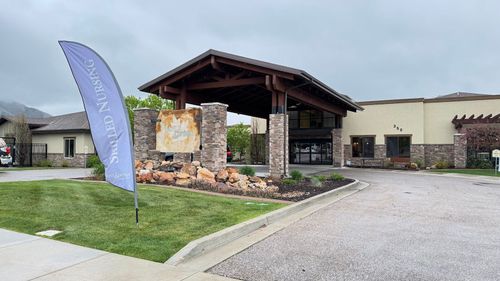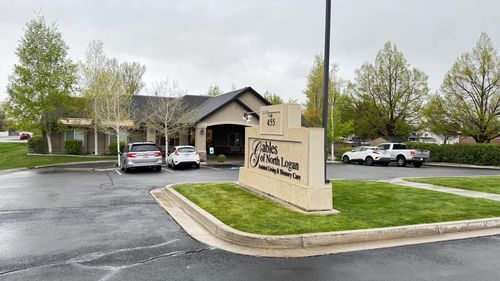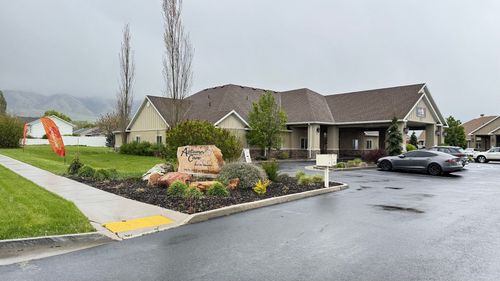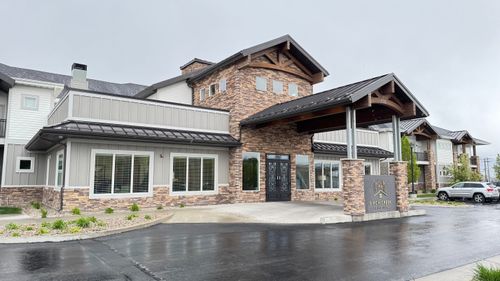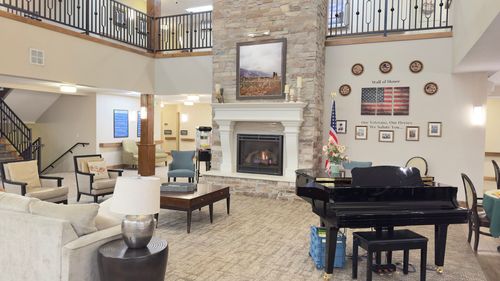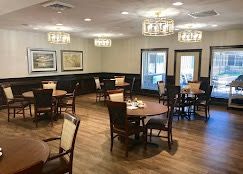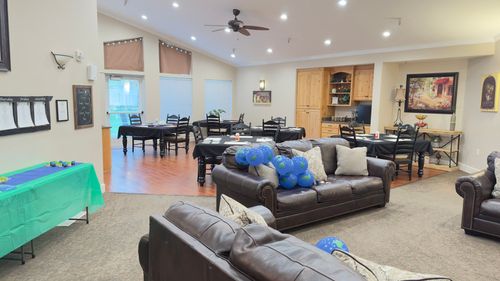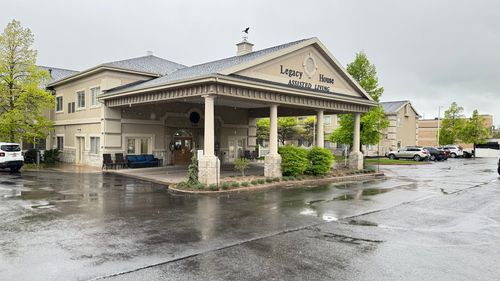

Most Logan dementia-care moves route through the behavioral-health and internal-medicine clinics at Logan Regional Hospital on East 1400 North, and both of the city's memory-care addresses sit close enough to that hospital relationship that the discharge-to-placement pathway is unusually tight for a smaller Utah city. Legacy House of Logan stands literally next door to Logan Regional, with the 110-resident assisted-living community carrying a memory-care designation handled inside the broader building under the Western States Lodging brand. Terrace Grove Assisted Living on 200 West, a short drive west of the hospital, runs the city's only verified secured-neighborhood inventory: a 21-apartment memory-care neighborhood inside its 56-resident community under the Sunshine Terrace Foundation brand.
Apply the national one-in-nine dementia rate to Logan's roughly 4,100 residents past sixty-five and the math points to about 455 local seniors living with a diagnosis at any moment in 2026. That figure sits inside a 52,778-person city whose median age trends younger thanks to Utah State's student and faculty enrollment. For higher-acuity neurology consultations and dementia-specialist evaluations, the route extends forty-five minutes south to McKay-Dee Hospital in Ogden, with Salt Lake County networks behind that.
Day-to-Day Care
Inside Terrace Grove's 21-apartment secured neighborhood, the daily routine is purposefully consistent for residents whose memory has shifted: a caregiver is on duty awake through every overnight, every door operates under controlled access, and the corridor layout loops so a confused resident finds their way back to the dining room rather than into a stuck corner. The weekly calendar pulls toward music sessions, sensory tabletop work, courtyard walks, and reminiscence circles built for small groups instead of the bus outings and large-event activities the broader assisted-living calendar carries.
Legacy House of Logan folds dementia care into its broader assisted-living service rather than carving out a separate step-up secured zone. Staffing density rises during the day and evening hours that carry the heaviest dementia-care risk, and dementia-appropriate activity blocks layer into the building's regular weekly schedule. The 110-resident scale gives Legacy House more activities variety than smaller integrated-dementia buildings can offer, with the trade-off that the dementia-specific environment isn't as bounded as a defined secured neighborhood would be.
Family visiting hours stay open every day at both buildings. Routine medical care coordinates through Logan Regional (immediately next door to Legacy House and a short drive from Terrace Grove), and higher-acuity neurology or dementia-specialist consultations route forty-five minutes south to McKay-Dee Hospital in Ogden or further to Salt Lake County networks.
Cost and Coverage
Logan prices below the Wasatch Front median and roughly in line with the broader Cache Valley range, putting memory-care rates at $3,500 to $5,500 in 2026 with most secured apartments near $4,500. Terrace Grove's 21-apartment secured neighborhood anchors the lower end of the band on its Aging-Waiver-participating Sunshine Terrace Foundation model. Legacy House of Logan holds the upper portion of the band on its 110-resident community structure with the integrated-dementia approach.
At Legacy House of Logan, stepping from the assisted-living tier into the dementia-care service typically adds $850 to $950 a month. Terrace Grove's all-inclusive pricing model under the Sunshine Terrace Foundation tends to bundle caregiver hours into the monthly figure rather than tiering them. Move-in fees land between $1,500 and $4,000. A couple sharing an apartment pays $750 to $1,200 a month for the second resident, and short-stay respite at the buildings runs $170 to $230 a day.
Terrace Grove carries the Aging Waiver contract on its memory-care tier, which gives Logan a real Medicaid path for dementia care. Legacy House of Logan operates private-pay across its dementia-care service. The waiver covers part of the caregiver-hours bill once a clinical evaluation rates the resident at nursing-facility-level need (a bar that typically clears inside the first twelve months after a diagnosis) and once income and assets sit beneath the state's published Aging Waiver thresholds.
Local Demand and Availability
Apartment turnover at Terrace Grove's secured neighborhood runs on a thirty-to-forty-five-day cadence under normal demand, while Legacy House of Logan's dementia-care service moves in line with the broader 110-resident building's assisted-living turnover.
Same-week placements happen when a Logan Regional discharge narrows the timing to a few days; in that scenario, the family usually ends up choosing whichever of the two addresses can absorb the resident inside the release window rather than the one they would have picked with more lead time.
Why Families Choose Memory Care in Logan
Dementia care is the one setting where consistent in-person contact has measurable weight; familiar faces and steady weekly visits slow how fast a resident's memory thins. Logan's geographic position keeps that visit cadence sustainable for adult children working in the Cache Valley corridor (North Logan, Smithfield, Hyrum, Providence) and for visiting family driving in from across the broader northern-Utah region. The combination of Logan Regional immediately next door to Legacy House, Utah State University's adult-education programs, and the Cache Valley cultural fabric gives visiting families and active-stage dementia residents a familiar walking environment.
Day-to-day primary care, medication reviews, and routine inpatient stays for the city's dementia residents are managed at Logan Regional. McKay-Dee Hospital in Ogden carries higher-acuity neurology consultations and dementia-specialist evaluations forty-five minutes south.
What a Local Advisor Brings to Logan
The advisor's first call on a Logan dementia case typically lands on Logan Regional's case-management line and the behavioral-health clinic team, because both Terrace Grove and Legacy House sit close enough to the hospital that the discharge-to-placement pathway depends on the timing of that one conversation. From there the resident's dementia stage, the household's preference between a defined secured neighborhood and an integrated approach, and the multi-year cost picture all get read together so the right of the two local addresses surfaces inside the family's planning window.
Medicaid-track dementia placements route almost entirely through Terrace Grove, so an early advisor call usually narrows the question to whether the Waiver-participating secured neighborhood has a qualifying room open inside the family's planning window. For private-pay families, the choice opens between Terrace Grove's smaller secured neighborhood and Legacy House of Logan's larger community with its integrated approach next door to Logan Regional. Most Logan memory-care calls come in after months of trying to layer family schedules and rotating home-care hours around a dementia that the home arrangement can no longer keep up with. Cache Valley triggers typically cluster as nights the household can no longer staff safely, conduct that has outrun what paid in-home aides were prepared to manage, and the cumulative exhaustion an adult-child caregiver carries through long cognitive stretches.
Our Logan directory keeps expanding as we work through the Cache Valley dementia-care landscape in 2026. The first call usually opens more options than a hospital-week scramble ever can; reach out about memory care in Logan, or look through the buildings we cover at your own pace.