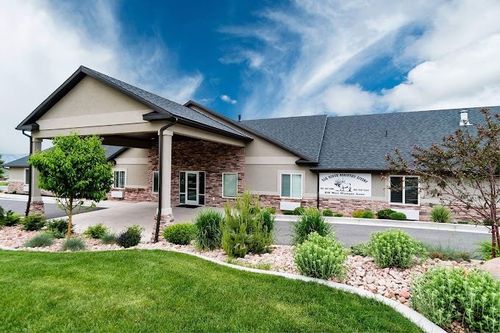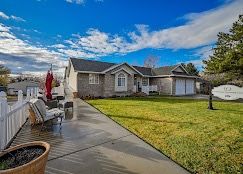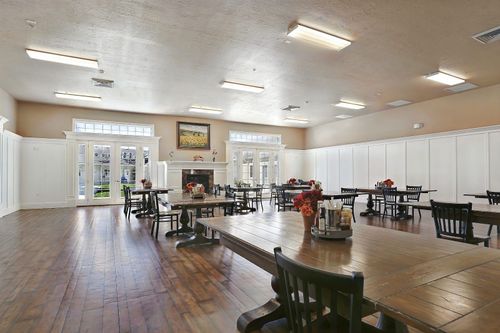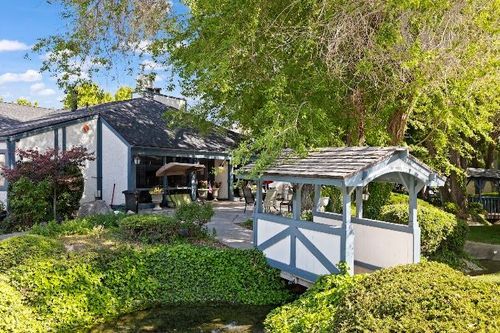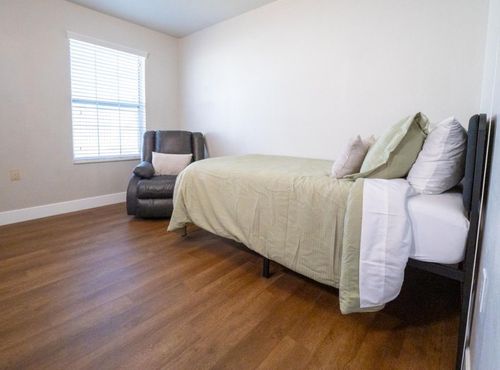

A 24-hour pet hospital and a full veterinary clinic sit right in Payson, which is not something every south-county town can claim, and it matters to anyone weighing senior living with a dog or cat in tow. The 2 senior-living communities in town both welcome a resident's animal, though they could hardly be more different: BeeHive Homes on 700 South is a house-scale home of about 20 residents, while Orchard View on Turf Farm Road is a large campus near the freeway. Both run assisted living and memory care, so the real question in Payson is rarely whether a pet can come, but which of two very different settings suits the animal and its owner.
Families look here when a Payson resident's life has narrowed to a few fixed points, one of them the dog at the foot of the bed. Keeping that animal through the move is what most families insist on, and the town's two communities are set up so they can.
How a Pet's Day Differs at BeeHive and Orchard View
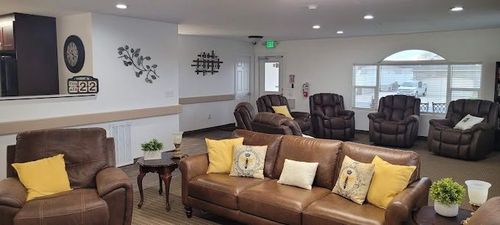
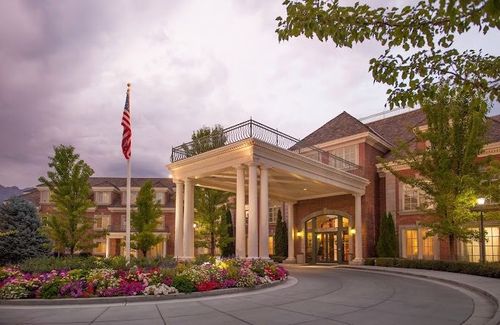
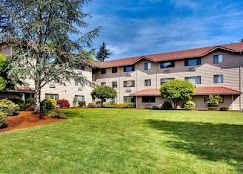
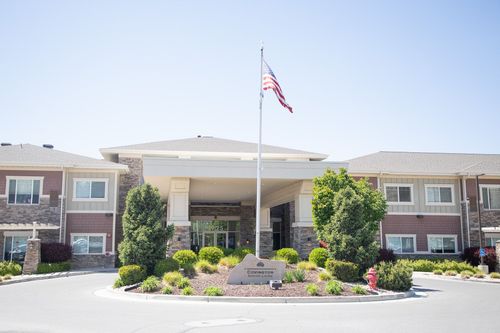
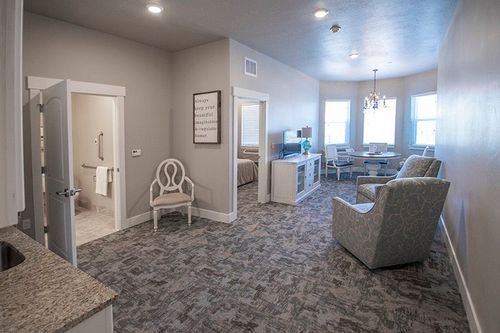
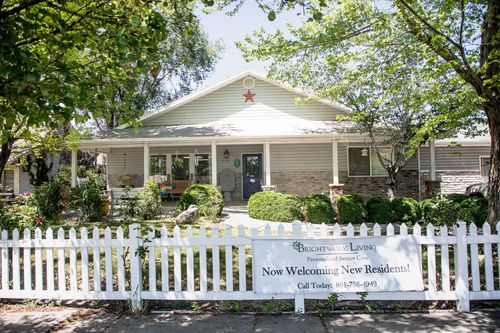
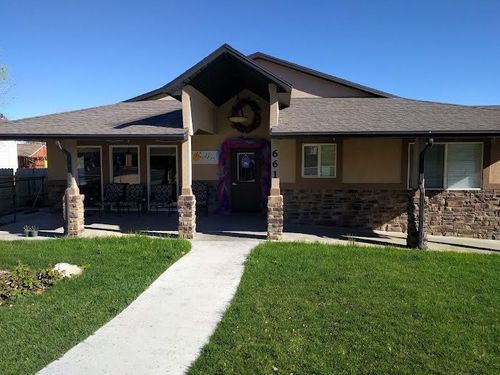
Building size, more than any written rule, shapes what a pet's day looks like in Payson. At BeeHive Homes, a residence of roughly 20, a dog or cat becomes part of a small household: a handful of residents, a shared kitchen and living room, staff who come to know the animal by name. That intimacy is the draw and also the limit, since a small home has room for only so many pets and leans toward cats and smaller dogs that suit close quarters. Orchard View, with around 90 beds, runs more like an apartment community, with longer hallways, more residents who may not want an animal near them, and correspondingly clearer rules about where a pet can go and how big it can be. Either way the baseline holds: current vaccinations, usually spaying or neutering, and evidence that the resident, or a designated relative, can manage daily feeding, walking, and cleanup, plus a plan for handling the animal if the resident is hospitalized. In memory care, offered at both Payson buildings, a pet is least assured. A secured neighborhood has to weigh whether an animal is safe among residents who may wander and whether its owner can still manage its care, so a cat that was easy in assisted living becomes a separate question after a move into memory care. Neither building posts its size cap or pet count publicly, which is why those specifics are worth confirming in writing.
The Pet's Cost, and Where It Sits in Payson
The pet's own price in Payson is small and easy to predict, even though the two communities reach it differently. Both charge a one-time pet deposit, the few-hundred-to-a-couple-thousand-dollar range typical of Utah assisted living and sometimes refundable, plus a monthly pet fee that usually runs 25 to 100 dollars per animal. The base rates do the real work: BeeHive Homes prices around $4,275 a month as a small home that folds room, meals, and care into one figure, while Orchard View runs nearer $4,800 with care billed on top, and memory care is higher at either. Orchard View also accepts Medicaid, which can change the funding picture for a qualifying resident, though that is a separate conversation from the pet. One line belongs here plainly: at both Payson buildings, the deposit and monthly fee apply to pets. A service dog trained for a disability is not a pet under fair-housing law and carries neither charge, though the resident still answers for any damage. Weigh the 2 Payson rates against each other and the animal is rarely the deciding number; the level of care, the size of the home, and whether Medicaid is in play matter far more.
Canyon, Park, and Room to Walk in Payson
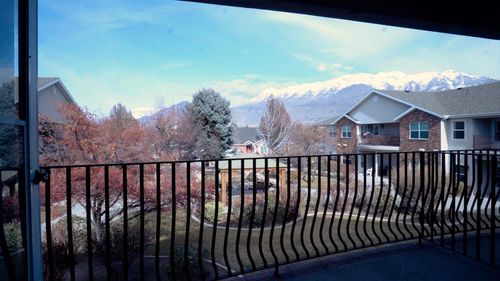
Few south-county towns open onto as much outdoors as Payson. Memorial Park sits downtown for a short daily loop, the Peteetneet grounds add green space, and Payson Canyon climbs straight from the south edge of town toward Payson Lakes and the Nebo Loop, high country a dog and an able owner can share in the warm months, all on the leash the county requires. That outdoor access pairs with real demand: roughly 2,500 Payson residents are past 65, and with a 2026 national poll on healthy aging putting pet ownership among older adults near 46 percent, well over 1,000 local owners sit behind these two communities. Winters close the canyon road, so the everyday walk drops back to the park and the neighborhood sidewalks.
Keeping Roots, and the Dog, in Payson
Payson has anchored the south end of the county for generations, the town families return to for the rodeo each summer and the canyon each fall, and that continuity is part of why a move here keeps more than an address intact. For a pet owner it keeps the dog's whole world: the same canyon trailheads, the same vet on 1000 East, the same block to walk. An adult child elsewhere in the county can reach either community in about 20 minutes and fold in a visit with the dog. Researchers who study healthy aging keep tying pet ownership to a stronger sense of purpose and more daily movement in older adults, exactly what a move into care can otherwise erode. In Payson a family rarely has to choose between the support a resident needs and the animal that gets them moving each morning.
Matching the Animal to the Right Payson Building
The two Payson communities are different enough that the choice often comes down to the animal and the resident rather than a brochure. The advisor knows which setting fits a particular pet: a small dog or cat into the household feel of BeeHive Homes, a larger or more independent animal into Orchard View's apartment-style campus, and a Medicaid-funded resident toward the building that accepts it. The advisor also tracks the moving parts a listing never shows, the current deposit at each, whether memory care will take a pet this month, and which has an opening at the right level of care.
That sorting is most of the work in a two-community town, and getting it right the first time spares a fragile animal a second move. Start the conversation about the right pet-friendly community in Payson, or browse what we've reviewed when you would rather look on your own.