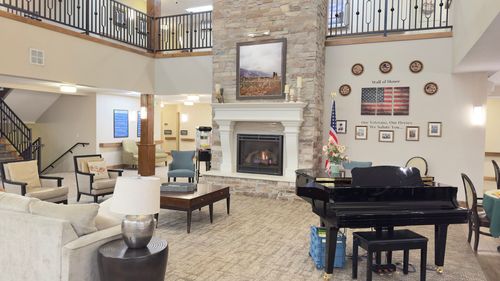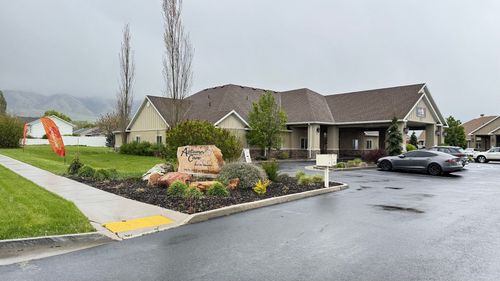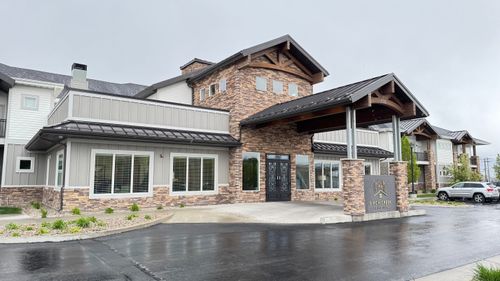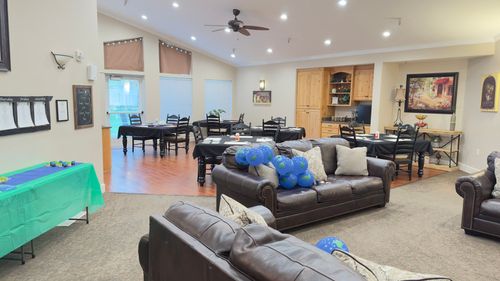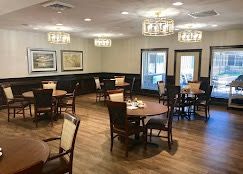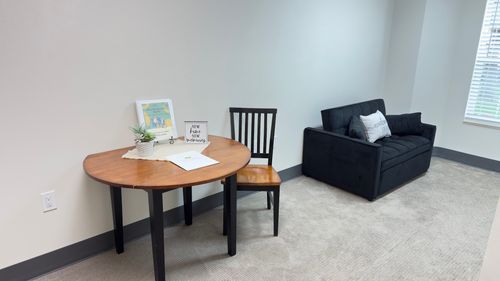

Dementia care inside the Providence city limits runs through a single building, Cache Valley Assisted Living on North Main Street, where the 54-resident community combines assisted-living apartments with an integrated memory-care service for residents with Alzheimer's and other dementias under one roof. The building's supervisory model leans on alarms across each resident door on both sides, an extra layer of nighttime and wandering-pattern coverage the brand highlights as distinctive in the Cache Valley market. Staff trained in dementia care cover the memory-care side around the clock.
The local conversation centers on format more than inventory. The dementia-care service at Cache Valley Assisted Living runs as integrated capacity inside the broader building rather than as a structurally separated dedicated secured-perimeter neighborhood of the type larger Wasatch Front campuses operate. For an early-to-moderate-stage dementia resident who still benefits from the smaller social texture and door-alarm supervision the building deploys, the format is often the right local fit. For a resident whose dementia has progressed past where integrated capacity can safely hold, the dedicated secured-neighborhood alternatives sit in Logan and North Logan inside a fifteen-minute drive or on the Wasatch Front about ninety minutes south.
Day-to-Day Care at an Integrated Memory-Care Service
Inside Cache Valley Assisted Living's memory-care service, dementia-aware support runs alongside the broader assisted-living service rather than splitting off into a separate zone. Dementia-trained caregivers cover the daytime hours, the building's door-alarm system provides supervisory continuity overnight, and the 54-resident community size is one a confused resident often tolerates better than a larger campus. The activity calendar leans into what dementia residents respond to: small-group reminiscence work, music sessions, tabletop activities tuned to attention spans, and supervised courtyard time.
The building does not deploy a structurally separated secured perimeter with coded doors, nor a specialized activities track separated from the rest of the community's calendar. What it does provide is dementia-care training across caregivers, the door-alarm supervisory model that gives families a margin of safety against nighttime wandering, and dementia care inside the same building as assisted living for couples and multi-year planning. Routine medical care routes ten minutes north to Logan Regional Hospital on US-91.
Cost and Coverage
Dementia-care apartments at Cache Valley Assisted Living generally bill $4,800 to $5,600 monthly in 2026, with most apartments near $5,200. The figure runs above the assisted-living rate at the same building because dementia-trained caregiver hours, the higher supervisory ratio on the memory-care side, and specialized activities add real labor cost. Stepping from the assisted-living tier into the memory-care service typically layers $500 to $800 onto the prior monthly figure, a smaller step than dedicated secured-neighborhood addresses run.
Aging Waiver participation at the building requires advisor-level verification before any Medicaid-track planning begins, since published records do not currently confirm an active contract. The Waiver covers a portion of the personal-care line at contracted buildings once Utah's clinical reviewer rates the resident at the program's care threshold and the household clears income and asset rules. When local intake cannot match the financial picture, the broader Cache Valley senior-living set in Logan and North Logan opens up the waiver-participating dementia-care pool. Move-in fees fall $1,000 to $3,000 by configuration, and short-stay respite on the memory-care side bills at $170 to $220 a night.
Local Demand and Healthcare
Providence's population sits near 8,700 in 2026, with Cache County's senior share climbing from 8.7 percent in 2015 toward a projected 11.7 percent by 2025. The local dementia caseload is on a measurable upward trajectory even though the broader county population skews young around Utah State University. Cache Valley Assisted Living's integrated memory-care service absorbs both in-city placements and referrals from Logan, North Logan, and surrounding Cache County settlements.
Memory-care openings follow individual resident transitions rather than a steady cadence. Wait times stretch when Logan Regional behavioral-event placements or corridor-wide referrals surface multiple placements in the same week. The new Intermountain East Logan Clinic's geriatric service has begun adding referral volume through its dementia-workup pathway, part of why local availability has been tightening.
Why Families Choose Memory Care in Providence
Familiar surroundings carry more weight in dementia care than in any other senior-living tier, because moving a person with cognitive impairment into an environment they cannot interpret amplifies the disorientation the disease is already producing. At Cache Valley Assisted Living's memory-care service, a resident keeps the Cache Valley mountain backdrop as the underlying texture of the week, the Old Rock Church historic district and longtime Providence ward connections within reach for porch-time visits, and the same Logan Regional Hospital primary-care relationships that have managed their cognitive workups inside ten minutes.
The door-alarm supervisory model gives families a structural margin of safety against nighttime wandering that simpler integrated formats do not provide, while keeping the resident inside the smaller social texture of a 54-resident community rather than the 100-plus-resident size dedicated secured neighborhoods often run. Adult children driving in from Logan, North Logan, and broader Cache County residential blocks reach the memory-care service in ten to twenty minutes.
What a Local Advisor Brings to Providence
Dementia-care calls into Providence generally arrive after a season where overnight safety has begun failing, behavior shifts have outgrown what the family rotation can absorb, or paid-aide coverage has stopped holding together. A spouse wakes at three in the morning to find a confused partner at the back door; behavioral patterns surface between weekly visits in ways longer intervals cannot bridge. The families who reach out have typically watched several events stack up across a short window.
The advisor's first move is reading the resident's dementia stage against what Cache Valley Assisted Living's integrated service plus the door-alarm supervisory model can safely hold. For an early-to-moderate-stage resident whose orientation still recovers with familiar caregiver redirection, the local service often holds. For a resident whose dementia has progressed to where a structurally separated secured perimeter and awake-overnight clinical staffing are essential, the advisor lays out the Logan and North Logan dedicated-neighborhood alternatives inside a fifteen-minute drive, with the visiting-cadence trade-off named plainly. Talk it through when dementia care arrives on the household's planning list, or see what we cover across the wider Cache Valley set.