
Skilled nursing almost never starts with a tour booked weeks out; it starts with a phone call from a hospital. A parent comes through surgery, a stroke, or a serious illness at Intermountain Medical Center in Murray, the University of Utah Hospital up by the foothills, or LDS Hospital in the Avenues, and the case manager says they cannot go straight home because they need licensed nurses on duty around the clock and daily physical, occupational, or speech therapy. That is a step above assisted living, which helps with bathing and medications, and different from memory care, which is built around dementia safety, and the family usually has days to decide rather than weeks.
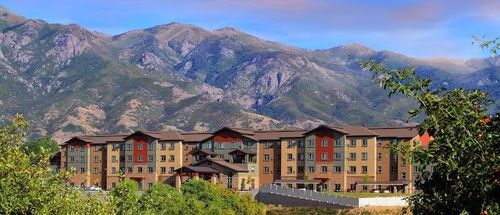
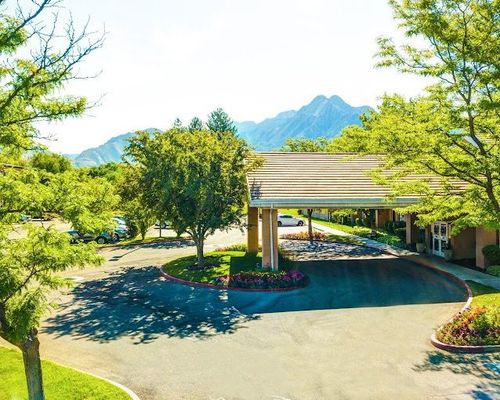
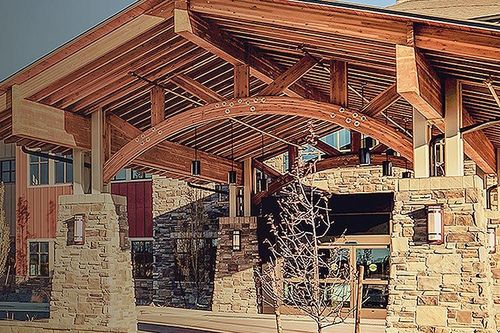
Within the senior-living directory the skilled-nursing-level options are small and clinical, since 3 Salt Lake County communities carry it and they sit in just two cities about fifteen minutes apart. Salt Lake City has Auberge at Aspen Park, which extends nursing-level support inside an advanced memory-care setting, while Taylorsville holds the other two, Meadow Peak and Summit Vista, the latter a continuing-care campus that bills nursing services on a daily rate. Most short rehab in the county actually runs through freestanding centers and hospital-attached units, so the directory set is deliberately the handful of residential campuses that fold nursing-level care in alongside their other neighborhoods.
Why the Setting Around the Nursing Matters
The common thread across all three is the care itself, with registered and licensed practical nurses on the floor at every hour, medication and wound management, and therapy aimed at getting a body back to strength. What differs is the setting around that care, because Auberge wraps the clinical support inside a secured memory-care environment, which suits a resident who needs both dementia oversight and skilled recovery at once, while the Taylorsville campuses run nursing care as one level inside a broader community, so a resident can move from rehab into a long-term apartment without changing buildings or starting over with new faces. That continuity matters most when nobody yet knows whether the stay is temporary.
The Two Pay Clocks Behind a Skilled Stay
Skilled nursing is billed differently from the rest of senior living, so a single monthly rent rarely fits. A short recovery stay after a qualifying hospital admission is often covered by Medicare for up to 100 days, with the first 20 days paid in full and a daily coinsurance near $217 after that in 2026, and once that window closes a longer self-funded stay in Utah is priced by the community, with $8,400 - $10,000/mo a useful starting reference, while Utah Medicaid covers long-term nursing care for residents who meet the medical-need and financial limits. The practical reality is two pay clocks running at once, since a Medicare-covered recovery and a Medicaid or private-pay long-term stay are approved on entirely different terms.
Why Skilled Nursing Is the Valley's Rare Exception
Salt Lake County is home to roughly 1.2 million people, more than a third of Utah's total, and about 130,000 of them are 65 or older, an older share that explains the county's deep assisted-living and memory-care inventory across Sandy, Murray, South Jordan, and the metro core. Skilled nursing is the exception, and the set is small here precisely because most post-hospital recovery moves through the rehab wings of Intermountain Medical Center, the University of Utah Hospital, and LDS Hospital rather than through stand-alone senior-living buildings. When a family does need a residential campus that carries the nursing level, the short list is these three, and a discharge date set by the hospital often means availability and the right pay source have to line up inside a two-to-three-day clock.
How an Advisor Beats the Hospital's Discharge Clock
The hard part of skilled nursing is speed, because the discharge date belongs to the hospital, not the family, so the real question is which option has an open bed and accepts the right pay source before that date arrives. The work is tracking current openings across the three communities and knowing which take Medicaid for a long-term stay versus which run on private pay or a continuing-care contract, so nobody is phoning every building from a hospital hallway. It also means reading the Medicare-then-Medicaid timeline, the point where a 100-day recovery benefit ends and a long-term funding source has to take over, and lining up the paperwork before that gap opens.
Reach out to find out which Salt Lake County community fits the discharge and the pay source, or browse the communities we have vetted to see the published Salt Lake City and Taylorsville pages in full.