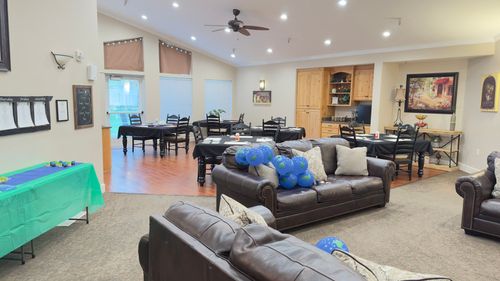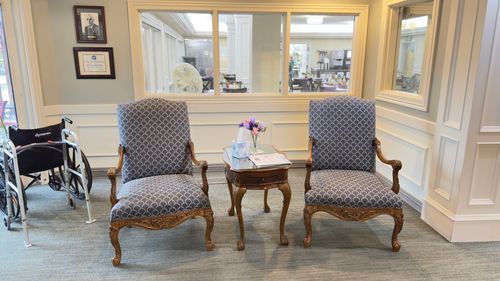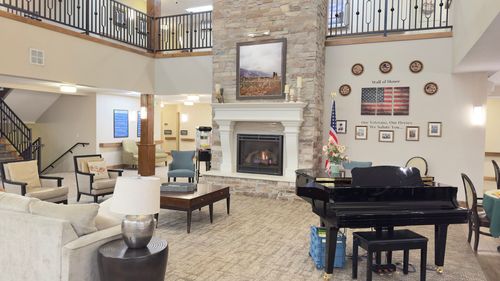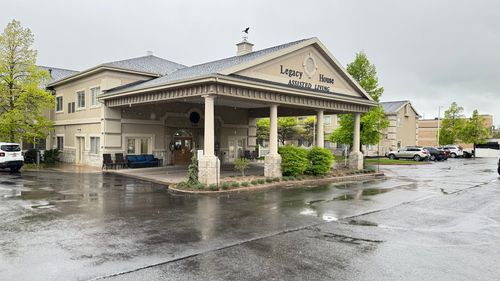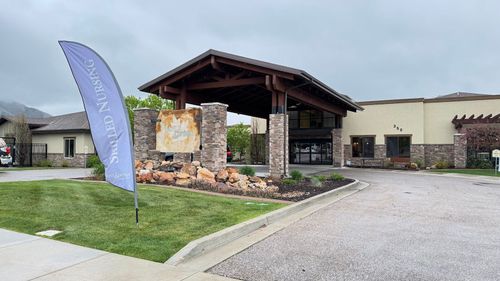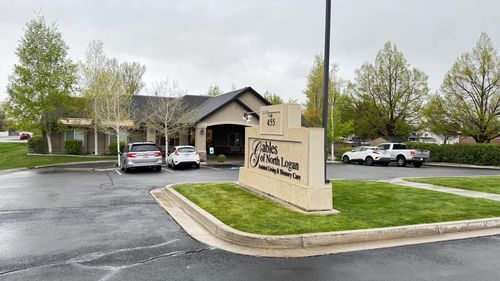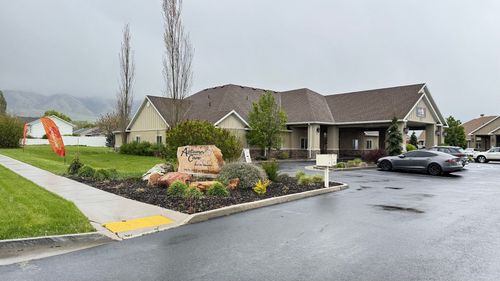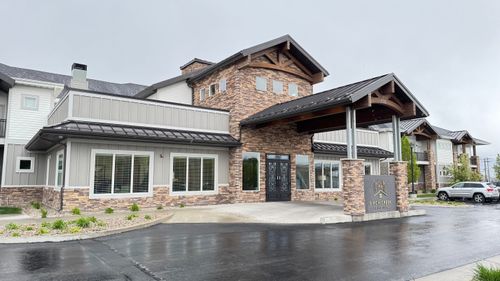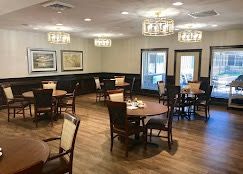

Box Elder County's dementia question turns on geography first, architecture second. Inside Tremonton city limits, the entire published dementia-care service lives at one address: Our House of Tremonton, 429 North 400 West, where a secured side configured for up to 18 residents sits inside a 33-resident building. Travel a half-hour south and the picture widens; Brigham City carries three dedicated secured-wing addresses (Gables of Brigham City, Maple Springs, Pioneer Care Center) with deeper dementia inventory.
For families rooted in Garland, Honeyville, or central Tremonton, that thirty-minute split matters more than any spec sheet comparison. Multi-generation Bear River Valley households, whose Sunday calendars still run through Main Street and decades of ward connections, weigh in-valley placement against secured-wing depth quickly. Most land on the in-city option until the dementia stage pushes past what a household-scale building can safely hold.
How the Local Secured Side Runs
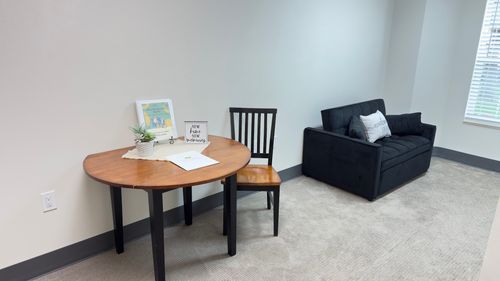
Our House configures the dementia neighborhood as a separate household zone within its 33-resident building, not a freestanding wing. Dementia-trained caregivers cover daytime hours, sightlines stay short so residents remain visible, and consistent caregiver faces across shifts let each resident's preferences and routines become familiar. That household-scale feel reads differently than the 30-to-50-resident secured neighborhoods inside larger Wasatch Front campuses.
Day-to-day care covers what brings families to memory care: medication oversight tuned to swallowing and timing, bathing paced to morning energy, dressing and transfer support, plus extra supervision through sundowning hours. With only 33 total residents, activities run small and intimate (quilting circles, music, devotional time, supervised outdoor moments). Bear River Valley Hospital sits five minutes south on Main Street; its 25-bed Level IV trauma campus handles routine dementia-care medical events: post-fall workups, infection-driven confusion, behavioral evaluations.
Cost and Coverage
Secured-side monthly rates sit in the $4,800 to $6,200 band for 2026, clustering around $5,300 for most apartments. The figure rises above the assisted-living tier because state licensing carries higher dementia-trained staffing ratios and household-management features. Moving from assisted living into the secured neighborhood typically layers another $750 to $950 onto the prior figure. Move-in fees land between $1,000 and $3,500, with respite billing $170 to $220 per night.
Funding stays entirely private, so when a family's dementia plan hinges on Aging Waiver coverage, the search usually shifts south to the Brigham City corridor or the broader Ogden corridor, where several buildings carry active waiver contracts. The opening conversation walks both routes, with the drive-time trade-off named plainly.
Local Demand and Healthcare
Tremonton grew from 9,900 residents at the 2020 count to roughly 13,700 today, lifted by young-family subdivisions along the city's edges, while the senior share sits mostly with long-tenured agricultural and ward-rooted households in the historic core. Applied against the national one-in-nine dementia rate among older adults, the local pool of households navigating a diagnosis stays small but steady, divided between the in-city secured side and the half-hour-south Brigham City inventory.
Openings on the secured side surface as individual residents transition, usually when a dementia trajectory shifts toward higher-acuity skilled-nursing care or hospice. Discharge clusters out of Bear River Valley Hospital can compress timing along the corridor when behavioral-health flags hit several placements in the same week.
Why Families Choose Memory Care in Tremonton
Familiar surroundings carry weight in dementia care that no other senior-living tier matches, because relocating someone with cognitive impairment into a space they cannot read amplifies the disorientation the disease already produces. Inside Our House, a resident keeps the Bear River Valley horizon they have framed their days against for decades, ward connections inside the visiting pattern, and the agricultural calendar (planting, harvest, back-to-school) that has run the week all along.
Geography supports the visiting rhythm: adult children commuting from Garland, Honeyville, or central Tremonton can keep weekly visits realistic across the longer arc dementia care follows, and that cadence matters because disorientation deepens when familiar faces show up at irregular intervals.
What a Local Advisor Brings to Tremonton
The memory-care call into Tremonton typically arrives after a stretch where overnight safety has started failing and the household rotation no longer covers the dementia load. The trigger might be a spouse waking before dawn to a partner working the door handle, an aide calling in sick without backup, or behavioral shifts surfacing between weekly visits that longer intervals cannot bridge.
First on the advisor's checklist: lining up secured-side availability against the family's window, then confirming the resident's stage and behavioral profile sit comfortably inside what a 33-resident building with a secured side can carry. If both check out, work moves into apartment specifics and move-in. If the side is full or the needs push past scope, the advisor opens the comparison to Brigham City's secured-neighborhood inventory and the Ogden corridor dementia-care set. Talk it through with an advisor before a hospital event narrows the window.