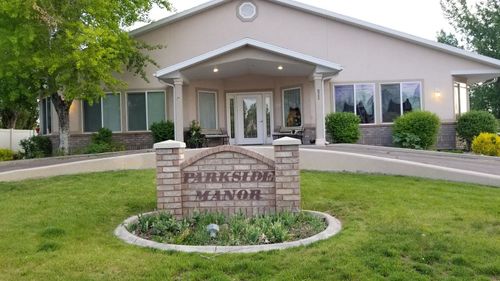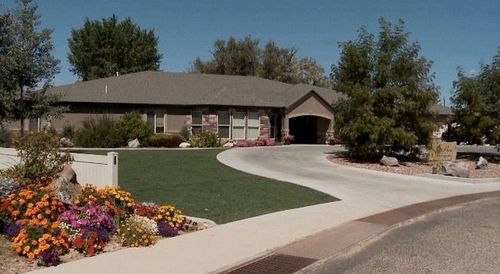

BeeHive Homes of Vernal stands out among small care homes for what it leads with: secured memory care, run inside a single house of up to sixteen residents on 2050 West, alongside traditional assisted living. It is the home-style choice in this Uintah Basin town, what some families call a care home, board-and-care, or adult family home, a place where someone lives in a house with a handful of others instead of a wing of a large building. For a town of about 10,000 this far east, having 1 small home that does secured dementia care, not just assisted living, is a genuine resource.
A Vernal family looks here most often when memory loss has made a regular home unsafe and they want a small, secure setting close by rather than a long drive to a city memory-care wing. The same house also takes residents who need everyday assisted living, but its structured, secured side is what sets it apart in the Basin.
A Small Home Built Around Memory Care
Because memory care is its focus, BeeHive in Vernal runs as a secured house: doors a resident cannot wander out of, a calm and structured daily routine, and staff trained for the confusion and agitation that dementia can bring. For a person with Alzheimer's, that small, contained world is often easier to navigate than a large locked unit with long hallways and many strangers. Residents who need plain assisted living share the same house, getting help with bathing, dressing, medications, meals, rides to appointments, and the rest of daily life, plus housekeeping and overnight staff.
With up to sixteen residents, the caregiver ratio stays low, which matters more in memory care than almost anywhere, since an anxious or disoriented resident gets a familiar person rather than a rotating crowd. The honest limits still apply: a house carries fewer group activities and a thinner social mix than a big community, and it cannot provide daily skilled nursing. A resident whose dementia reaches the point of needing constant medical care, or who simply wants the wider life of a big campus, is a different fit, and a large community is an equally valid answer for them.
The Cost of Memory Care in a Vernal House
At BeeHive in Vernal, the rate tracks the level of care. Assisted living starts around $3,900 a month, and the secured memory care runs higher, reflecting the added staffing and the structured, locked setting. Even the memory-care rate stays below the 2026 statewide average for assisted living, and well below what dedicated memory-care wings in larger cities often charge.
BeeHive is paid privately and does not take Medicaid, though long-term care insurance or Veterans benefits sometimes go toward the bill. The monthly figure rolls the room, meals, care, medications, and overnight supervision into a single charge, and because assisted living and memory care happen under the same roof, a resident whose dementia advances can move between them without changing buildings, with the rate adjusting to the higher level. What the price cannot buy is round-the-clock skilled nursing; a home like this provides custodial and memory care, not the clinical care of a nursing home, so a resident who reaches that need has moved beyond it. For a Basin family weighing this home against a memory-care community across the mountains, the in-town location and the lower rate usually tip the balance toward staying in Vernal.
One Home for a Wide Basin
Vernal is the county seat of Uintah County and the commercial center for a wide stretch of the eastern Basin, with Ashley Regional Medical Center drawing patients from four counties across two states. Even so, only about 12.7 percent of Uintah County's 35,000 residents are 65 or older, a younger profile shaped by the oil and gas economy, and that senior population is scattered across a large rural area. The result is real but thin demand, enough to support a single small home in Vernal and little more. With sixteen beds split between assisted living and memory care, a secured memory-care spot in particular can be scarce, so a family that needs one should ask early.
Why a Small Secured Home Suits Memory Loss
For a resident with dementia, the case for a small secured home is not really about size for its own sake; it is about what memory loss needs. A house of sixteen offers fewer hallways to get lost in, fewer unfamiliar faces to alarm, and caregivers who learn a resident's history well enough to head off a hard moment before it builds. Meals come from a kitchen the resident can smell, the daily rhythm stays steady, and a visiting family walks into a living room rather than signing in at a locked ward. None of that makes a small home right for everyone; a resident who is still socially active and independent may do better with the fuller calendar of a large community, and that is a fair preference. But for the specific challenge of keeping someone with memory loss calm, oriented, and known, a small secured house in Vernal answers it about as well as anything can.
Matching a Resident to Vernal's One Home
With one home in town, an advisor's job in Vernal is to match a resident to it honestly: whether BeeHive's secured memory care fits where the dementia actually is, or whether assisted living is the right starting point, and whether the home has the kind of opening that situation needs. The advisor knows how the secured side runs day to day, when a memory-care room comes free, and how the home handles a resident whose needs are climbing.
A secured house like BeeHive carries a resident a long way into dementia but not into the round-the-clock nursing the late stages can require, and seeing that turn coming keeps a move from becoming a crisis. Talk it over with us, or see the homes we've covered at your own pace.