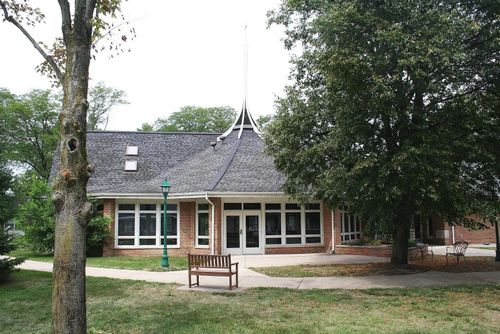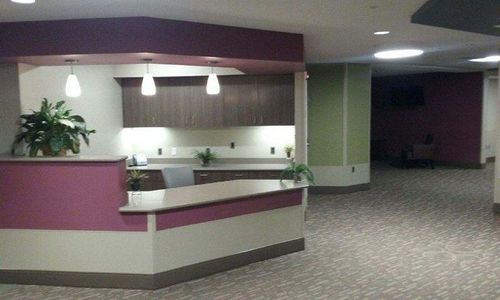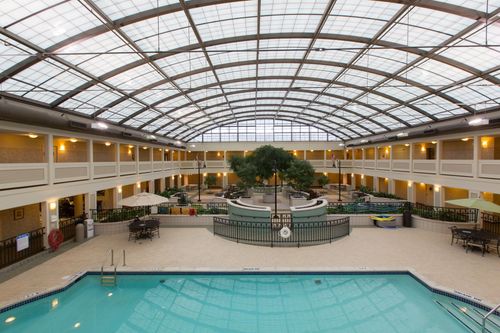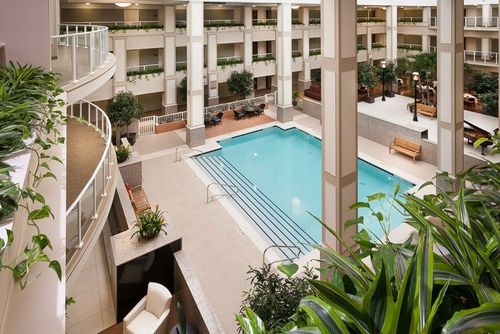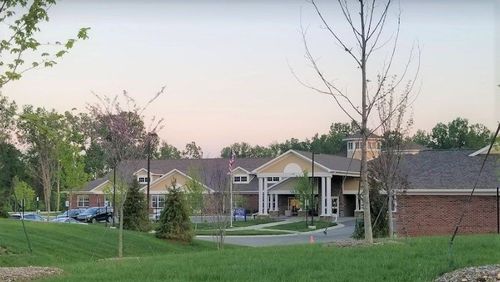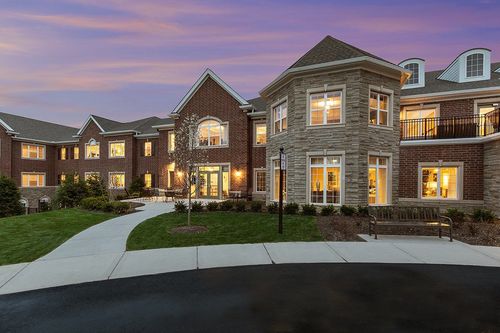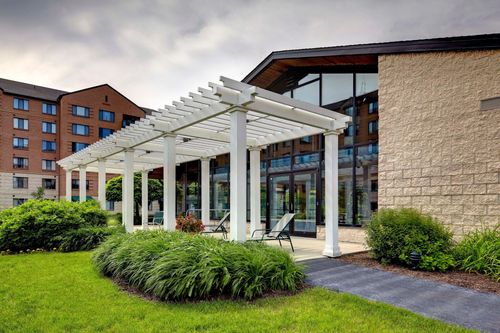
Skilled nursing in Dearborn sits at the top of a continuing-care campus rather than in a standalone nursing home, and that changes who ends up in the beds. Allegria Village on Ford Road runs 132 beds across independent apartments, assisted living, a secured memory-care neighborhood and nursing care, so a substantial share of the people in its nursing wing were already living somewhere else on the property.
The campus also participates in Medicaid, which is uncommon for a continuing-care community and matters most at precisely this level, since nursing is where private savings disappear fastest.
Clinical Care Rather Than Daily Support
Skilled nursing is the one level of senior living organized around medicine rather than around the day. Licensed nurses work the floor around the clock rather than being on call, a physician oversees the medical plan, and the timetable is built around therapy: physical therapy for strength and walking, occupational therapy for the business of dressing and washing, and speech therapy where eating or speech has been affected.
Oxygen, intravenous medication, wound care and the management of catheters and feeding tubes all sit inside the license, which is precisely where assisted living and memory care stop. Most residents arrive on a recovery timeline after a fracture, a stroke, surgery or a long admission. A meaningful share do not leave on one, and on a campus like this that transition is handled by changing a care plan rather than by finding another building.
How a Nursing Stay Is Actually Funded
Skilled nursing does not price like the rest of senior living, and most residents do not begin by paying for it at all. Medicare pays for a defined stretch following a qualifying hospital admission, entirely at the start and then against a daily co-payment, and it stops when that stretch expires rather than when somebody feels ready.
What follows is where Dearborn differs from most of the county. A stay continuing past that point becomes private pay at a daily rate or moves onto traditional Medicaid, which is the program covering long-term nursing rather than the MI Choice waiver that reaches assisted living. Because the Ford Road campus takes Medicaid, a resident who outlives their savings is not obliged to move. A household weighing an entry fee at a continuing-care community should understand what that fee commits them to alongside what it protects.
An Inner-Ring City Inside a Very Large County
Wayne County is Michigan's largest, and although seventeen percent of it is 65 or older, that share still amounts to 300,122 people. Dearborn sits in the dense inner ring where households have generally owned the same house for decades.
For skilled nursing that density cuts a particular way. There are beds within reach in every direction, but only one nursing-level address inside the city itself, so a household wanting a resident to stay in Dearborn is choosing that campus rather than choosing among several.
More Hospital Capacity Than Almost Anywhere
A nursing decision is usually made against a discharge date, which makes hospital geography unusually relevant. Corewell Health Dearborn sits under four miles away with 632 beds, trauma verification, accreditation as a primary stroke center and teaching programs run with Wayne State University School of Medicine across orthopedics, neurosciences, heart and vascular and cancer care.
Two top-level trauma centers lie inside eight miles, since Henry Ford Hospital runs 877 beds and Michigan's largest intensive care unit, while DMC Detroit Receiving was the state's first hospital to hold that designation and keeps its largest verified burn center. Very little has to travel far from a Dearborn address, and a resident returning to Ford Road afterwards is going back to somewhere already familiar.
Deciding on a Clock
A skilled-nursing decision is usually made in days rather than weeks, with a discharge date fixed and a case manager waiting. What settles it here is whether the nursing wing has a bed, which coverage applies at the point of admission, and what an entry fee at a continuing-care campus actually commits a household to.
A Local Senior Advisor covering the inner-ring suburbs can answer all three quickly, and can explain which levels on the campus accept which program, which is the part households most often get wrong. Where a family has a discharge date and is being asked to commit to a campus they have never visited, it is worth a short conversation before signing anything.
Our Dearborn directory keeps expanding as we evaluate providers for quality and alignment in 2026. Start the conversation about skilled nursing in Dearborn, or look through the buildings we cover at your own pace.