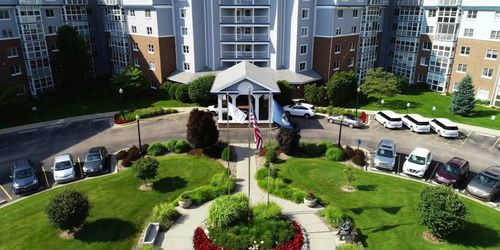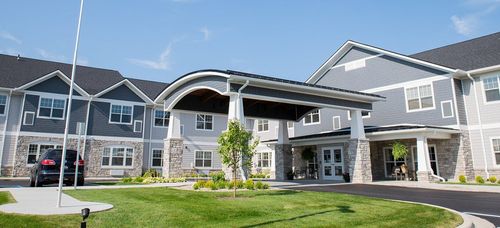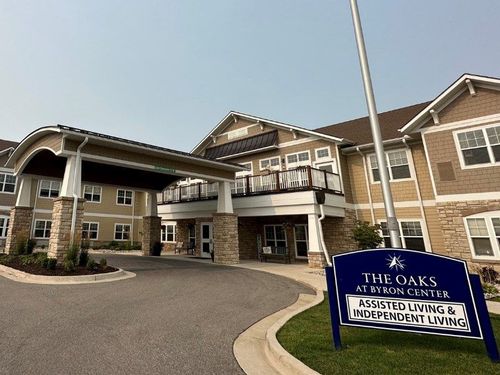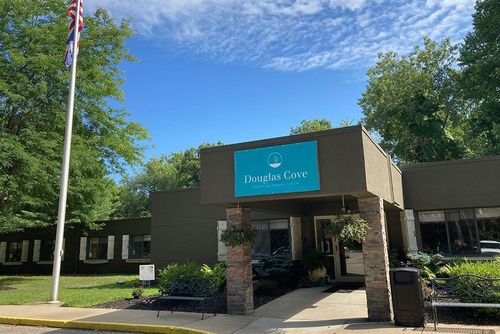

Nursing-level care in Douglas is available inside a building that also runs daily support and secured dementia care, and it participates in Medicaid. At this tier that second fact carries more weight than anywhere else on the care ladder, because nursing care is where private funds most often run out and where Medicaid most often becomes the payer.
That combination in a lakeshore town of barely a thousand people is genuinely unusual. The 1 local skilled nursing option means a resident needing continuous nursing does not have to leave the town, and a household whose money eventually runs short does not have to move them again when it does.
What the Nursing Tier Provides
This is licensed cover around the clock and clinical direction of a care plan rather than help with the day. Therapy is scheduled around a specific recovery, wound care and intravenous treatment are given on site, medication is managed as a clinical matter rather than prompted, and a physician oversees the plan rather than calling in on it.
Most residents at this level arrive to recover rather than to settle, since a fracture, a stroke, a cardiac event or a long convalescence all generate the same need: more supervision than a household can give and more therapy than an outpatient timetable delivers. Where recovery turns out to be partial, the same licence supports a longer stay, and the levels beneath it on the same property mean a resident who improves has somewhere to move that is not another town.
What It Costs and How It Is Funded
Whatever the building charges at its lower levels tells a household nothing about this one, because nursing care is costed on its own basis entirely, so the figure has to be asked for directly and on paper. Doing that at the outset heads off the misunderstanding families most often bring to this tier.
Funding usually opens with Medicare, whose support at this level lasts a fixed run of days once somebody has had a qualifying hospital admission, and that run is what carries most rehabilitation stays. What follows is private payment or traditional Medicaid long-term care for residents who qualify financially, and this is where the address matters, because a building that participates is the difference between a resident staying and a family arranging a move at the worst possible moment. Note that this is traditional Medicaid rather than the MI Choice Waiver, which covers assisted living and similar settings.
A Thin Tier in a Small County
Around 24,000 Allegan County residents have passed 65, roughly a fifth of the whole, spread between farm townships and a lakeshore where the summer population swells and thins. Nursing-level capacity across a county like that is limited wherever you look.
Skilled nursing here is therefore not something a household compares, because discharges run on days and a family working out at that point where nursing care exists in the western half of the county, and which of it takes Medicaid, has started far too late.
Why the Same-Building Arrangement Matters
For a resident whose recovery is incomplete, the ordinary version of this story is a nursing placement followed months later by a second move once the level of care no longer fits. Here both directions are available on one property: somebody who improves moves down a level and somebody who does not stays where the clinical cover is.
The hospital picture is straightforward and looks north rather than inland. Twelve miles up the shore, a private not-for-profit of 189 beds covers surgery, cardiology, intensive care, behavioural health and round-the-clock emergency work with more than 400 physicians across upwards of forty locations, while serious trauma travels toward Kalamazoo or Grand Rapids.
What a Local Advisor Adds Here
Nobody sets the pace at this tier except the hospital. A Local Senior Advisor covering the Allegan lakeshore can establish whether a nursing bed exists, what the rate actually is, and what the Medicaid participation means once the paperwork is examined, which is a longer answer than a simple yes.
The Medicaid question is the one worth raising first rather than last, since eligibility rests on an assessment and on financial limits that take time to work through, and a household beginning that process while it still has funds is in a far better position than one beginning after they are gone. Families are welcome to reach out at the point a hospital stay starts.
Our Douglas directory keeps expanding as we evaluate providers for quality and alignment in 2026. Start the conversation about skilled nursing in Douglas, or scan the buildings we cover at your own pace.