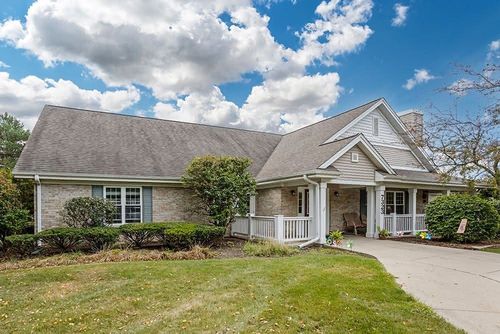
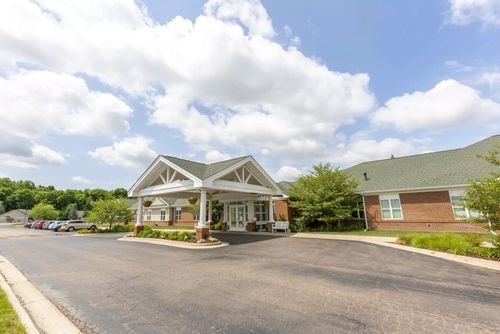
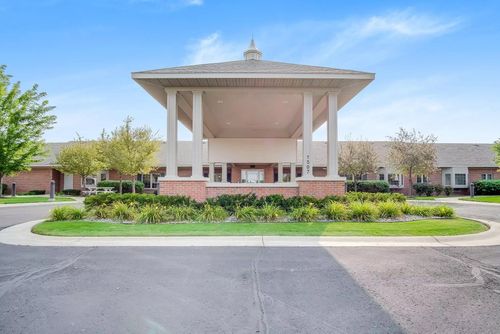
East Lansing, MI

Pet-Friendly Senior Living in East Lansing

One pet-friendly community in East Lansing, MI — with free, unbiased guidance from local advisors.

1
Community
1
Medicaid Accepted
$4,474
Avg. Monthly Pricing

Explore Pet-Friendly Senior Living in East Lansing

One pet-friendly community to review, with free guidance from a local advisor.

View all communities in East Lansing

What to Expect From Pet-Friendly Senior Living in East Lansing

  • Pets welcome: All 1 community welcomes pets.
  • Setting mix: 1 ccrc in the matching set.
  • Price range: From $4,474/mo across the matching set.

East Lansing is an unusually easy place to be an older adult with a dog, and the reason sits half a mile from most of the senior housing in town. The Michigan State University Veterinary Medical Center runs a full specialty and emergency animal hospital on campus, so the two things that most often unsettle a pet owner considering a move, namely who treats the animal and what happens at two in the morning, have a local answer here that very few Michigan towns can offer. A small number of senior communities in the city welcome animals, Burcham Hills Retirement Center II among them, and the Red Cedar corridor gives residents somewhere flat and paved to actually walk one.

What a Pet Owner Signs Up For Here

Welcoming animals is never unconditional, and the conditions cluster in predictable places. A community will set how many pets an apartment may hold, a size limit for dogs, sometimes a list of breeds its insurer declines to cover, a deposit collected once, and a charge that recurs monthly. Current shots, proof of spay or neuter, and occasionally a short introduction between staff and the animal come before any of that is signed.

The condition that ends more arrangements than any rule is the daily work. Someone has to walk the dog in a February sleet at seven in the morning, take it to appointments, and be reachable if the resident is admitted to hospital. Communities ask for that person by name and in writing, which sounds bureaucratic until the week it is needed. A campus like Burcham Hills, where a resident may move between levels of support over several years, makes the question sharper still, because the amount of help a resident needs is not fixed for the duration.

What the Animal Adds to the Monthly Figure

The base rate at the pet-welcoming senior housing in East Lansing starts around $4,474, and the animal is charged separately from it. A deposit lands once at move-in, and whether any of it comes back depends entirely on the building, while the monthly pet charge continues for the animal's whole life in the building and quietly overtakes the deposit in total cost.

The costs outside the building are the familiar ones. Food, litter, and routine veterinary visits carry on unchanged, and specialty treatment at the campus hospital is not inexpensive, though having it nearby saves a long drive at a bad moment. Michigan requires a license for any dog over four months, issued through Ingham County against a current rabies certificate, with a multi-year option that costs less than annual renewal. Service animals and documented assistance animals are exempt from every one of those pet charges, because housing law places them outside pet policy altogether.

Matching the Animal to a Building

Start with the animal rather than with the building. Species, weight, and number settle most of the question before a single tour is scheduled, since cats move almost anywhere on the local list while a large dog cuts it down and a second animal cuts it further. Getting those three facts stated plainly in the first phone call is the difference between three useful visits and six wasted ones.

After that, look at what the resident can still do unaided. Someone who walks their own dog along the Red Cedar path has the widest choice in town. Someone who needs staff or family to handle the walking has a narrower one, and someone moving into a secured memory-care setting faces a decision made individually rather than by policy, since a building has to weigh whether the resident can still care for an animal at all. That last question deserves asking early, because the answer does not carry over from one part of a campus to another.

What a Local Advisor Brings to East Lansing

A published pet policy is a snapshot, and it goes out of date without anybody updating a website. Size limits move when an insurance carrier changes, deposits shift between refundable and not, and a building that took two animals last spring may take one now.

An advisor covering Ingham County holds the current version across the local communities, which matters most when the animal is the reason a household has been putting the decision off. If keeping the dog or the cat is the condition of moving at all in East Lansing, it is worth a short conversation before the first tour gets booked.

Our directory for East Lansing continues to grow as we evaluate providers for quality and alignment in 2026. Reach out for a conversation about pet friendly in East Lansing, or look through the communities we have vetted at your own pace.

Advisor Insight on
Pet-Friendly in East Lansing

East Lansing holds an advantage most Michigan towns lack for older pet owners, since Michigan State University runs emergency and specialty animal care inside the city itself. What still varies address by address is the size limit, the number of animals allowed, and whether a pet follows a resident into a higher level of support.

Pet-Friendly Senior Living Near East Lansing

Pet-Friendly communities within 25 miles of East Lansing.

Frequently Asked Questions About Pet-Friendly Senior Living in East Lansing

Do senior communities in East Lansing allow dogs and cats?

Some do, and those are the ones listed on this page. Cats face the fewest obstacles, since they stay indoors and rarely encounter a size rule, and small dogs are widely accepted as well. Larger dogs depend entirely on where a particular building sets its limit, and that figure varies more than most families expect across a town this compact. Birds and fish are usually permitted and are often not counted toward a pet limit at all, while reptiles and unusual animals are seldom accommodated anywhere. The useful move is to describe the actual animal at the outset rather than asking in general terms whether a community welcomes pets.

Where is the nearest emergency vet to East Lansing senior living?

The Michigan State University Veterinary Medical Center sits on the campus in East Lansing and runs emergency and specialty services alongside its teaching hospital, which makes it the closest option for most senior housing in the city. Having a facility of that scale within a few minutes is a genuine advantage for an older owner, both because a late-night crisis does not mean a long drive and because complex conditions can be managed locally rather than through referral elsewhere. Routine care is handled by the general practices around town, and a family arranging a move should confirm the animal's records are current and transferable before the move rather than after.

How much do pet deposits and monthly pet fees run at senior living?

Communities typically charge in two ways at once, and the two behave differently. A deposit is collected at move-in as a single payment, sometimes returned in part when the resident leaves and sometimes retained regardless, and it is meant to cover the wear an animal puts on an apartment. A monthly charge is separate and recurs for as long as the animal lives there, which means that over several years it becomes the larger of the two figures even though the deposit looks more substantial on signing day. Neither amount is fixed by any Michigan rule, so both are set by the individual building and both should appear in writing next to the base rate.

Can a resident keep a pet after moving into memory care?

Sometimes, and the answer belongs to the specific building rather than to the community's general pet policy. Secured settings apply tighter conditions for reasons of safety rather than preference: someone whose memory is failing may stop feeding or walking an animal without noticing, a secured door cannot stand open while a dog goes out, and the other people living on that floor have needs of their own to weigh. Some East Lansing arrangements do work, usually where a family member takes on the daily care and visits regularly to do it. Plenty of other arrangements simply do not work out. Raising the question well before a move, rather than assuming an answer carries across a campus, is what prevents a painful surprise later.

Where can an older resident walk a dog in East Lansing?

The paved path along the Red Cedar River is the most practical route for most residents, since it is flat, well surfaced, and long enough to suit either a short outing or a proper walk. The Michigan State University campus adds a large network of walkable ground that stays busy and well lit through the academic year. Several senior communities in the city also keep looped paths on their own grounds, and through a Lansing winter that shorter loop tends to be the one that actually gets used day to day. Leash rules apply in public areas, and Michigan requires any dog over four months old to hold a current county license.

More Senior Living in East Lansing

Get Help Finding Pet-Friendly Senior Living in East Lansing

Our local advisors know every pet-friendly community in East Lansing personally. Get free, unbiased recommendations tailored to your family's care needs, budget, and location preferences.

Free service · No obligation · We only recommend what's right for you