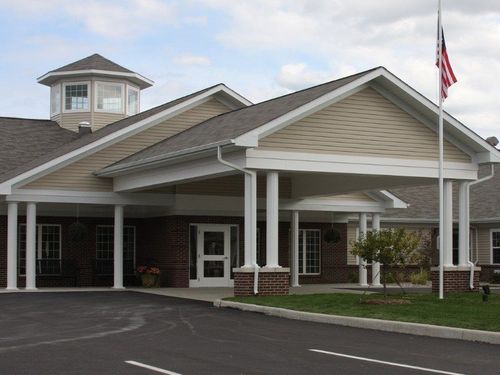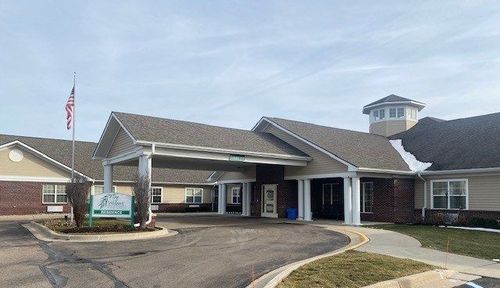
Nobody plans for skilled nursing, because it arrives attached to a hospital discharge inside a window of two or three days, and the family doing the choosing has generally never thought about it before that week. East Lansing has 2 addresses offering it, both substantial buildings running from around sixty-five residents up past a hundred, and both take respite guests.
The other thing worth knowing at the outset is that skilled nursing splits into two quite different things sharing a corridor. One is a short rehabilitation stay after surgery, a fracture, or a stroke, with the aim of going home. The other is long-term nursing care for somebody whose medical needs can no longer be met anywhere else. Most families arrive assuming the first and need to understand the second.
Therapy, Nursing, and Medical Oversight
A skilled nursing stay is built around licensed clinical care, which is what separates it from every other kind of senior living. There is registered nursing coverage around the clock rather than during the day, a physician overseeing the medical plan, and therapy delivered on a schedule rather than offered as an option.
For a rehabilitation stay, that therapy is the whole point. Physical therapy works on strength, balance, and walking; occupational therapy on the practical business of dressing, washing, and managing a kitchen; speech therapy on swallowing and communication after a stroke. Sessions typically run five or six days a week, and that intensity is what earns the coverage, so ask how many hours a day a resident will actually receive, since it varies between buildings more than anybody advertises.
Two Different Bills Behind One Door
The East Lansing addresses publish figures of $4,474 and $5,428 a month for 2026, though skilled nursing bills are frequently expressed as a daily rate rather than a monthly one, which is worth translating before comparing anything.
More consequential than either figure is the question of who pays, because a short rehabilitation stay following a qualifying hospital admission is usually covered by Medicare for a limited period, with coinsurance after the first stretch of days, and that coverage ends when therapy progress plateaus rather than when a family feels ready. Long-term nursing care is a different question entirely, funded privately until a household's resources are exhausted and then through traditional Michigan Medicaid nursing facility coverage rather than the MI Choice waiver used for assisted living. One local address participates in Medicaid, which matters enormously for anybody whose stay may become permanent.
Where the Lansing Corridor Discharges To
East Lansing sits beside one of the larger hospital concentrations in the state. University of Michigan Health-Sparrow Lansing runs seven hundred and thirty-three beds as a teaching hospital tied to Michigan State's medical colleges, and McLaren Greater Lansing opened a two-hundred-and-forty-bed campus just south of the university.
Two hospitals of that size generate a steady stream of post-surgical and post-stroke discharges into a limited number of beds. That is why the decision so often feels rushed, with a discharge planner working against a clock and availability changing daily. Families who understand the pattern beforehand handle it far better than those meeting it cold.
Why Staying in the Corridor Matters During Recovery
Recovery is the one part of senior living where visiting frequency has a measurable effect, because a resident who sees family regularly participates more in therapy and eats better than one who does not. A building fifteen minutes from home makes that ordinary rather than heroic.
Continuity of care matters at least as much, since a resident recovering from surgery keeps the surgeon, the cardiologist, and the records that go with them by staying inside the same corridor, and when something goes wrong during a rehabilitation stay, the hospital they return to is the one that operated on them.
What an Advisor Does Against a Discharge Clock
When a discharge planner says a patient is ready and a family has forty-eight hours, the useful contribution is not sympathy but current information: which local building has a bed at the right clinical level today, which will take a resident on a particular medication or with a specific wound, and how each handles the transition when Medicare coverage ends and a stay has to be re-funded.
The harder question runs underneath it, which is whether this is genuinely a short rehabilitation stay or the start of something permanent, because the answer changes which building is right and which financial route needs opening now rather than in three months, and it is worth settling before anything is signed. A short conversation at the point of discharge, rather than after it, is usually what gives a family a real choice between the two options rather than whichever bed happened to be free.
We keep expanding our East Lansing coverage as we evaluate providers for quality and alignment in 2026. Reach out for a conversation about skilled nursing in East Lansing, or browse the communities we have vetted at your own pace.