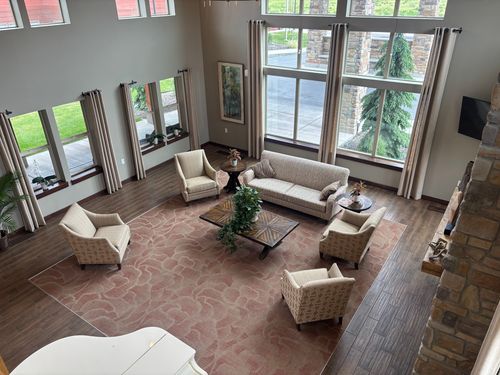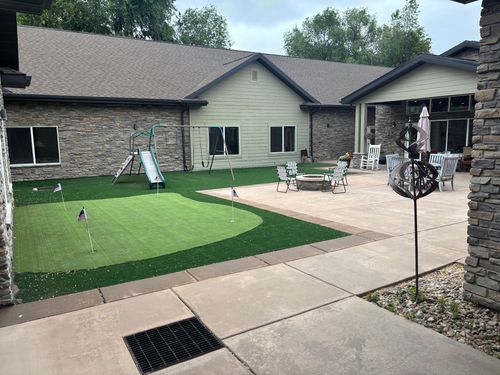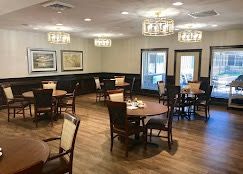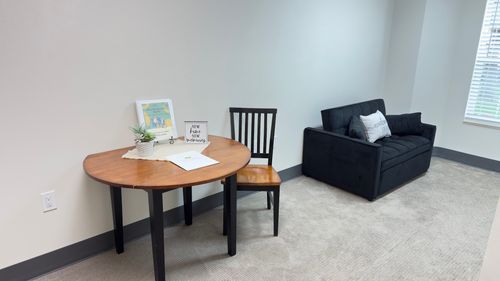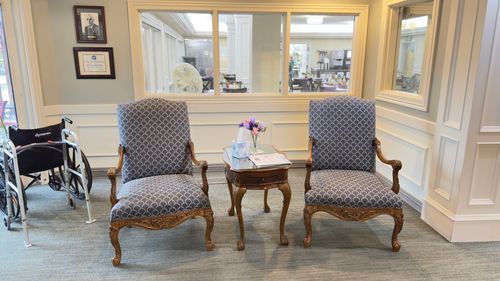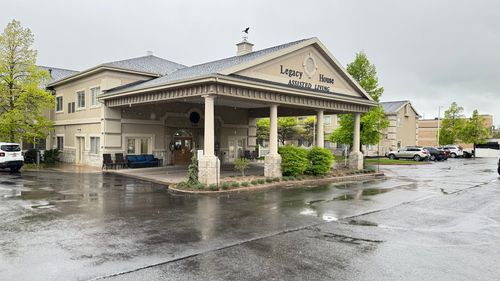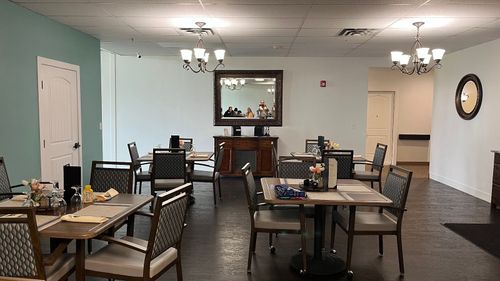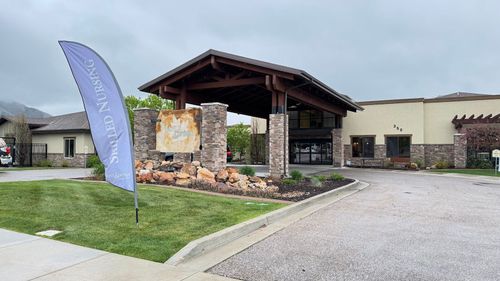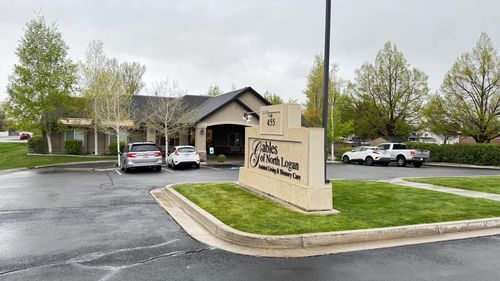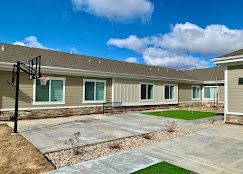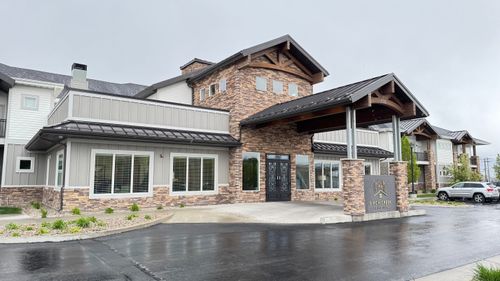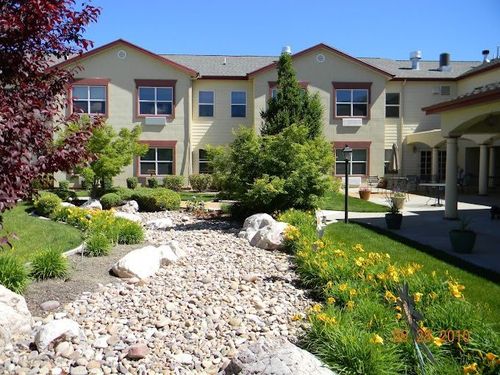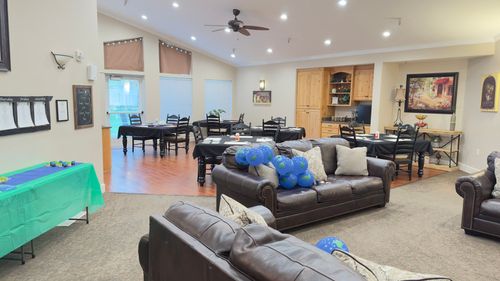
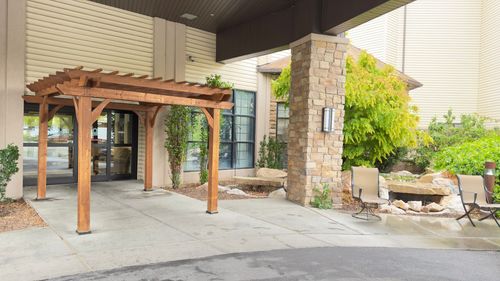

Memory care in Brigham City divides between two buildings with very different relationships to the dementia population. Gables of Brigham City on 800 West is the city's primary dedicated memory-care provider, with two-thirds of its forty-five total beds dedicated to the secured neighborhood: the building's daily rhythm, staffing model, and physical layout are organized first around dementia care, with a smaller assisted-living wing alongside. Maple Springs of Brigham City on Medical Drive carries memory care as part of its four-tier continuum (independent living, assisted living, memory care, and skilled nursing under one 60-resident roof), so the dementia tier operates inside a building also serving residents at every other care level.
That structural difference is the central decision point for a Brigham City family weighing memory care. A resident whose dementia is in earlier stages, who will benefit from a smaller-scale dementia-focused environment with a heavier activities concentration on memory-appropriate activities, often fits Gables. A resident whose family is already at Maple Springs in an earlier tier, or whose planning horizon includes the likelihood of needing skilled-nursing care later, often fits Maple Springs's continuum. Box Elder's senior demographics shape demand more than raw counts suggest: against a city population of 19,650, dementia prevalence among the older share (which itself runs around fifteen percent of residents) tracks near the one-in-nine national average, and the families needing secured care almost all surface from inside Brigham City rather than from elsewhere in the county.
Day-to-Day Care
Inside Gables's secured neighborhood, the day is shaped to reduce cognitive workload for residents whose memory has shifted. Caregivers stay awake through every overnight shift, controlled-entry doors and hallway loops are part of the building design, and the weekly calendar concentrates on music activities, sensory tabletop work, supervised garden time, and small-group reminiscence rather than the larger weekly bus runs and event-heavy schedule that an assisted-living-focused calendar would carry. With thirty memory-care beds out of forty-five total, Gables's staff-to-resident ratio and dementia-specific activities depth concentrate in a way smaller integrated-dementia buildings can't match.
Maple Springs's memory-care tier operates inside the larger continuum, which gives it a different feel. The dementia residents share a dining hall and outdoor courtyard with assisted-living and independent-living residents during programmed shared times, and move into the secured environment overnight or for dementia-specific activity blocks during the day. That mixed-tier exposure is part of what some families specifically seek for residents in earlier dementia stages who still benefit from broader social contact. The trade-off is that the dedicated dementia-activities depth is smaller than what Gables runs.
Family visiting hours stay open every day at both addresses, and both buildings keep alternate sitting spaces available for visits that land on a harder afternoon for the resident.
Cost and Coverage
Brigham City memory-care monthly rates run $4,500 to $6,500 in 2026, with most secured apartments near $5,200. Gables's dedicated memory-care neighborhood holds the entry-to-middle portion of the range on its all-inclusive pricing model, since the building's economics are anchored to the larger secured neighborhood. Maple Springs's memory-care tier prices toward the upper half of the band, reflecting the continuum architecture and the building's broader amenity package.
Neither Brigham City building currently carries an Aging Waiver contract. That's a real gap for Medicaid-track families. Waiver-eligible memory-care inventory begins on the Weber County side of the county line, roughly a twenty-minute drive down I-15, and concentrates across Ogden and South Ogden buildings with active contracts. For private-pay households, the local set works well at a noticeably lower cost basis than comparable Weber County addresses. Move-in fees fall $1,500 to $4,000, second-resident pricing for shared apartments adds $750 to $1,200 a month, and short-stay respite at either building prices $170 to $230 a day.
Local Demand and Availability
Gables's thirty memory-care apartments make it the deepest dedicated secured inventory in Box Elder County, which means it absorbs most of the local memory-care demand and a meaningful share of referrals from north along U.S. 89 (Tremonton, Garland, Willard) and from the broader Cache Valley north when Logan and North Logan inventory is tight. Turnover at Gables runs on a thirty-to-forty-five-day cadence under normal demand, though that can stretch when corridor-wide referrals cluster.
Maple Springs's smaller memory-care footprint cycles less often, and same-week placements there are rare unless the family is already inside the building at an earlier tier and the resident is moving through the continuum rather than entering fresh from outside.
Why Families Choose Brigham City
Dementia-care planning lives or dies by the weekly visit pattern, and Brigham City's geographic compactness makes that pattern more sustainable than an out-of-city move would. Most Brigham City memory-care families have adult children driving in from Logan, Tremonton, Willard, or other Box Elder addresses fifteen to twenty-five minutes away. A move to Ogden adds twenty minutes each direction and gradually erodes the visit cadence that anchors a dementia resident's orientation.
Brigham City Community Hospital on US-89 sits five minutes from both addresses for primary care and routine inpatient work. Higher-acuity neurology and dementia-specialist consultations that the Brigham City campus doesn't run in-house route down to the Intermountain McKay-Dee campus in Ogden, a twenty-minute drive on I-15. The Tabernacle grounds and Main Street historic district give visiting families and active-stage dementia residents a familiar walking environment that broader, less-grid-style cities can't reliably offer.
What a Local Advisor Brings to Brigham City
The practical question for a Brigham City family weighing memory care is which of the two buildings actually suits the resident, and the answer depends less on price than on the resident's dementia stage and the family's longer-horizon planning. Gables works for residents whose dementia is the central care issue and who will benefit from a building whose entire weekly rhythm orbits around memory-care activities. Maple Springs works for residents whose dementia is in earlier stages and who will benefit from the broader social mix of a continuum, or for households whose long-horizon plan includes skilled-nursing care at some point.
Neither building's Medicaid status makes the conversation easy for waiver-track families. For those households, the practical first step is usually a Weber County review: the broader waiver-participating inventory across Ogden and South Ogden makes the financial picture workable inside the family's planning window. The advisor pulls live availability across Ogden, South Ogden, and Roy dementia-care buildings alongside Brigham City's two so the family can weigh the in-Brigham-City geography against the financial reality.
Most Brigham City memory-care calls come in after months of trying to layer family schedules and rotating home-care hours around a dementia that's outgrown what the household setup can absorb. The events that move the conversation forward are usually overnight: wandering, a kitchen mishap, a winter wake-up that ends at the front door, an evening agitation pattern that paid home-care staff have started flagging as outside their training. Once those events land, what might otherwise drag into a multi-week shortlist process collapses into a few days of focused tours under the advisor's coordination.
Our Brigham City directory keeps expanding as we evaluate providers for quality and alignment in 2026. Start the conversation about memory care in Brigham City, or browse the buildings we cover for the area at your own pace.