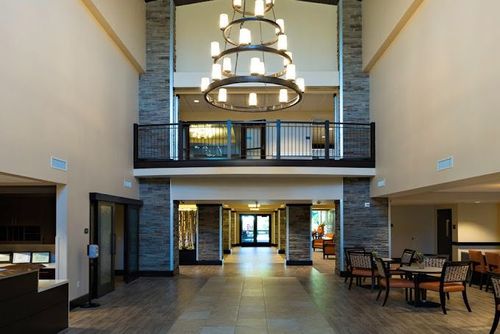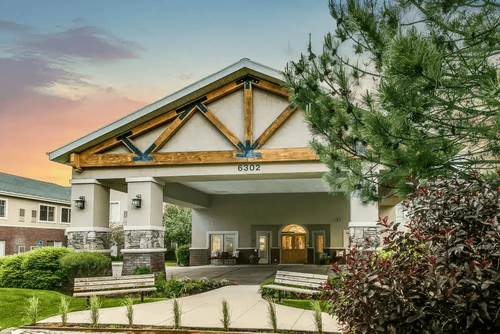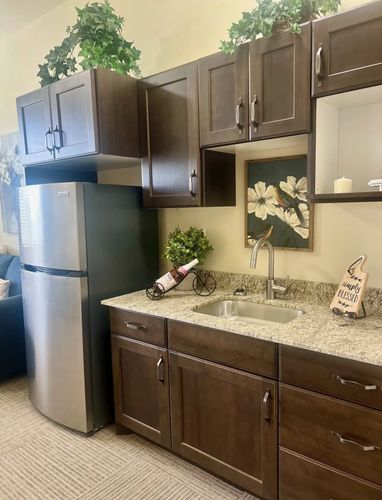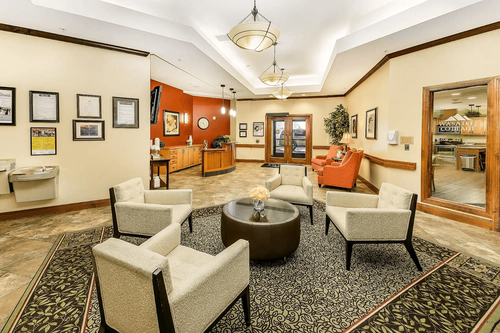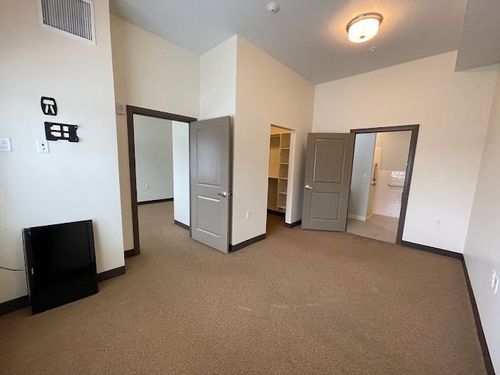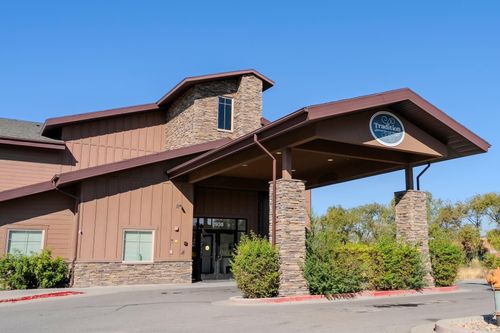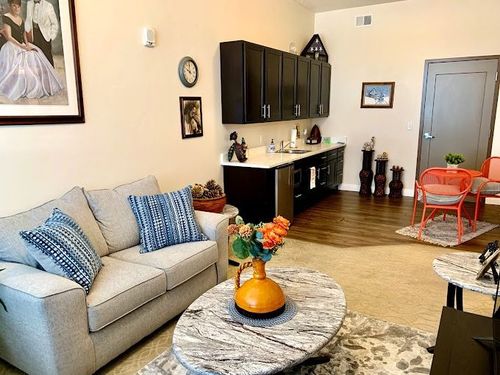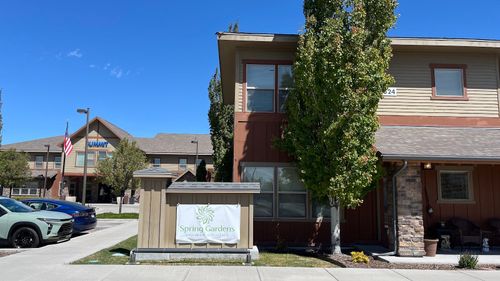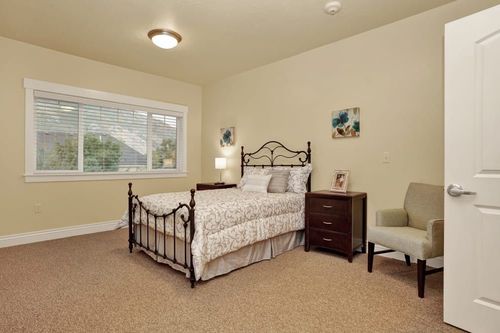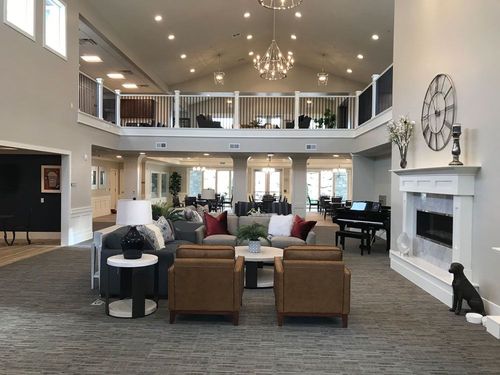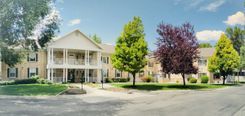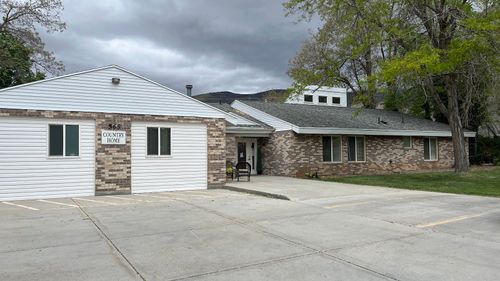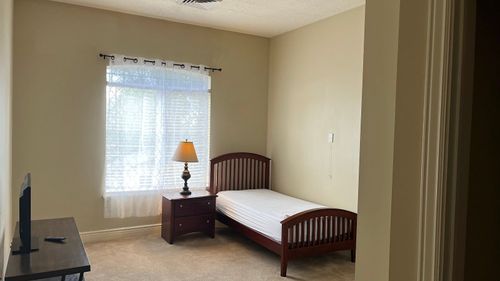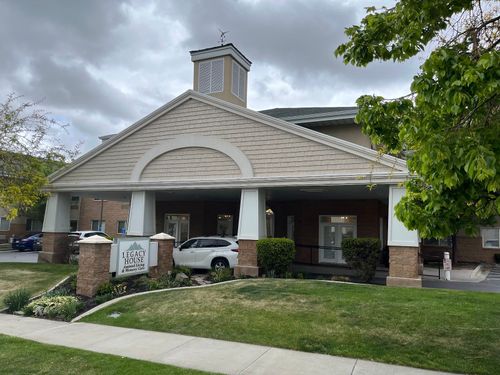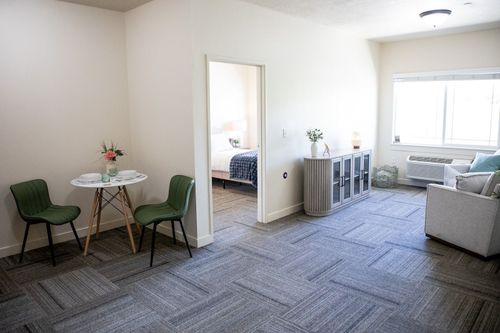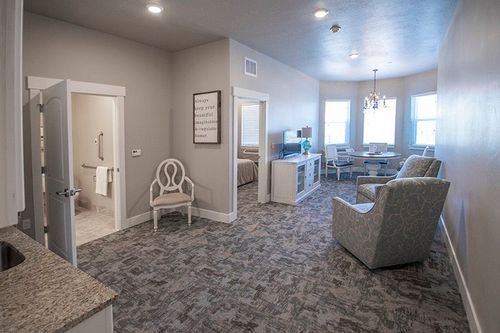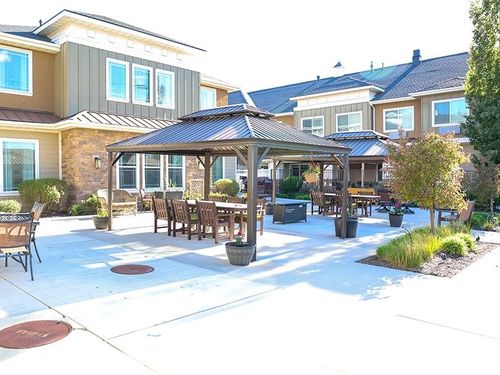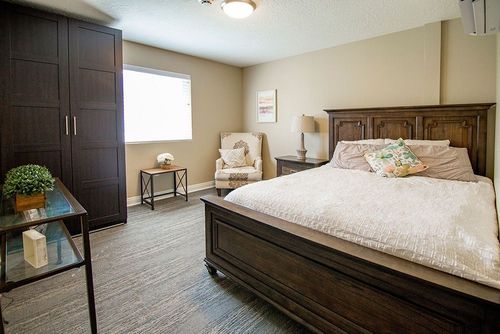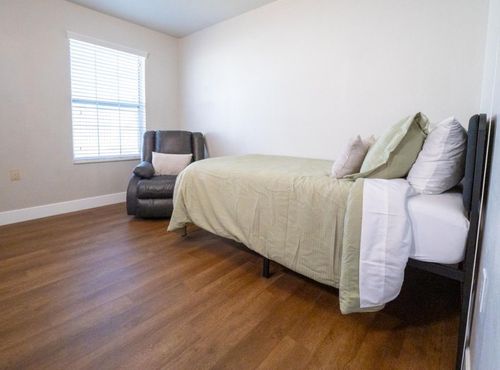
Coventry Senior Living's 32-apartment secured memory-care neighborhood at 6895 South Whitmore Way is Cottonwood Heights's only matching memory-care address, sitting inside the larger 162-apartment Wasatch Senior Living continuum on the east-bench side of the city. At 32 apartments, Coventry's secured side is among the deeper dedicated dementia-care settings in the south Salt Lake Valley, with the staffing depth and engagement variety a larger neighborhood scale supports.
The Cottonwood Heights memory-care decision, then, is not which building to pick but how Coventry's specific model fits the resident's dementia stage and the family's planning window. The neighborhood functions as a dedicated secured environment with its own dining room, courtyard, and staffing rotation, rather than a few rooms appended to an assisted-living floor, which puts the daily rhythm on a different basis than smaller-scale memory-care settings would offer.
How Coventry's Secured Neighborhood Operates
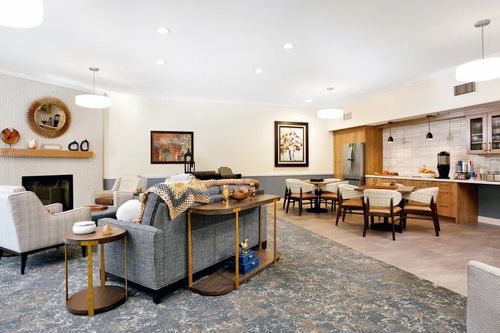
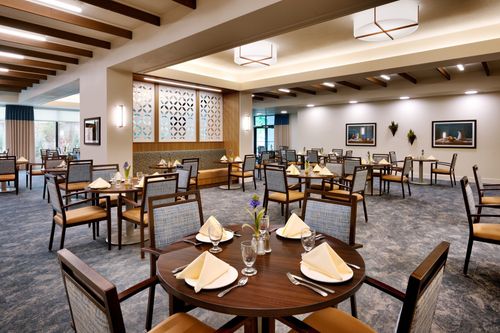
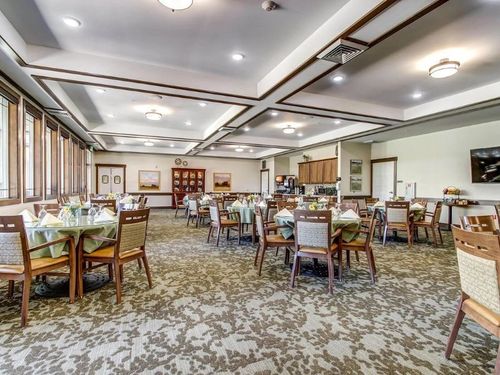
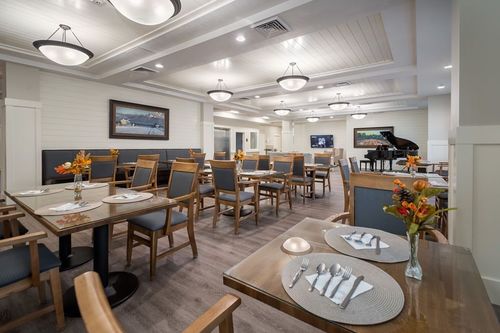
The 32-apartment secured side at Coventry runs on its own staffing rotation, separate from the rest of the campus. Dementia-trained caregivers cover the neighborhood across each shift, awake licensed clinical presence holds through the overnight hours, and the engagement schedule (a mix of small-group and one-on-one activities) is built around the cognitive and behavioral profiles the population actually carries. The dining room sits inside the secured perimeter so residents are not navigating doors and access codes for meals.
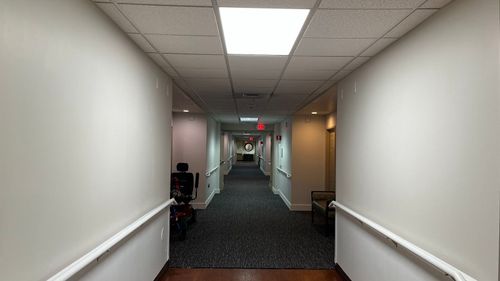
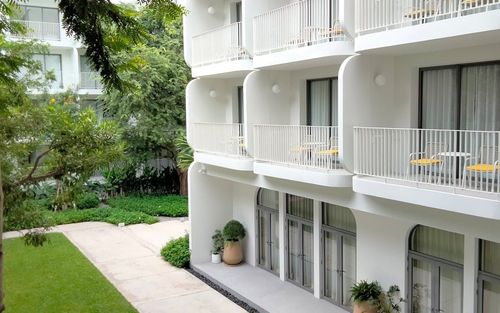
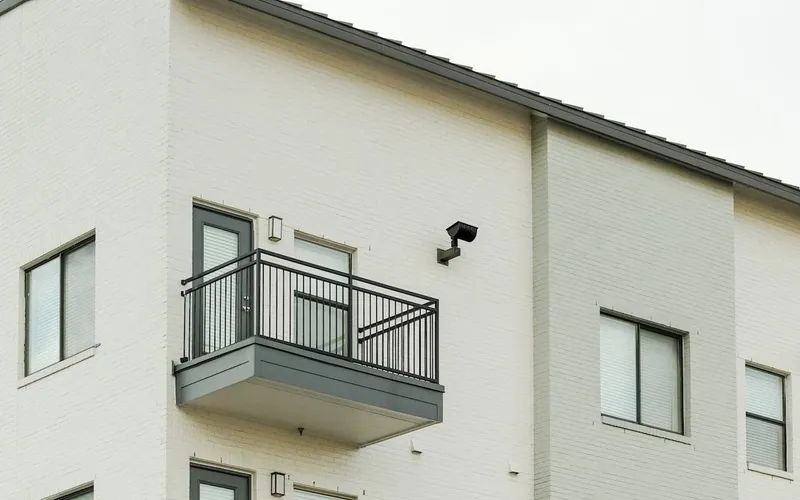
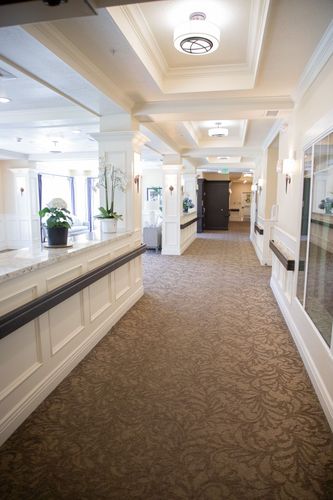
The neighborhood's design carries the standard memory-care physical-plant features: perimeter monitoring on the doors, a secured outdoor courtyard residents can use without supervision, calm-down spaces for residents whose sundowning pattern gets disruptive in the afternoon, and contrast-friendly hallway and bathroom design to reduce disorientation. Pet-friendly policies extend into the neighborhood for residents whose long-term emotional connection to a small dog or cat predates the dementia.
Cost and Coverage
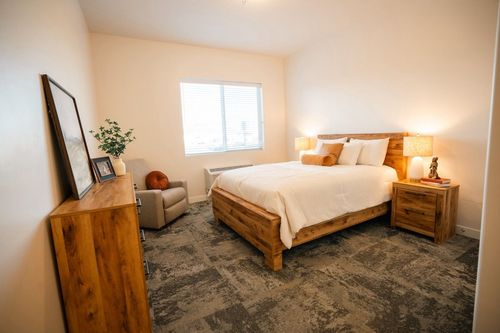
The secured-side monthly rate at Coventry runs $5,500 to $7,400 in 2026, an $800-$950 lift over the assisted-living side under the same roof. The lift reflects the dementia-trained caregivers on each shift, the awake clinical presence overnight, and the physical-plant features (secured doors, monitored courtyard, contrast-coded design) that secured care requires by license. Within that band, the floorplan, the resident's intake care-tier, and any above-baseline behavioral or supervision needs all push or pull the figure.
Aging Waiver participation reaches into the memory-care neighborhood as well, which is uncommon at this price tier. For Cottonwood Heights households whose finances align with Utah's program rules, the Waiver underwrites a share of the personal-care line on the monthly bill. Move-in fees land in the $1,500-$5,000 range; respite stays on the secured side cost $200 to $275 daily. Because the waiver-funded slots cycle through eligible residents rather than sitting open, families anticipating a dementia transition benefit from starting the eligibility paperwork weeks in advance of the actual move-in.
Senior Demand and Wait-List Dynamics
Cottonwood Heights's senior population skews older and longer-tenured than typical Salt Lake County suburbs, with roughly eighteen percent of the city over sixty-five in 2026, which produces steady demand for the 32-apartment memory-care neighborhood. Most-requested apartment configurations and the Aging Waiver-funded openings typically run a four-to-six-week wait, and occasionally longer when discharge spikes from Alta View Hospital or Intermountain Medical Center pull several memory-care placements into the same period.
That wait dynamic shapes how the planning conversation runs: families who reach out at the early dementia stage, before the household is on a hard discharge clock, usually have more room to land on a Coventry apartment that fits both the clinical profile and the location-and-budget picture, while families calling during an acute event sometimes need to consider Murray, Sandy, or Holladay addresses while a Coventry slot opens.
Why Families Choose Memory Care in Cottonwood Heights
The pull of staying inside the east-bench corridor is strong for households whose Cottonwood Heights identity is wrapped up in the canyons, the long-tenured neighborhoods, and the medical relationships built over decades. For a resident with dementia, that familiarity matters more than in other care types, because moving to a Wasatch Front address with no orientation compounds the cognitive disorientation that the dementia itself produces. The pets-allowed policy gives families one fewer hard conversation when a long-loved family pet is part of the picture.
Acute medical issues that show up in dementia care (sudden behavioral changes, urinary infections that mask as confusion, medication conflicts) route to Alta View in Sandy on a short south-bound drive, with Intermountain Medical Center carrying the heavier acuity work to the northwest. The case-management teams at both hospitals know Coventry's secured-side scope and coordination patterns, which usually shortens the back-and-forth when a dementia event drives a hospital visit.
What a Local Advisor Brings to Cottonwood Heights
Most Cottonwood Heights memory-care conversations open after a dementia diagnosis, when overnight supervision at home has stopped being safe and the spouse or adult child can no longer absorb the load. The advisor's first move is to read Coventry's secured-side availability against the family's timing window, then to clarify whether the Aging Waiver belongs in the affordability plan. When a household has flex of four to six weeks ahead of the move-in date, the family has room to land on the right Coventry apartment configuration rather than taking the first vacancy that surfaces.
A different conversation runs when the dementia profile has progressed past what a 32-apartment secured neighborhood typically holds (significant aggression, daily one-on-one intervention needs, physical care that approaches nursing-facility intensity). For those cases the advisor lays out the south Salt Lake Valley addresses with deeper clinical staffing on the dementia side, alongside the realistic timing. Discharge-window coordination with the hospital case-management teams keeps the resident's plan aligned with what Coventry's clinical scope can actually carry.
Getting in touch ahead of an acute event opens more of Coventry's options than waiting for a discharge clock to start. Talk through a memory-care plan when the diagnosis or the household situation begins pointing toward secured supervision, or view the directory for context on the broader east-bench memory-care set.