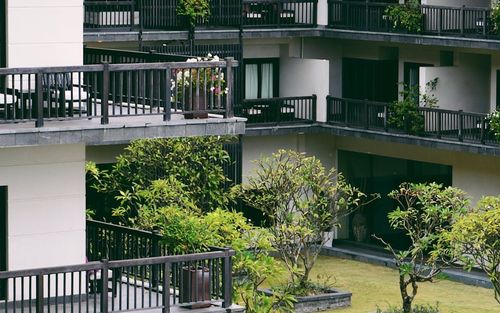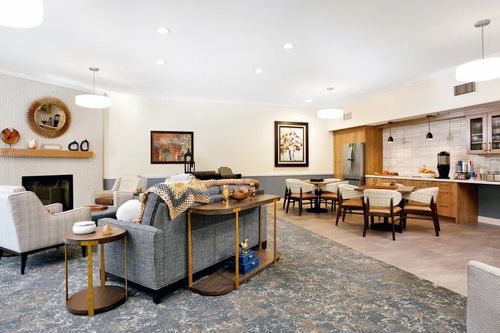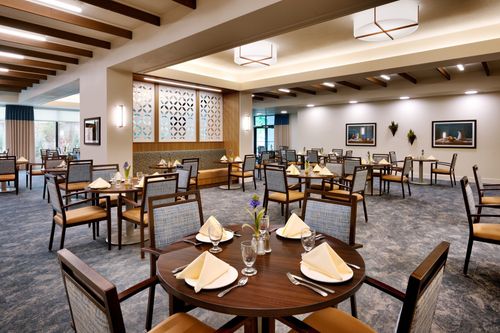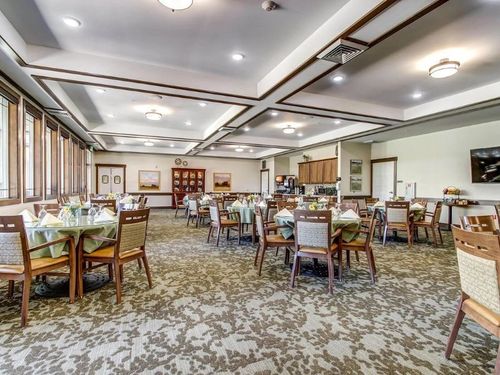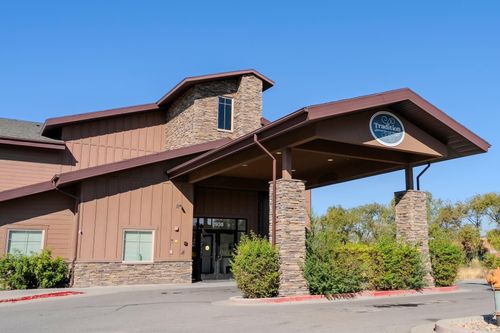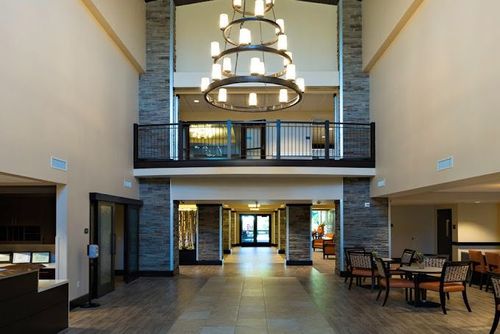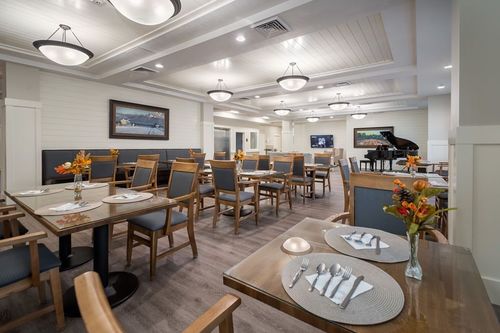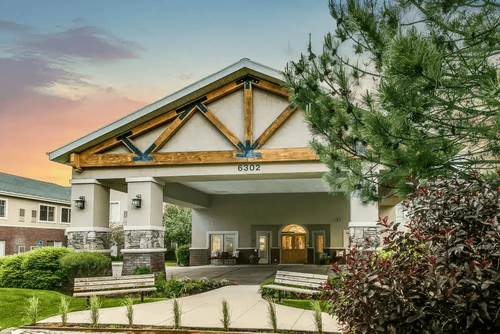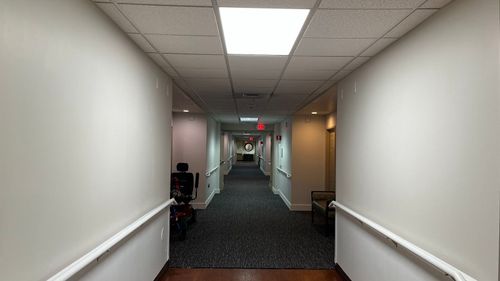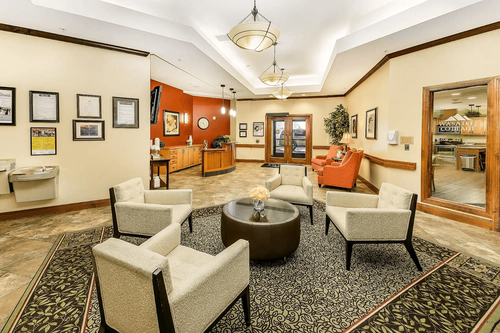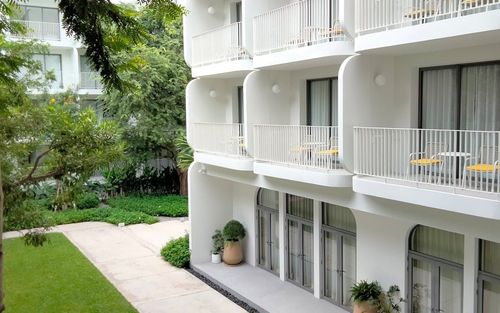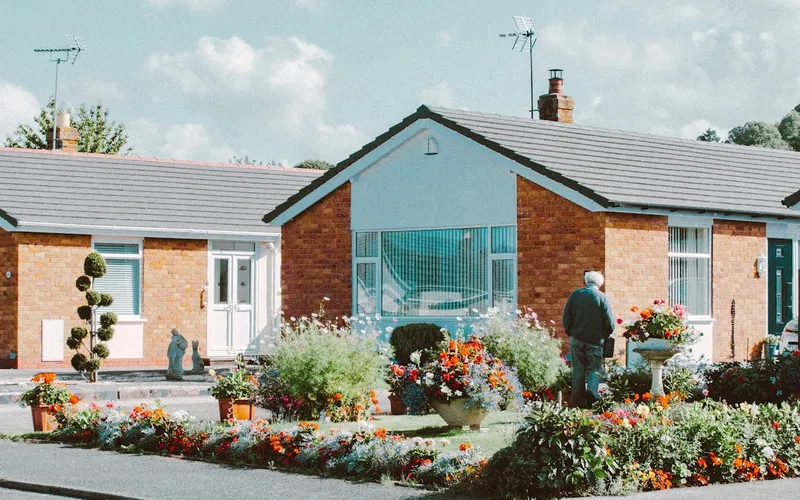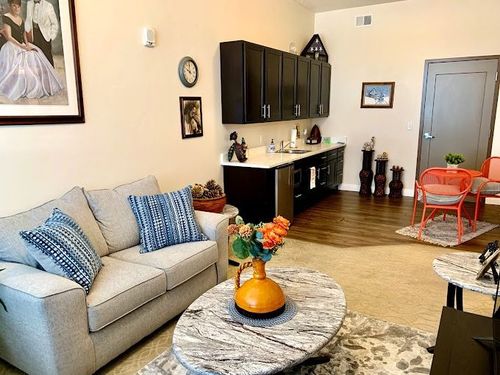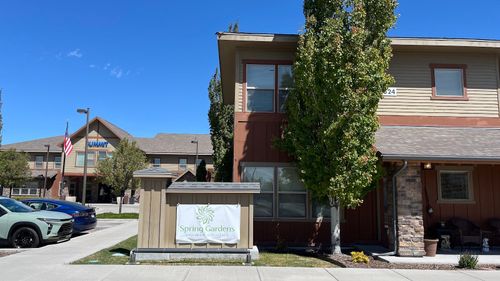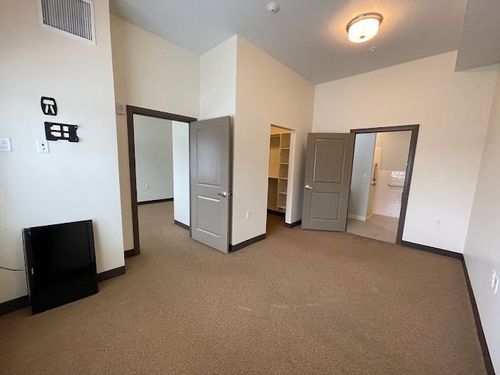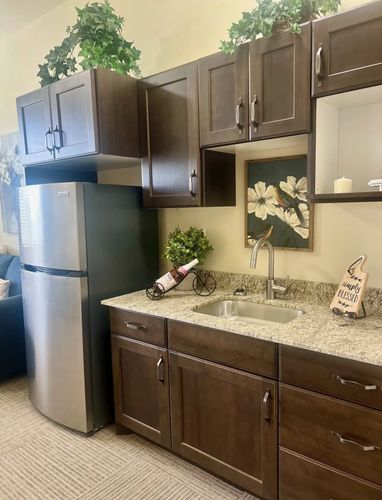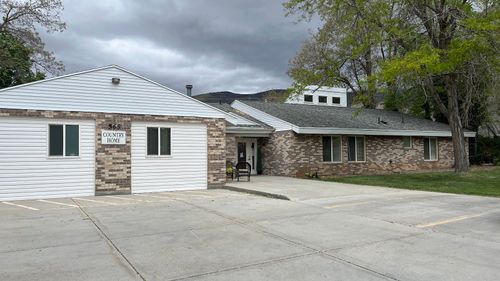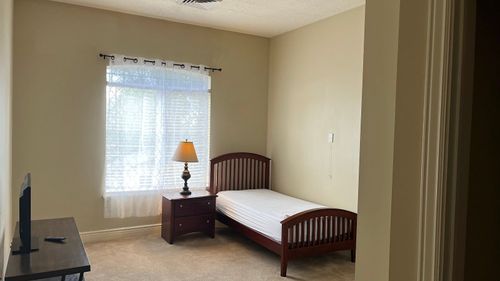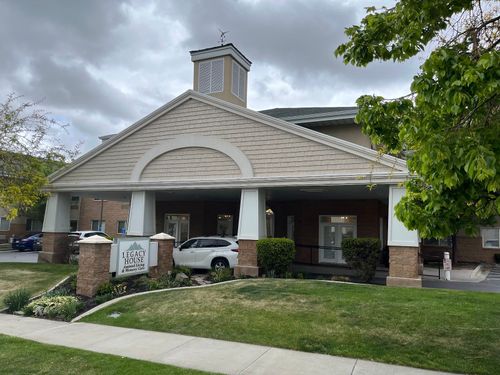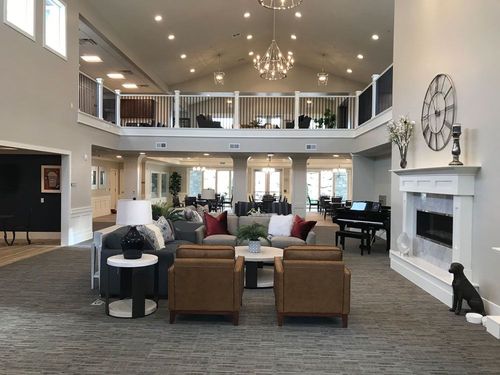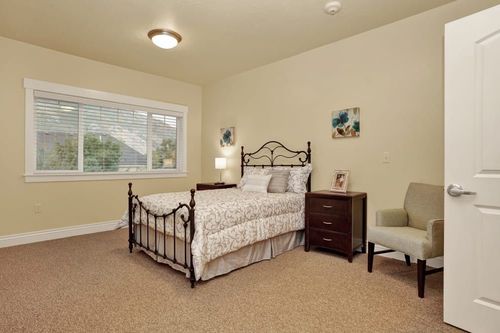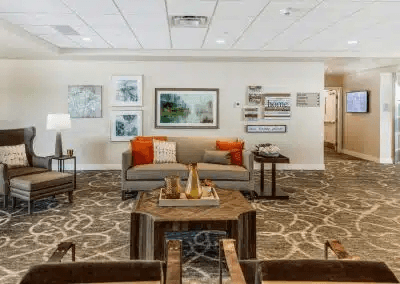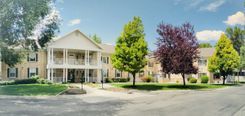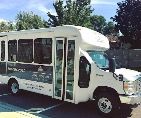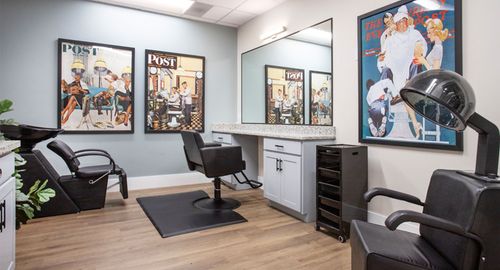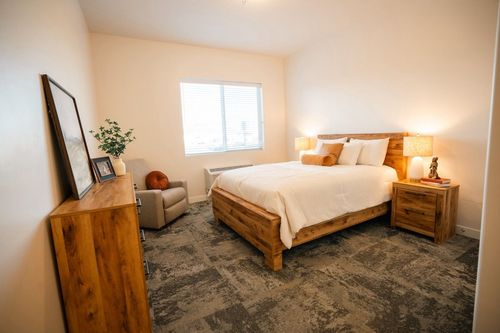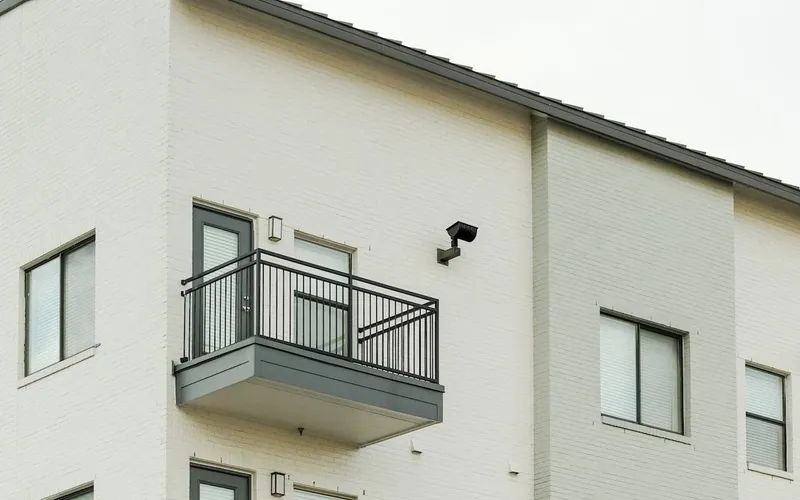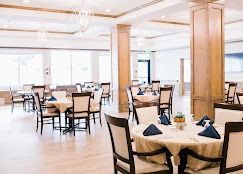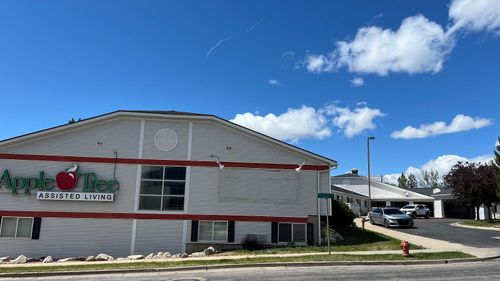
One memory-care address sits inside South Salt Lake's city limits, and its design does not match the secured-neighborhood pattern most central Salt Lake County families expect when a doctor first uses the word dementia. Rosewood Assisted Care on East 3700 South operates a 29-bed Type II Utah license under Wasatch Senior Living, weaving dementia-aware support into the building's general assisted-living service instead of carving out a separate secured wing. Early-stage residents whose cognitive shifts have not yet brought wandering or behavioral patterns into the picture often fit comfortably inside that integrated arrangement.
So the first conversation a South Salt Lake family has is honest rather than transactional: does the resident's current dementia stage sit within what an integrated household can hold safely, or has the disease moved past that line? If the second answer turns up, the secured-neighborhood campuses inside fifteen minutes along the central Salt Lake County corridor (Murray, Millcreek, Holladay, Cottonwood Heights) become the realistic next step, and Intermountain Medical Center in Murray anchors the post-diagnosis appointment calendar either way.
How Integrated Dementia Care Runs at a Small Scale
Dementia-aware service at Rosewood blends into the building's everyday assisted-living rhythm rather than running on its own track. Long-tenured caregivers learn each resident as a person, recognize the early signs of confusion in someone they see every day, and use that familiarity to steer a difficult moment back toward calm. The 29-bed footprint keeps the social map small, which gives a resident whose orientation has begun slipping a manageable environment to navigate. Music sessions, sensory tabletop work, exercise classes, book clubs, light outings, and house social events fill the weekly calendar and tend to land well across mild-to-moderate cognitive change.
Families need a clear picture of what this format leaves out before they sign a lease, however. There are no coded doors holding a separate wing, no awake-overnight ratios sized to a secured-side population, and no activity calendar partitioned off from the household. None of that infrastructure is missing through oversight; it simply belongs to a different model of dementia care. When the disease has progressed to the point where those features become necessary rather than optional, the realistic answer points toward a secured neighborhood inside the corridor. Registered nurses run regular wellness checks across the building, and the Type II license gives Rosewood more clinical headroom than a Type I home carries.
Cost and Coverage
Monthly rates for an integrated dementia-aware resident at Rosewood usually run $3,500 to $4,500 in 2026, with apartment configuration accounting for most of the spread. Because the model does not separate out a secured-tier line item, that pricing tracks the broader assisted-living rate; instead, the care-services tier from the move-in clinical assessment flexes to the real caregiver hours each resident draws, dementia-aware support included.
Move-in fees land between $500 and $2,500 depending on the apartment, and short-stay respite bills $150 to $200 per night. Rosewood participates in the Utah Aging Waiver, a combination rarely seen at a 29-bed Type II urban address, which keeps a small-home Medicaid path open without forcing a household toward a larger setting. Aging Waiver funding offsets a portion of the daily-care charge on the monthly invoice at contracted addresses once clinical and financial reviews clear, with current intake status worth confirming before the household commits to paperwork.
A Central Salt Lake County Demand Pattern
South Salt Lake holds roughly 26,500 residents in 2026, around 2,000 of them past sixty-five. The city's age profile skews younger than Murray or Holladay next door, yet the dementia caseload still moves with the broader Salt Lake County trend as the inner-suburb senior generation ages in place. Most secured-neighborhood placements from the central corridor get absorbed by the larger county inventory, while Rosewood holds a meaningful local foothold for residents whose stage fits an integrated household.
Apartment availability turns on individual resident transitions rather than a predictable monthly schedule, and at 29 beds each opening reshapes the picture noticeably. Advisor reads on availability shift with the building's operating cycle, and the Aging Waiver rotation runs on its own cadence tied to vacancies and state processing.
Why Families Choose South Salt Lake
When a person's memory begins to fail, the surroundings around them carry more weight than they do at any other stage of senior living. Move someone with cognitive change into an environment they cannot read and the disorientation already in motion accelerates. At Rosewood, an earlier-stage resident keeps the central Salt Lake County corridor stitched into daily life: Wasatch peaks east, a short drive to Sugar House for a walk through familiar blocks, longtime neighborhood ties and ward connections turning up for visits, and the State Street rhythm holding underneath the week.
Adult children working in central Salt Lake City, Murray, Holladay, or anywhere across the valley reach 3700 South within fifteen minutes during most traffic windows, which makes weekly visits realistic over the longer arc dementia care usually follows. Intermountain Medical Center in Murray, ten minutes south, handles the medical events that surface regularly along that trajectory, and its case-management team knows Salt Lake County small-home addresses well enough to keep post-discharge handoffs short.
What a Local Advisor Brings to South Salt Lake
Most memory-care calls in South Salt Lake come in after the home arrangement has been quietly unraveling for weeks. Overnight wakings happen with a spouse finding their partner disoriented in the hallway; medications get missed or doubled despite a labeled organizer; behaviors shift between weekly check-ins in ways the gaps between caregiver visits cannot smooth over. One incident rarely settles the question, but two or three across a month usually push a family from patched-together home support toward planned placement.
The advisor reads the resident's present dementia stage against what Rosewood's integrated household can absorb safely, then lines that up with the family's timing. An earlier-stage profile where orientation still steadies under familiar caregiver redirection usually fits the local building, and the Aging Waiver participation keeps that option viable for Medicaid-track households. When wandering, perimeter risk, or behavioral events that need dedicated secured-side staffing put the situation past what an integrated model holds, the advisor opens up the secured-neighborhood inventory inside the central Salt Lake County corridor within a fifteen-minute drive.
Reach out before an Intermountain Medical Center episode tightens the timeline. An early planning conversation leaves room to weigh both routes carefully, and our team is here when you're ready to talk through what fits best.