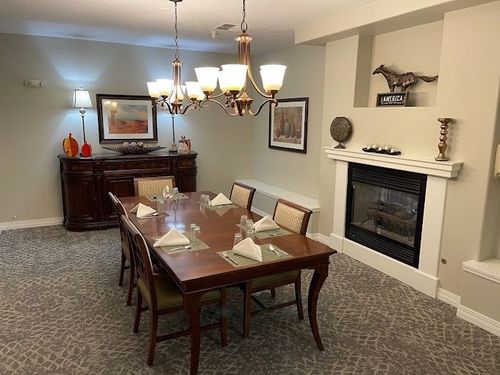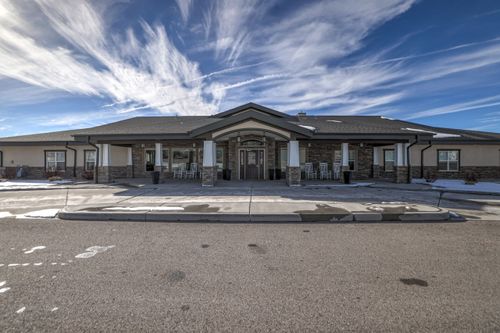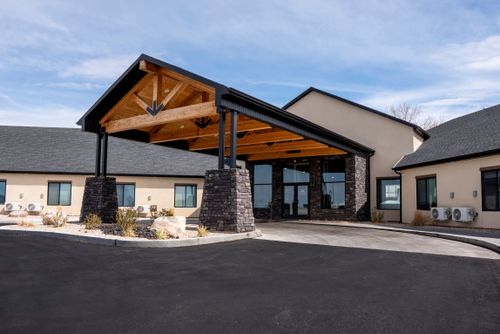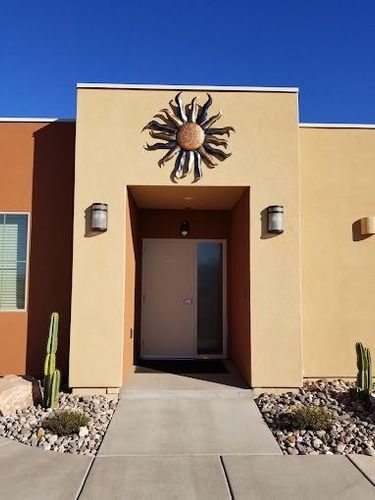

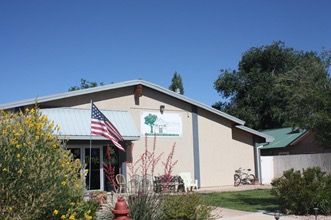
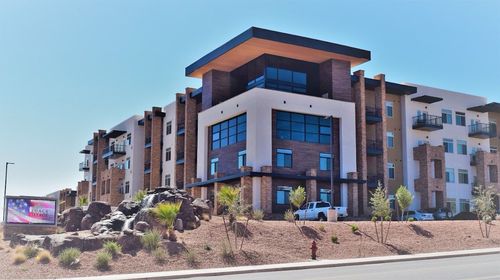
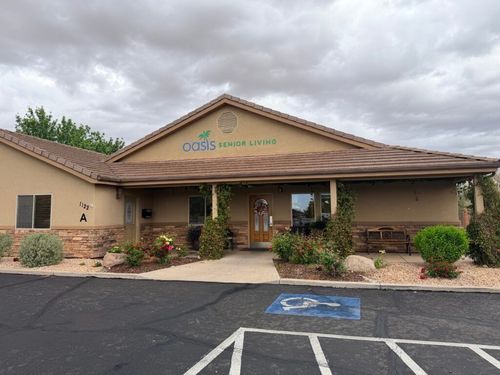
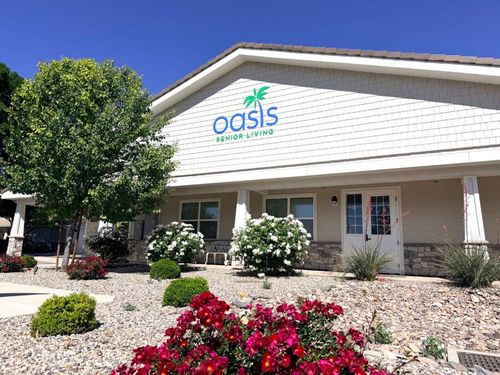
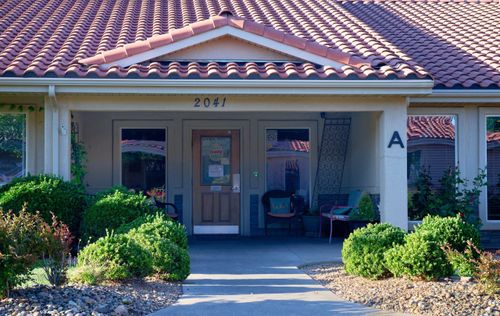
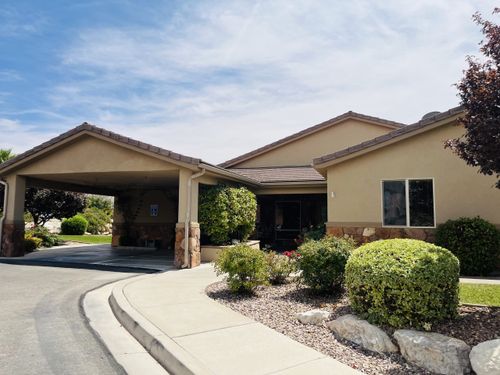
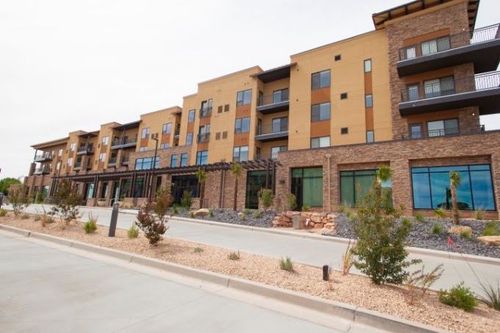




Washington County's senior-living network spreads across the southern Utah corridor, anchored by sixteen published communities in St. George, with five buildings in Washington City, three in Hurricane, and one in Santa Clara filling out the rest. St. George Regional Hospital handles regional clinical work, and the corridor's geography puts most senior-living addresses, the hospital, and a parent's children within a fifteen-minute drive.
Two decades of retiree migration into dry desert weather, lower humidity than the Wasatch Front, and the red-rock landscape have built Washington's senior community into one of Utah's largest. St. George alone holds more than 22,000 residents 65 or older in 2026, with the broader county count above 35,000 and the share running near twenty percent of the population. The senior-living market has scaled up to match.
How Care Shows Up in Washington County
Washington County's care levels split between dense St. George inventory, growing buildings in Washington City and Hurricane, and smaller residential homes filling in around the southern Utah corridor.
- Assisted Living: Available at twenty-two of the published buildings and at smaller residential homes scattered through the corridor. That depth means day-to-day personal care arrives at a setting near family without sending anyone outside the corridor.
- Skilled Nursing: St. George Regional Hospital's clinical capacity carries short rehabilitation stays following a hospital event, and a handful of freestanding rehabilitation campuses around St. George handle the longer placements.
- Memory Care: Sixteen of the published communities operate a secured memory-care neighborhood, distributed through St. George, Washington City, Hurricane, and Santa Clara. Several-weeks-to-couple-of-months timelines at the most-requested addresses give way to four-to-eight-week openings somewhere along the corridor for most recent dementia diagnoses, given the sixteen-building depth.
- Independent Living: Available at five dedicated buildings spread across St. George, Washington City, and Hurricane, with assisted-living buildings often pairing an independent-living tier alongside. The combined depth gives southern-Utah families a real choice between an apartment-style building and a more flexible mixed-care setting near the family neighborhood.
Given the corridor's depth, families filter the Washington County options by which St. George neighborhood the family already drives, which doctor relationships a parent already keeps, and which retiree community fits the household, rather than waiting on whether anything is open.
Healthcare Access in Washington County
Hospital care for southern Utah residents centers at Intermountain St. George Regional Hospital, a 284-bed Level II trauma center spread across two St. George campuses, with a comprehensive cancer center, cardiology and cardiac surgery, neurology, orthopedics, women and newborn services, and a regional referral footprint that reaches into northwestern Arizona and southeastern Nevada. The hospital's case managers coordinate directly with senior-living staff across the corridor.
For the most demanding cardiac surgery, oncology, or pediatric subspecialty referrals, families head about five hours up I-15 to Intermountain Medical Center in Murray, with University of Utah Health's main campus a few minutes further into Salt Lake City. Most senior-living buildings sit within ten to fifteen minutes of one of St. George Regional's two campuses, which keeps post-hospital handoffs short.
What Washington County Pricing Looks Like
Washington County pricing reflects the southern Utah retiree market, running slightly below the Wasatch Front median while St. George's higher-end buildings push closer to corridor pricing. In 2026, assisted living across the corridor typically charges $4,000 to $6,000 monthly. The corridor's memory-care neighborhoods price from $4,500 up to the top of the range, with a transition from assisted living into memory care at one campus usually layering on $750 to $950 each month. Independent living at the dedicated buildings starts at the low end of the range and tops out at $4,800 depending on apartment size and extras. Smaller residential homes price all-inclusive at $4,000 to $5,000.
Move-in fees across the corridor vary widely, from modest to several thousand dollars, with the high end at $4,000. A second resident in a couple's shared apartment adds about $750 a month or somewhat more, and respite stays come in at $160 to $230 daily. Newer St. George buildings frequently run move-in incentives, which the advisor flags on the first conversation.
Why Families Choose Washington County
St. George pulls older households south for the same reasons it has pulled retirees for decades. Dry, mild winters, the red-rock landscape on every horizon, walkable downtown, the activities run by the Washington County Council on Aging, and a fabric of retiree-friendly neighborhoods runs from St. George out through Washington City and Hurricane. Most older residents either grew up in the corridor or moved south from the Wasatch Front, California, the Pacific Northwest, or the Midwest specifically for the climate and the lower cost of living.
Snow Canyon State Park's accessible overlooks, the Virgin River Parkway, the paved walking around Town Square Park, and the proximity to Zion National Park give older residents weekday outings that feel like a vacation rotation. The Washington County Council on Aging runs the St. George Senior Center on 200 West with hot lunches, Medicare counseling, and group outings, and the corridor's social fabric tends to surface a missed Sunday gathering by the next week.
What a Local Advisor Brings to Washington County
When a Washington County family calls, the advisor cuts the deep southern-Utah inventory down to three or four buildings that line up with a family's specific St. George, Washington City, or Hurricane neighborhood, doctor relationships, and budget. The advisor knows which St. George building has a couple's apartment open next month, which Hurricane communities handle Medicaid waivers cleanly, which Santa Clara residential homes have memory-care space available this week, and the way St. George Regional Hospital's discharge planners route a resident from a hospital stay into senior living.
Our directory for Washington County continues to grow as we evaluate providers for quality and alignment in 2026. Reach out for a conversation about senior living across southern Utah, or browse the communities we have vetted at your own pace.