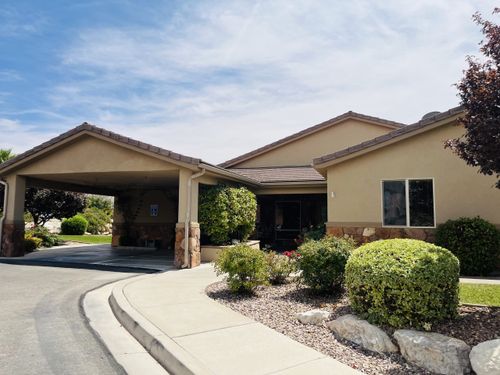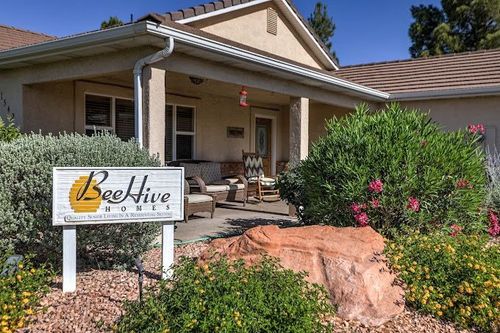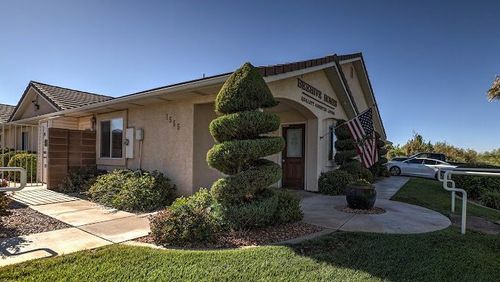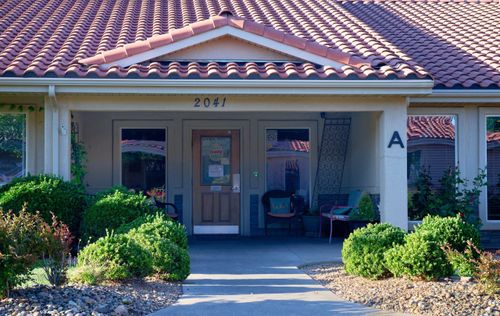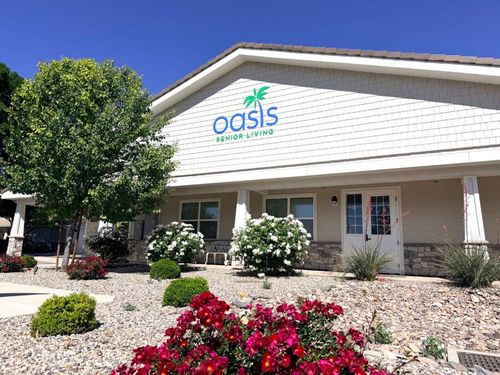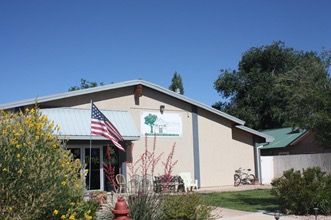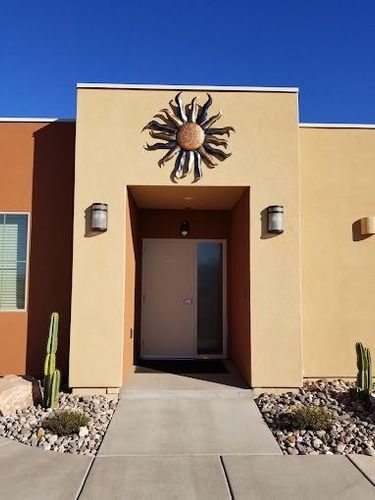
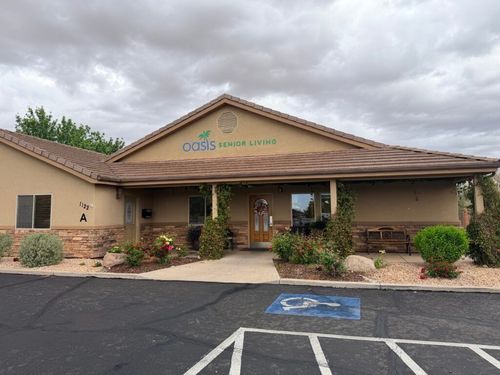
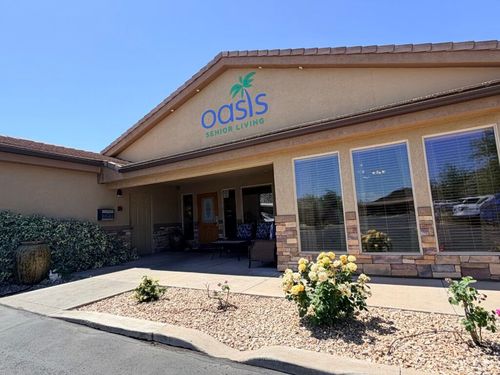

On the north side of Washington, two Oasis Senior Living houses sit almost side by side on Coral Canyon Boulevard, inside the master-planned Coral Canyon community below the golf course, and a third home, Autumn Park, anchors the older streets near 1100 East. Together they give Washington 3 small, home-style care homes, what some families call a board-and-care home, a care home, or an adult family home, where a dozen or so residents share one kitchen, one common room, and the same caregivers.
These homes draw a Washington family that has decided a large community is not what they want for someone who would rather live in a regular house on a quiet street. A resident who prefers a quiet household to a busier building, or who is moving into memory care and wants a calmer setting, tends to do well where the household is small and the same caregiver is there every day.
What Daily Life Looks Like in a Washington Care Home
The number that defines a Washington care home is the caregiver ratio: with no more than sixteen residents under one roof, staff often look after three or four people each rather than a full hall of apartments, which shapes the rest of the day. Meals come out of the house kitchen and everyone eats together, while help with dressing, bathing, medication, grooming, and moving around comes from a caregiver who already knows the resident, and the housekeeping, laundry, and overnight supervision all happen in that same house.
Care levels split cleanly across the three: the two Oasis Senior Living houses on Coral Canyon Boulevard provide assisted living, while Autumn Park near 1100 East adds secured memory care for residents living with dementia. The trade a family makes for that closeness is honest: a single house carries fewer organized activities, a smaller group of housemates, and no nurse on the premises, so a very social resident or one who needs daily skilled nursing is usually a better match for one of Washington's larger communities.
Paying for a Small Home in Washington
The three Washington homes price between roughly $4,000 and $4,800 a month, which sits under the latest 2026 statewide assisted-living average of $4,400. That puts a small home here close to, and often below, what a larger Washington-area community charges for comparable assisted living, so families rarely pay a premium for the lower ratio. Autumn Park accepts Medicaid for residents who qualify, which can reduce the out-of-pocket cost once savings have been spent down, while the two Oasis houses are private pay.
Because the homes are small, there is little of the tiered pricing a large community uses, where a base rent climbs with each added level of care. A Washington care home tends to quote one all-in rate for the resident's current needs and revisit it if those needs grow. For a family comparing options, that single figure can make the real monthly cost easier to pin down, and it usually covers the room, three meals, personal care, and round-the-clock supervision together.
How Much Small-Home Care Washington Has
Washington has grown into a retirement destination of its own, with about 19.9 percent of its roughly 34,000 residents now 65 or older, close to 6,800 seniors. Even with that demand, only 3 of the city's senior-living options are true small homes, since most local capacity sits in larger assisted-living and independent-living buildings. With sixteen beds at the most in each house, a particular opening can come and go quickly, and the single memory-care home means a secured bed in Washington itself is the scarcest of all. The supply is real but thin, so reaching an actual opening is mostly a question of timing.
Why a Washington Family Might Choose a Small Home
Keeping a relative in Washington, minutes from family in Coral Canyon or Washington Fields rather than an hour up the interstate, is often the first reason a family looks at a small home here. Beyond proximity, the appeal is the texture of the place: a household where the resident is one of a dozen known faces, meals that smell like a kitchen instead of a cafeteria, and a caregiver who notices a change in appetite or mood because there are only a few people to watch. Grandchildren can stop into a living room after school, and the resident stays part of ordinary family life rather than visiting hours at a large campus. None of that suits everyone, and a resident who thrives on a busy calendar and a wide social circle may be happier in a bigger community, which Washington also has. But for the family that wants closeness and calm, a small home delivers it a few minutes from the front door.
How a Local Advisor Narrows the Washington Homes
Between the two Oasis houses and Autumn Park, the right home turns on details an address never shows: whether a resident needs the secured memory care only Autumn Park provides, which house has a bed open this month, and which assisted-living license type fits the level of help the resident actually needs. A local advisor keeps that current, and knows how the two Oasis Senior Living houses on Coral Canyon Boulevard differ from each other in feel even though they share a street and a name.
Whether the Oasis houses or Autumn Park can keep a resident as dementia progresses, and how each handles a medical issue with no nurse on site, is worth knowing before a tour. Ask us, or see the communities we have reviewed when you are ready.