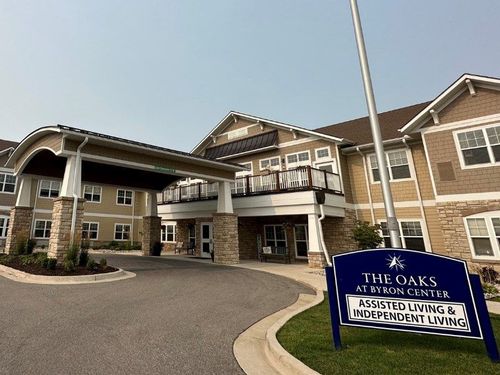

Michigan funds senior care through two doors that look alike from the outside and behave nothing alike once a family walks through one. The first is MI Choice, a waiver written for people whose care needs have risen to what a nursing home would ordinarily answer, but who would rather stay in community life; it pays for the care and leaves the housing bill where it was. The second is traditional Medicaid, which meets the whole cost of a nursing facility, accommodation included, for anyone clearing both the financial and the functional tests. In Byron Center the community carrying Medicaid acceptance is The Oaks at Byron Center, and knowing which door a household is actually walking through is what determines the timeline, the paperwork and the monthly arithmetic.
What Medicaid Covers in an Assisted Living Setting
Inside a licensed assisted living or memory care building, Medicaid reaches the care and not the roof. MI Choice can fund personal care, nursing oversight, medication management and the other services a resident receives, while the room, the meals and the utilities remain the resident's own responsibility, generally paid from Social Security and any pension. Families hear the word Medicaid and understand it to mean everything is covered, and the distance between that and the monthly statement causes most of the distress in this process.
Scope also turns on the care level, and the three routes diverge sharply. Assisted living and memory care are reached through the waiver. Skilled nursing runs on traditional Medicaid instead, which is the one route where accommodation is part of what the state pays for. Independent living sits outside the program entirely, because Medicaid funds care and independent living involves no assessed care need, so no waiver and no institutional route applies to it at any income level. Any sentence that says a building accepts Medicaid is therefore a statement about part of that building rather than all of it.
The Byron Center Money Picture
The monthly starting figure at the local Medicaid-accepting address is $4,765, which is what a private-paying resident begins at rather than what a waiver-funded resident pays. The distinction matters because the two are computed differently: private pay is a rate, while a waiver arrangement is a care package paid to the community plus a housing share paid by the resident from income.
Michigan adds one piece here that families frequently miss. A state supplement is paid on top of federal disability income to anyone residing in the licensed settings Michigan regulates, whether an adult foster care house or a larger home for the aged, and it is pointed squarely at that housing share, arriving monthly without a separate application once eligibility is settled. It rarely closes the gap alone, though on a fixed income it can separate a workable plan from an unworkable one, and it belongs in the arithmetic before anybody concludes the numbers will not work.
Timing, Which Matters More Than Eligibility
With one Medicaid-accepting address in Byron Center, the binding constraint is rarely whether a household qualifies. It is that MI Choice enrollment is capped, administered regionally, and involves two assessments that run on separate clocks: a financial determination of income and countable assets, and a functional determination of whether care needs reach nursing-home level. Either one can hold up the other, and neither is quick.
Running alongside all of that is the community's own commercial position, which is a separate matter again. A building that accepts Medicaid may hold only a limited number of waiver-funded rooms, or may take a resident privately first and convert later, and both are ordinary practice rather than a criticism of anyone. What they mean for a Kent County family is that qualifying, being accepted and finding a room free are three separate events on three separate timetables, and the one lever a household genuinely controls is beginning the paperwork long before the room is wanted.
Putting the Steps in Order
The useful work here is sequencing rather than searching, since the address is already known. What is not known from outside is whether the building currently has a waiver-funded room, what its practice is on converting a private-pay resident, and how far along the regional waiver process a household would need to be before any of that becomes relevant.
An advisor covering this part of Kent County holds those answers and can put them in the right order, so a family is not completing an application for a room that is unavailable or touring a building whose waiver places are already filled. Where the money is already tight and the timeline is uncertain, that ordering is worth more than any listing, and it costs a household nothing to reach out and get it straight at the beginning.
Our Byron Center directory keeps expanding as we evaluate providers for quality and alignment in 2026. Reach out for a conversation about medicaid in Byron Center, or look through the communities we have vetted at your own pace.