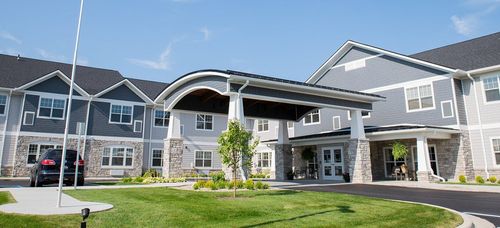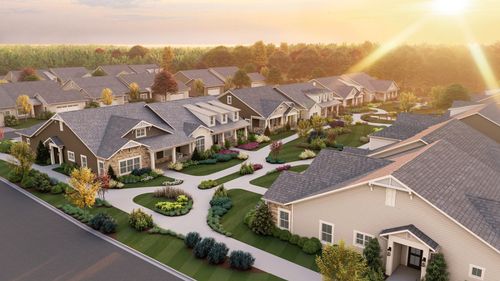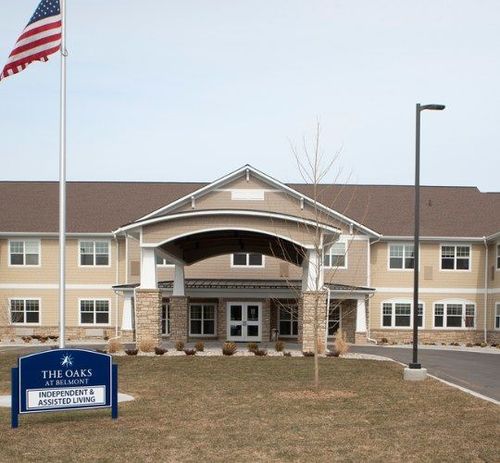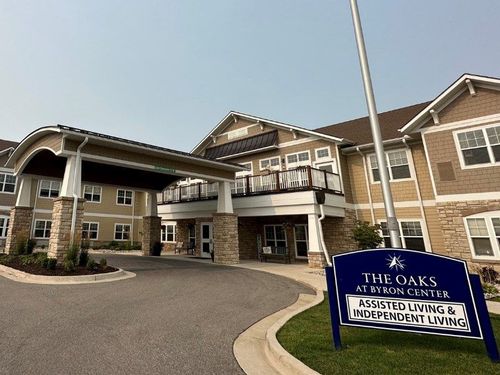

Nearly everyone who reaches a nursing bed arrives there from a hospital ward, having never seen the building before the ambulance pulled up. At The Oaks at Byron Center a large share arrive from a corridor away, because the nursing licence sits at the top of a continuing-care campus whose lower levels are full of people who moved in years earlier.
That is the rarest arrangement on the whole care ladder, and it is the reason this address deserves a longer look than its size suggests. It is also the only Byron Center building licensed for round-the-clock nursing, so a household wanting this level in this town has exactly one option.
What Round-the-Clock Nursing Involves Here
This is the level at which a registered nurse is present at every hour rather than reachable by telephone. The daily work is clinical: wounds dressed and tracked, intravenous courses run to completion, oxygen and catheters managed, and therapy delivered in-house rather than by a visiting service.
Two quite different routes lead into a nursing bed here. One is a hospital discharge, where a patient leaves an acute bed still needing continuous nursing and rehabilitation before any question of home arises. The other is internal, where a resident already living on the campus reaches a point their existing level cannot hold and moves up without leaving the property.
Two Entry Routes, Two Different First Payers
The Oaks publishes a starting figure of $4,765 a month for 2026, and it belongs to the entry level rather than to nursing care, which prices substantially above it. Treat it as the cost of arriving on the campus rather than the cost of the top of it.
What pays the nursing bill depends on how a resident got there. After a qualifying hospital admission, Medicare covers a defined and medically bounded stretch, then tapers out. A resident who moved up from inside the campus usually has no Medicare entitlement at all and pays privately from the first day. Both routes converge in the same place: when private funds are exhausted, traditional Michigan Medicaid meets nursing-facility care, and this campus participates, which is what makes a long stay survivable for a household of ordinary means.
A Campus in a County With Capacity Concentrated Nearby
Kent County is the fourth most populous in Michigan, and its southern edge has drawn a disproportionate share of the region's senior-living building, which is how a community the size of Byron Center supports a licensed nursing operation at all.
Availability is still the binding constraint, and the campus structure is why. A campus that fills nursing beds partly from its own residents has less room for outside admissions than a standalone nursing home does, and no short respite stays are offered here, so there is no temporary bed to bridge a gap.
Why Families Choose Skilled Nursing in Byron Center
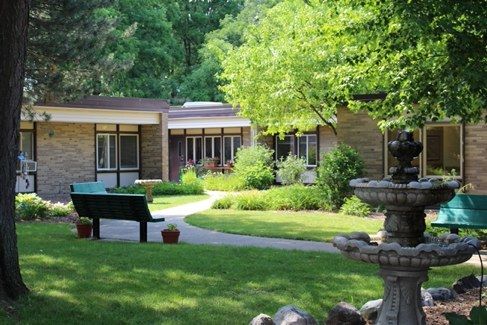
Continuity is the honest answer and it is worth something real. A resident who reaches nursing care on a campus they have lived on for years keeps the same dining room, the same grounds and the same faces at the door, and relatives keep a drive they have made hundreds of times, which is a large part of why anybody actually visits often.
The clinical surroundings around the campus support the level as well. University of Michigan Health-West stands a few minutes up the road and is where most admissions from this part of the county begin, and where most discharges heading back toward the campus originate.
Working With a Local Senior Advisor in Byron Center
With one licensed address in the community and no respite option behind it, the questions that matter are blunt ones. Is there a nursing bed this week, will the campus accept the clinical picture set out in the discharge paperwork, and how quickly can its own assessment be completed against the date the ward is working toward.
The funding conversation needs the same handling, because the first payer differs depending on whether a resident is coming from a hospital or moving up from inside the building, and families routinely assume the wrong one. A Local Senior Advisor covering south Kent County can map that against real circumstances and say where the next nearest licensed bed sits if the answer here is no. That is a short conversation, and it is worth having before the discharge date rather than on it.
We keep expanding our Byron Center coverage as we evaluate providers for quality and alignment in 2026. Start the conversation about skilled nursing in Byron Center, or scan the buildings we cover at your own pace.