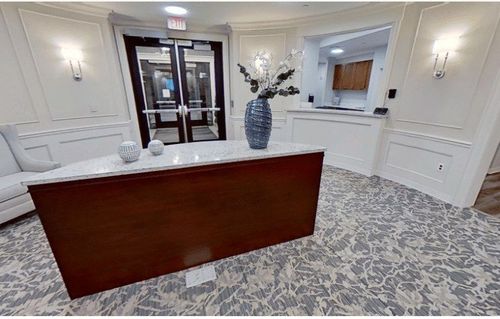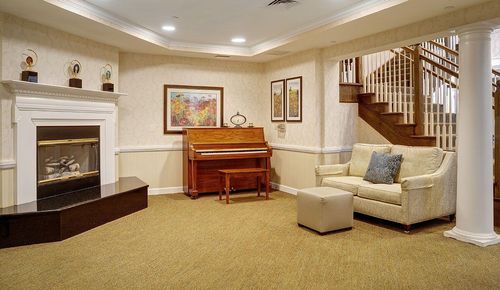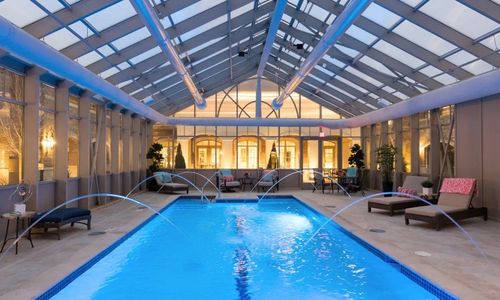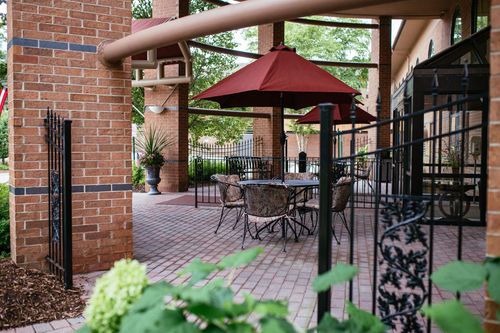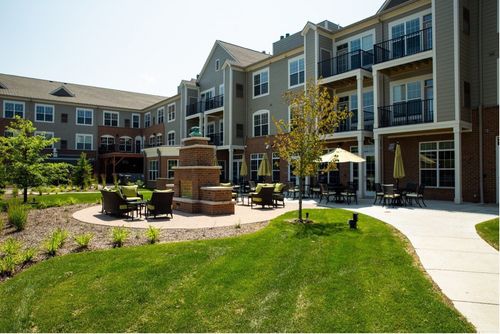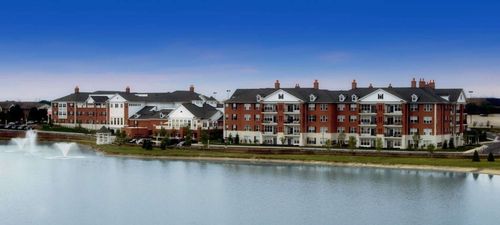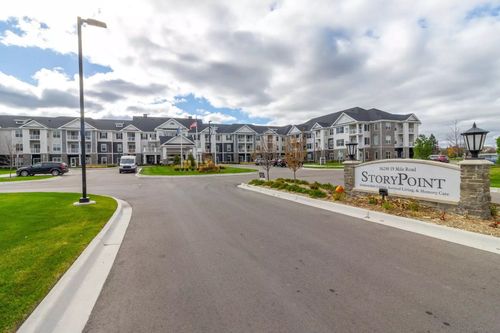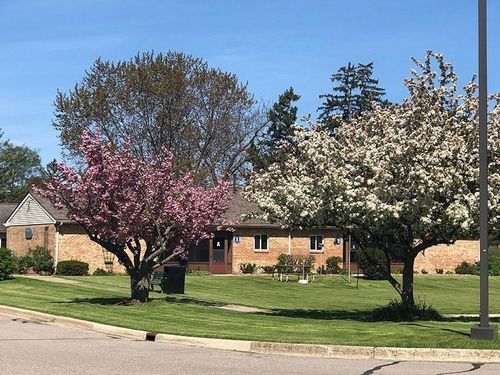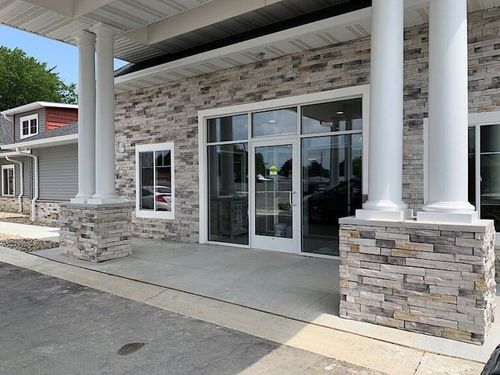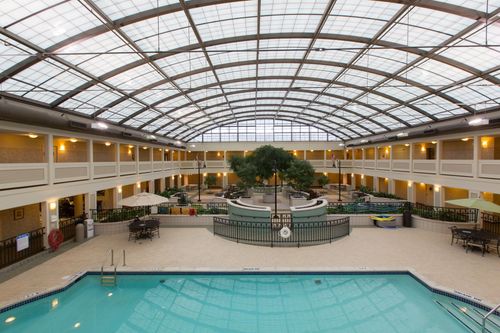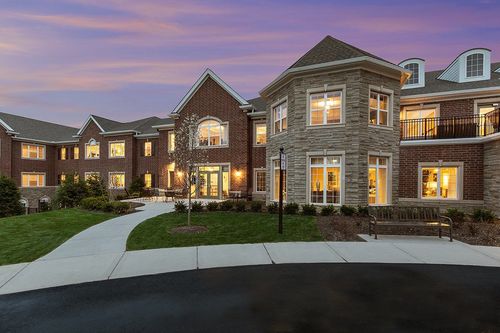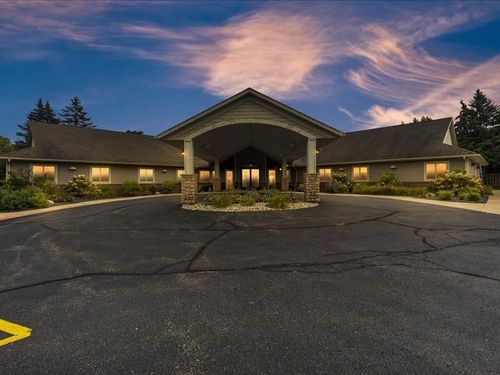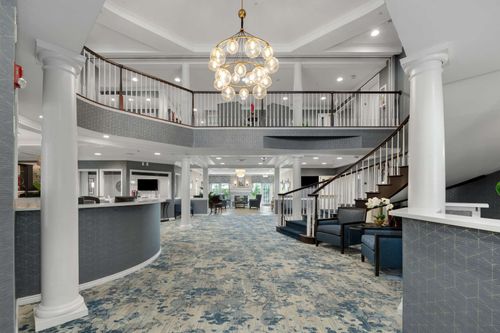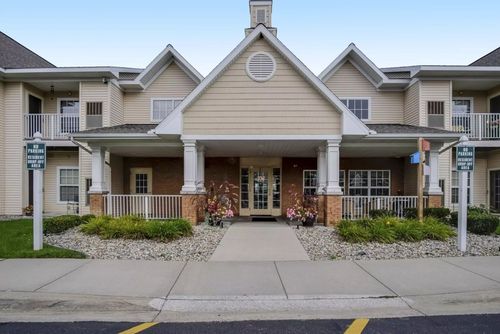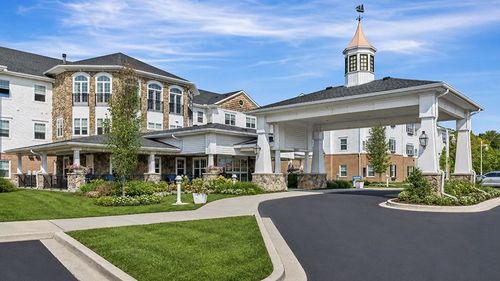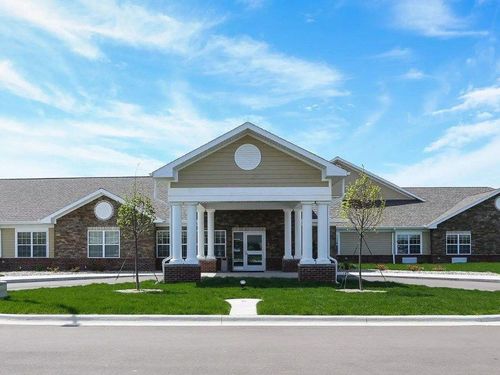
A village of fewer than four thousand people does not usually contain a campus running every level of senior living, and Romeo does. Orchard Grove Health Campus offers apartments at one end and nursing beds at the other, with assisted living and a secured dementia section between them, a ladder most towns twenty times the size cannot assemble on one property.
For a household starting at the apartment end that is the whole argument. What is being chosen is not next year's address but whether the next fifteen years can happen at a single one.
An Apartment First, Everything Else Later
Independent living here is housing rather than a care plan, and the distinction is worth stating plainly, because a property offering both invites people to blur it. The person in the apartment is their own doctor's patient, their own pharmacist's customer and their own timekeeper. No one holds a medication list and no one notices what time the car leaves in the morning.
What the monthly figure buys is the end of a house. Cooking, cleaning and laundry stop being anybody's Saturday, the lawn and the roof and the furnace pass to somebody whose job they are, most utilities arrive folded into one line rather than five, and a van runs to appointments and the shops. Pets are welcome at one address in the village, which counts for more than it sounds once a household discovers how many places say no.
What the Apartment Costs, and What the Rungs Above It Cost
The apartment is the least expensive thing on the property, exactly what housing with nothing clinical attached ought to be, and it behaves like rent. A resident whose health changes does not watch the figure move, because it was never priced against health to begin with.
The numbers worth interrogating sit further up, where assisted living, the secured section and the nursing beds each carry a rate of their own, and across a decade those decide a household's finances far more than the apartment does. What reveals most is what an assessment adds to a published rate, since that is where a predictable bill turns into a variable one. Worth pinning down too is whether somebody already on the property has a claim on the next room that opens, because a ladder only counts if a resident can climb it.
A Village That Kept Its Own Center
Romeo was platted in 1830 and incorporated eight years later, and the historic district at its central crossroads still works as a downtown rather than a photograph of one. The Peach Festival has run every Labor Day weekend for more than ninety years, the longest-running festival in the state, and an institution like that tells you a place has held onto a life of its own.
That matters to a retirement decision more than it sounds. A resident moving into an apartment here is still in the village they shop in, worship in and vote in, and the walk to a coffee shop stays a walk. Northern Macomb kept a rural texture the southern half of the county gave up decades ago.
Why Romeo Households Do Not Drive South
Hospital access is the usual reason people consider moving south, and it does not survive examination. Henry Ford Macomb in Clinton Township is a 361-bed hospital carrying Level II trauma verification and sits within a comfortable drive, and Royal Oak puts a Level I center at the end of a freeway run.
What households genuinely do not want is to live down there. Something like a fifth of Macomb County is past 65, roughly 170,200 people, and most of the county's senior housing sits well south of the village. An apartment in Romeo keeps the specialists a drive away while daily life stays where it has always been, and for people who worked or raised families up here that trade is not a close call.
What a Local Advisor Brings to Romeo
At the apartment level an advisor earns their keep on the part of the decision that is invisible at a viewing. What the levels above charge, what an assessment does to those rates, and what residents who have already moved up actually experienced: none of it appears on a brochure and all of it describes the next decade.
The second contribution concerns the far end of the ladder. One address in the village participates in Medicaid at the nursing level, unusual for a place this size and worth understanding long before it matters, since eligibility rests on income and assets and the paperwork is slow. If Romeo is where the next ten or fifteen years are meant to happen, that is worth twenty minutes to talk it through.
Our directory for Romeo continues to grow as we evaluate providers for quality and alignment in 2026. Start the conversation about independent living in Romeo, or scan the buildings we cover at your own pace.