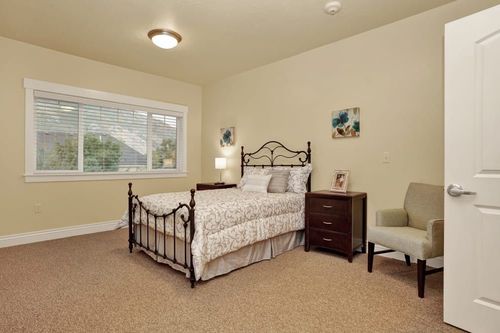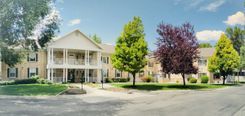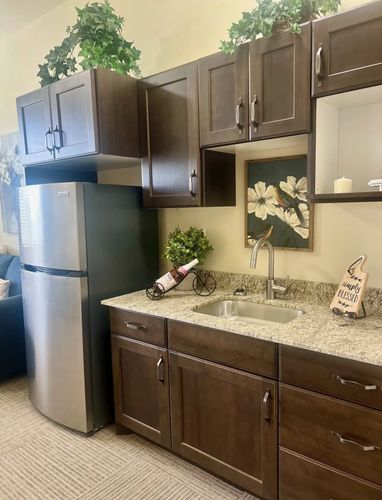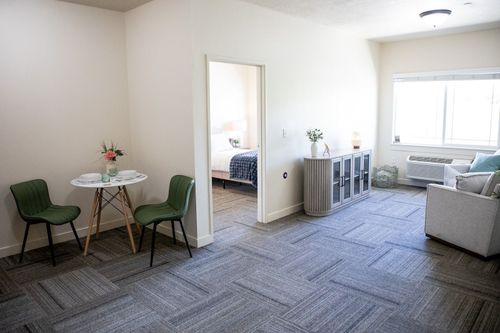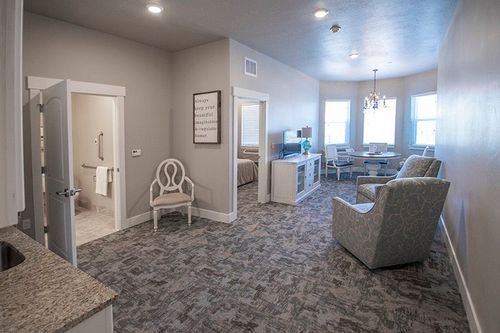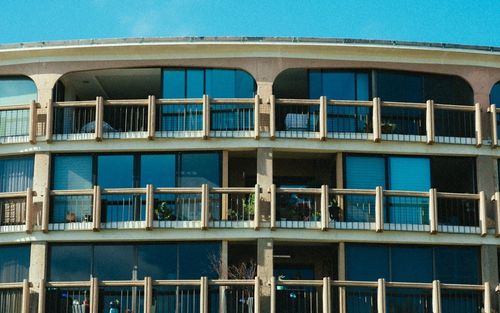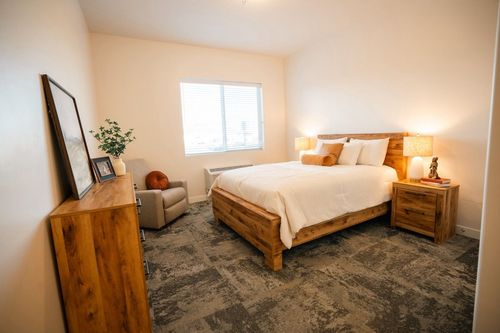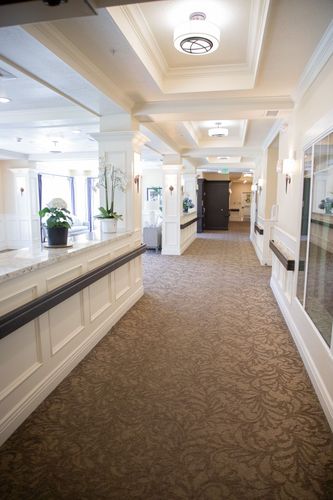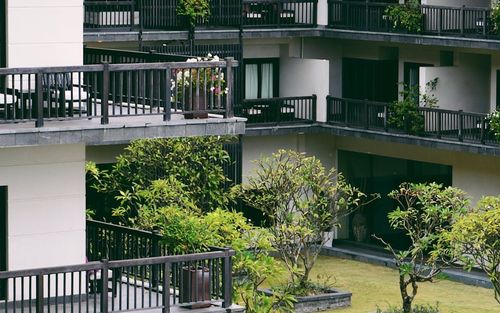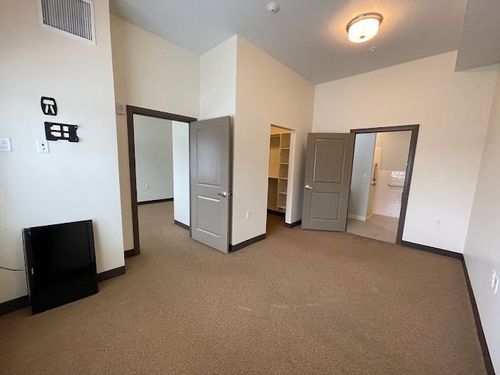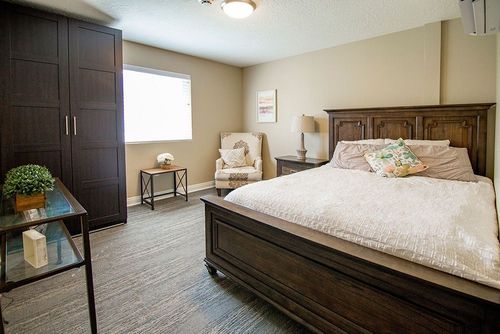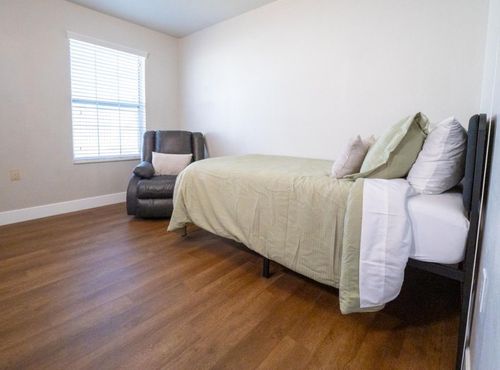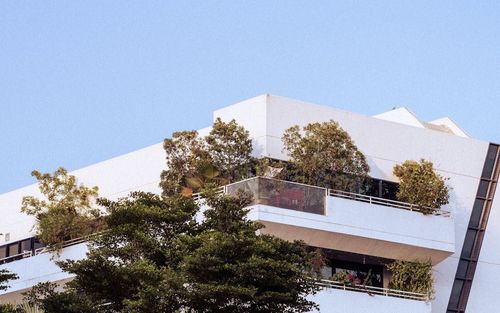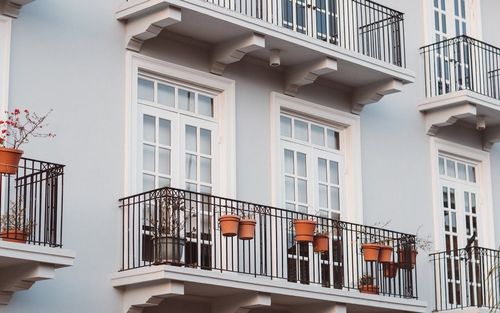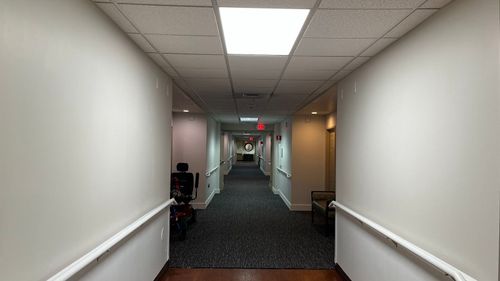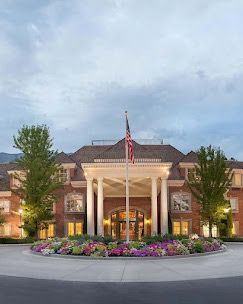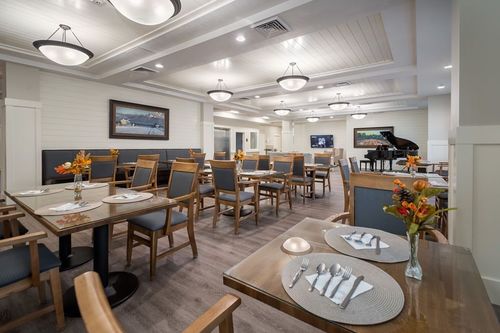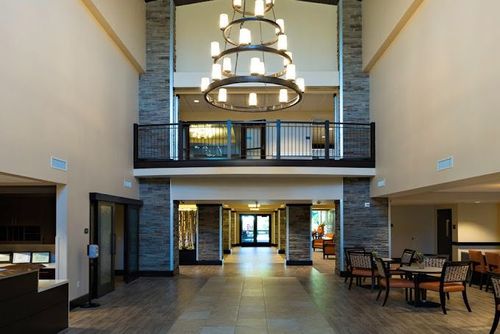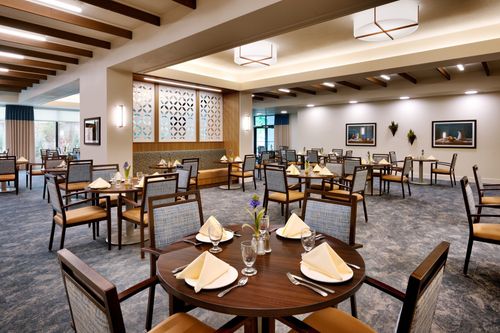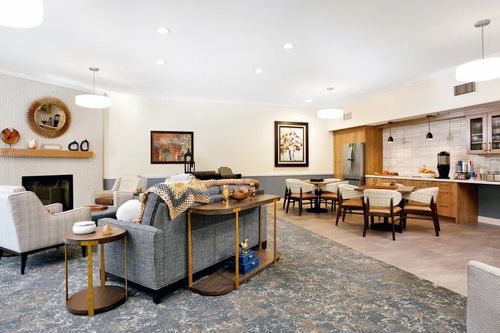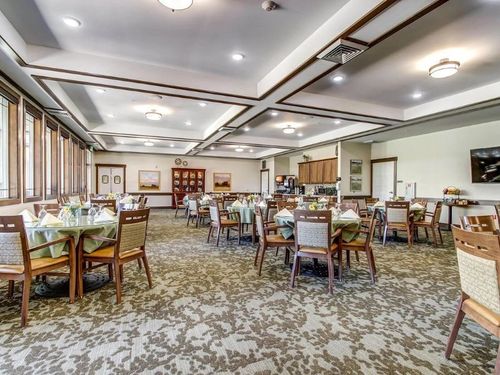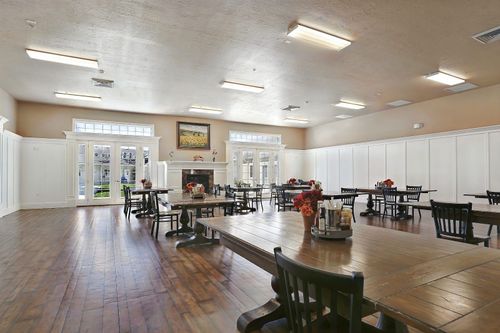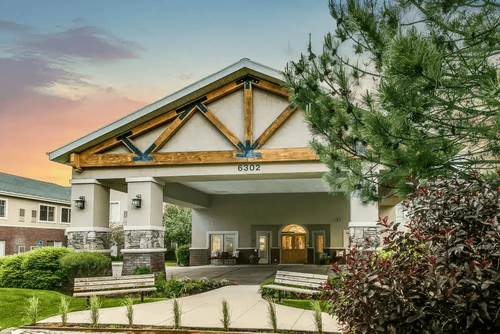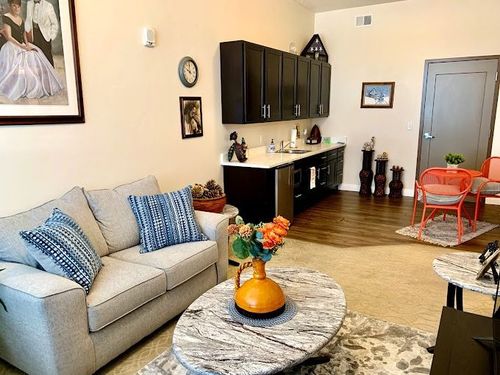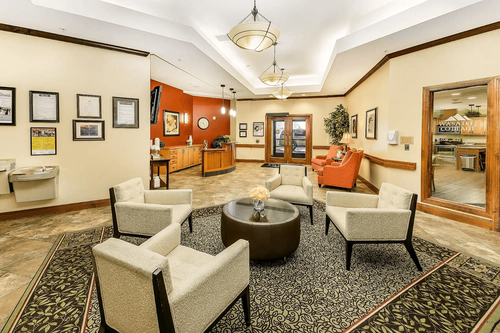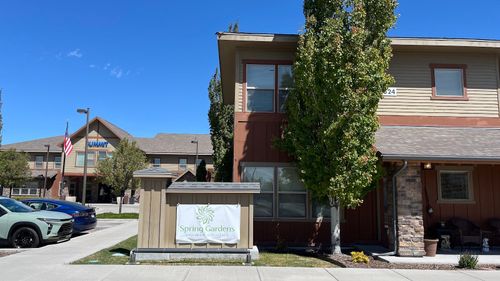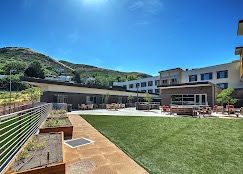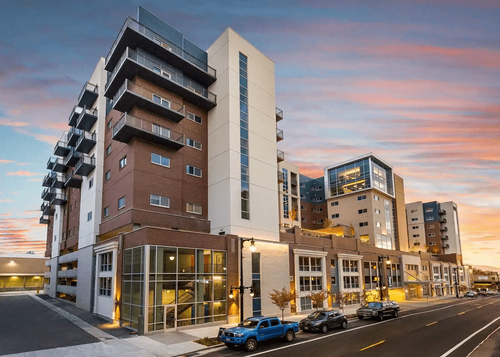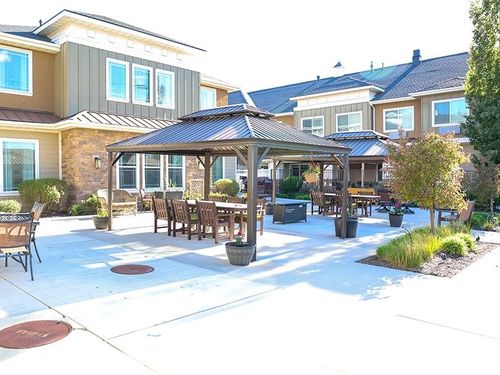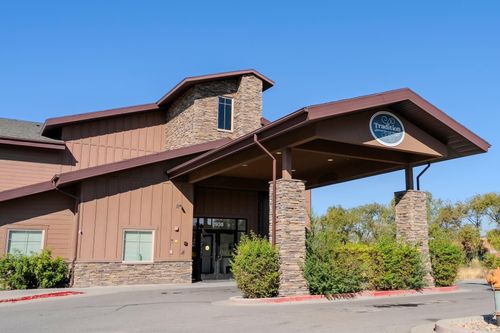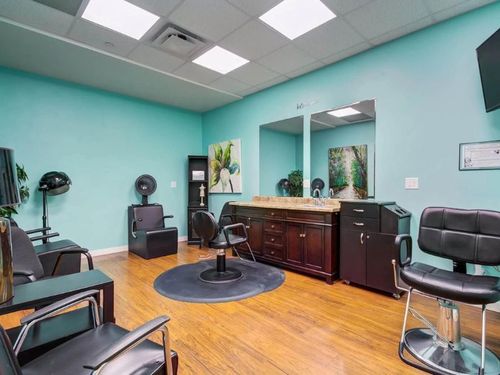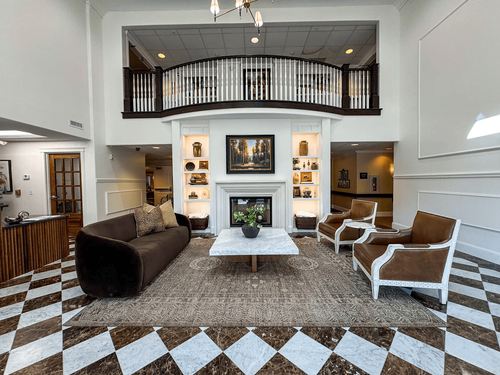
Alpine's dementia-care picture runs through one address: River Meadows Senior Living on Red Pine Drive, a 36-apartment building that holds the city's full senior-living capacity. The building carries memory-care service inside its broader assisted-living license rather than running a structurally separated secured neighborhood, which means dementia support is woven into the same dining room, the same hallways, and the same caregiver rotation that handles every other resident in the 36-apartment count.
That single-building reality and the integrated-rather-than-secured format shape how an Alpine dementia conversation runs. The question is rarely which Alpine secured wing fits the resident; it is whether River Meadows's household-style approach can carry the resident's current stage of dementia, or whether a purpose-built secured neighborhood in the broader Utah Valley corridor matches the family's situation better.
How Dementia Care Works at River Meadows
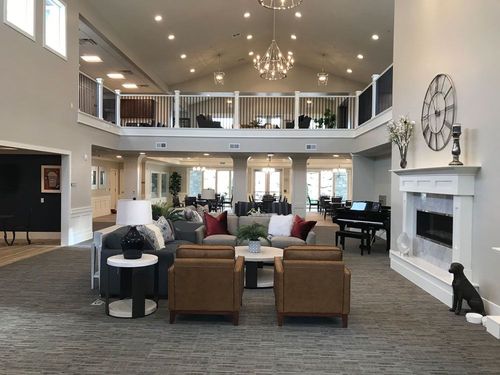
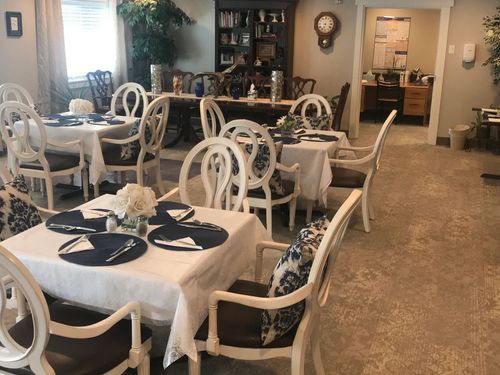
The 36-apartment footprint puts every resident inside the same building rhythm. One dining room serves both the assisted-living and independent-living sides at the same seatings, the activity calendar (light fitness, music sessions, devotional time, small-group socials) runs as one schedule across the building, and the same caregiver names show up on both day and evening shifts. Dementia support layers in as additional caregiver attention rather than a structurally walled-off zone, with medication management, bathing support, and 24-hour supervision available to residents whose cognitive picture has begun to shift.
For a resident whose dementia profile reads as earlier-stage (orientation slipping at home, daytime cueing needed, overnight routines still mostly steady), the household-scale environment a confused resident often tolerates better than a busier campus can hold up well. For a resident whose dementia has progressed into significant wandering pressure, repeat overnight unpredictability, or behaviors that need a dedicated secured perimeter rather than supportive supervision, the conversation usually broadens to American Fork, Pleasant Grove, Lehi, or Highland, where four purpose-built secured neighborhoods sit inside a fifteen-minute drive south.
Cost and Coverage
River Meadows's dementia-care monthly rate in 2026 runs roughly $4,400 to $5,800. The starting figure tracks the Utah Valley range for dementia care offered inside an assisted-living license; apartment configuration and the move-in clinical care-tier rating account for most of the spread. Move-in fees fall $1,000 to $3,500 by floor plan. Couples sharing a unit add $700 to $1,000 monthly, and respite stays come in around $160 to $220 a night.
River Meadows runs private-pay; the Aging Waiver is not part of the building's funding model. For Medicaid-track Alpine families, dementia-care funding through the Waiver routes through participating buildings in American Fork or Lehi, with the corridor's geographic proximity meaning the visit cadence rarely lengthens by more than ten or fifteen minutes either way compared with an Alpine address.
Local Healthcare Access
American Fork Hospital, the Intermountain campus five miles south, anchors routine clinical care for River Meadows residents. Its brain and spine program covers cognitive-disorder consults, neurology follow-up, headache medicine, and movement-disorder care, with a transitional-care center serving as an Alzheimer's facility for north Utah County. Utah Valley Hospital in Provo, twenty minutes south on I-15, adds the regional behavioral-health unit, Level II trauma coverage, and the geriatric-specialist depth that pace the appointments shaping the first year after a dementia diagnosis.
The practical advantage for an Alpine family is hospital proximity at every acuity tier: a UTI-driven confusion episode runs through American Fork inside fifteen minutes, a neurology workup goes to Provo's specialty floor inside thirty, and the Salt Lake County academic depth (University of Utah Health, Huntsman Cancer) sits less than an hour north when a complex case calls for it.
Why Families Choose Memory Care in Alpine
The pull is family geography: adult children working in Lehi, American Fork, Pleasant Grove, or commuting north toward Silicon Slopes reach River Meadows in ten to fifteen minutes, which keeps weekday visits and Sunday dinners on the calendar without long drives. For a dementia resident, that visit frequency matters more than at any other care tier, because the disorientation the disease produces deepens when familiar faces appear only on irregular intervals.
The Mt. Timpanogos foothill setting and quieter community character also stay accessible after the move. Many Alpine households built the area's senior demographic alongside the city's transformation from a quiet foothill town into one of Utah County's most affluent suburbs, and the small-residential scale of River Meadows fits the same household-scale expectation a confused resident often holds onto from years of single-family life.
What a Local Advisor Brings to Alpine
A typical Alpine dementia call starts after the home arrangement has reached its functional limit: medication doses end the week unfinished despite a labeled organizer, overnight orientation has stopped feeling reliable, sundowning has turned the late afternoon into agitated wandering through the house, and the family rotation has cumulative fatigue from layering schedules around a dementia trajectory that keeps moving faster than the support system can adjust. The advisor reads the resident's profile against what River Meadows's integrated format can safely hold and against what the corridor's purpose-built secured neighborhoods offer when the dementia stage has moved past earlier territory.
When River Meadows fits (the resident's wandering pattern stays inside what supervised supportive care can manage, the family's anchor to Alpine is strong, and no Waiver constraint forces the corridor pivot), the advisor walks the family through floor plans, move-in timing, and the care-tier rating that shapes the monthly figure. When the dementia stage has progressed past what a 36-apartment integrated setting can hold, the advisor brings American Fork's, Pleasant Grove's, Lehi's, and Highland's secured neighborhoods into the comparison without the family running multi-week parallel admissions inquiries on their own.
Reaching out before a hospital event narrows the planning window keeps both River Meadows and the corridor's secured options genuinely on the table. Reach out for a planning call when memory care in Alpine is on the table, or browse the buildings we cover for the broader Utah Valley dementia-care context.