
Cache County, UT

Skilled Nursing Communities in Cache County

One skilled nursing community in Cache County, UT — with free, unbiased guidance from local advisors.

1
Community
1
Community
$8,500
Avg. Monthly Pricing

Explore Skilled Nursing Communities in Cache County

One skilled nursing community to review, with free guidance from a local advisor.

View all communities in Cache County
Randy Chipman, MBA, CSA, CPRS

Cache County Skilled Nursing Advisor

Randy Chipman, MBA, CSA, CPRS

Certified Senior Advisor

Randy personally knows every skilled nursing community in Cache County. Get free, unbiased recommendations tailored to your family's care needs, budget, and timeline — no sales pressure, no obligations.

What to Expect From Skilled Nursing in Cache County

  • Inventory: 1 community in Cache County for 24-hour clinical care.
  • Setting mix: 1 community in the matching set.
  • Price range: From $8,500/mo across the matching set.

In Cache Valley, skilled nursing care almost always traces back to one building: Intermountain Logan Regional Hospital. A parent comes through surgery, a stroke, or a serious illness, and the discharge planner says they cannot go straight home. They need licensed nurses on duty around the clock and daily physical, occupational, or speech therapy to recover. That is a step beyond assisted living, which helps with bathing and medications, and different from memory care, which is built around dementia safety. The family usually has days to arrange it, not weeks.

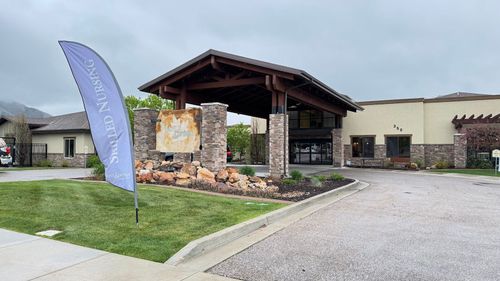
Within the senior-living directory, the skilled-nursing-level set in Cache County is small. Maple Springs of North Logan is the community here that carries skilled-nursing-level care alongside its other neighborhoods, which lets a resident move from a recovery stay into longer-term support without changing buildings. Most short-term rehabilitation in the valley actually runs through Logan Regional Hospital's own rehab unit and a handful of dedicated nursing facilities in Logan, so the directory set is deliberately the residential community that folds nursing-level care into a broader continuum rather than the hospital wings.

Around-the-Clock Nursing and Therapy After a Hospital Stay

What defines skilled nursing is the level of medical support: registered and licensed practical nurses on the floor at every hour, medication and wound management, and therapy aimed at rebuilding strength and mobility after a hospital stay. That is a different order of care from the rest of senior living, ordered by a physician and delivered on a clinical schedule rather than a daily-help one.

The value of a residential community that carries this level is continuity. When nobody yet knows whether a stay will be a short recovery or a permanent move, being able to shift between nursing-level care and a long-term apartment without starting over in a new building, with new faces, eases an already hard moment. For a Cache Valley family, it also keeps a recovering parent close to Logan Regional Hospital and to home rather than placed an hour and a half away in a larger metro.

Two Pay Clocks: Medicare Recovery Then Medicaid or Private Pay

Skilled nursing is billed differently from the rest of senior living, so a single monthly rent rarely fits. A short recovery stay after a qualifying hospital admission is often covered by Medicare for up to 100 days, with the first 20 days paid in full and a daily coinsurance near $217 after that in 2026. Once that window closes, a longer self-funded nursing stay in Utah commonly runs from roughly $6,400 a month for a shared room to about $8,400 for a private one, and Utah Medicaid covers long-term nursing care for residents who meet the medical-need and financial limits. The practical reality is two pay clocks running at once, a Medicare-covered recovery and a Medicaid or private-pay long-term stay, each approved on entirely different terms.

Why the Directory Set Is Small and the Discharge Window Is Tight

Cache County is young on paper, with Utah State University holding the median age down and the senior share near 10 percent, so the standing demand for nursing-level care is smaller than in the larger Utah metros. The need is also concentrated where most post-hospital recovery is handled, inside Logan Regional Hospital's rehab unit and the valley's dedicated nursing facilities, which is why the residential set that carries this level is small. When a family does want a community that folds nursing-level care into a broader continuum, the short list is brief, and a discharge date set by the hospital often means availability and the right pay source have to line up inside a two-to-three-day window.

What a Local Advisor Brings to Cache County

The hardest part of skilled nursing is the clock, since the discharge date belongs to the hospital, not the family. A local advisor knows which valley option can absorb a discharge on that short timeline, and which pay source it accepts, whether Medicaid for a long-term stay or private pay for a shorter one, so nobody is phoning every building from a hospital hallway. The advisor also reads the Medicare-then-Medicaid timeline, the point where a 100-day recovery benefit ends and a long-term funding source has to take over, and lines up the paperwork before that gap opens.

Reach out and an advisor can help line up the right option and pay source for the discharge, or browse the communities we have vetted across Cache Valley.
Randy Chipman, MBA, CSA, CPRS

Randy Chipman, MBA, CSA, CPRS

Certified Senior Advisor, Utah

Advisor Insight on
Skilled Nursing in Cache County

Skilled nursing placements run on the hospital's discharge timeline, often two or three days, so Cache Valley options vary in whether they can absorb a discharge that quickly. Pay sources differ too: Medicare covers up to 100 days of rehab before long-term funding takes over, after which a stay shifts to Medicaid or private pay depending on the situation.

Skilled Nursing Communities Near Cache County

Skilled Nursing communities within 50 miles of Cache County.

Frequently Asked Questions About Skilled Nursing in Cache County

How much does skilled nursing cost in Cache County?

There is no single monthly rent the way assisted living has one. A short post-hospital recovery stay is often covered by Medicare for up to 100 days, with the first 20 days paid in full and a daily coinsurance near $217 after that in 2026. A longer self-funded nursing stay in Utah commonly runs from roughly $6,400 a month for a shared room to about $8,400 for a private room, and Medicaid covers the cost for residents who qualify financially. An advisor can confirm the exact figure for the specific stay and pay source.

Where is skilled nursing available in Cache County?

Most short-term rehabilitation in Cache Valley runs through Intermountain Logan Regional Hospital's rehab unit and a handful of dedicated nursing facilities in Logan. Within the senior-living directory, Maple Springs of North Logan is the residential community that carries skilled-nursing-level care alongside its other neighborhoods, which lets a resident move from a recovery stay into longer-term support without changing buildings. An advisor can help sort out which setting fits a particular discharge.

Does Medicaid cover skilled nursing in Utah?

Yes. Utah Medicaid pays for long-term nursing-facility care for residents who meet the medical-need and financial limits, and it is the most common way families fund a permanent nursing stay once Medicare's short-term coverage runs out. Each setting handles Medicaid differently, so an advisor confirms which valley option accepts it for the kind of stay you need before you apply, since the right pay source and an open bed have to line up at once.

What is the difference between skilled nursing and assisted living?

Assisted living helps with daily tasks like bathing, dressing, and managing medications for someone who does not need constant medical care. Skilled nursing adds licensed nurses on duty around the clock plus daily physical, occupational, or speech therapy, and it is the level a hospital orders after a surgery, stroke, or serious illness. A Cache Valley community that carries both lets a resident move between levels without changing buildings as their needs become clear.

Is skilled nursing the same as a nursing home or rehab?

They overlap. A skilled nursing facility is the formal name for what families often call a nursing home, and short-term rehabilitation after a hospital stay usually happens inside one or in a hospital rehab unit like Logan Regional's. The same setting can run a 20-day Medicare rehab stay aimed at getting someone home and a long-term stay for a resident who will not be returning home, so the right choice depends on the goal of the stay, not just the address.

How quickly can a parent move into skilled nursing after a hospital stay?

Often within days, because the discharge timeline is set by the hospital case manager, not the family. That speed is the hardest part of skilled nursing, and with a small directory set in the county it helps to know in advance which option has a bed and accepts your pay source. An advisor tracks current openings and pay-source rules so a family is not phoning around from the hospital hallway while the clock runs.

How does skilled nursing compare to memory care in Cache County?

Memory care is built around safety and routine for someone living with dementia, while skilled nursing is built around clinical recovery and around-the-clock licensed nursing. Some residents need both at once, and a community that carries nursing-level care can sometimes coordinate the two. An advisor can sort out which level a parent's situation actually calls for and where in the valley it can be met.

More Senior Living in Cache County

Get Help Finding Skilled Nursing in Cache County

Our local advisors know every skilled nursing community in Cache County personally. Get free, unbiased recommendations tailored to your family's care needs, budget, and location preferences.

Free service · No obligation · We only recommend what's right for you