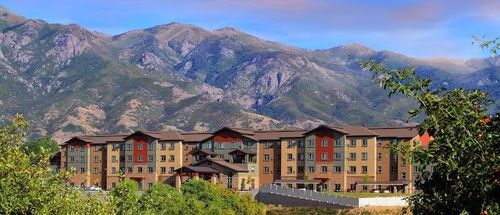
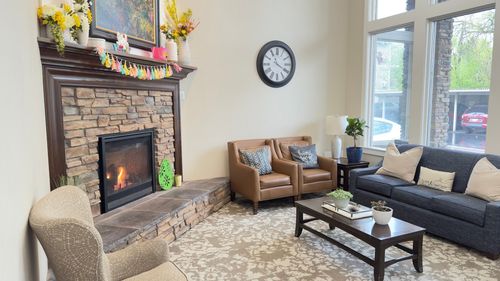

Cache County is one of Utah's more compact independent living markets, and the reason sits at its center: Logan and Utah State University. The campus keeps the valley young, with a median age in the low twenties, so only about 15,000 of the county's roughly 145,000 residents are 65 or older, close to one in ten. That share runs below the Utah average, which is why the county supports a focused set of communities rather than a long list. Independent living here means two buildings, both in the Logan area: Williamsburg Retirement Community in Logan, near the hospital and the university corridor, and Pioneer Valley Lodge a few minutes north in North Logan. They sit close enough that a family can tour both in one afternoon, and a resident who chooses either stays inside the same valley, the same circle of grandchildren, neighbors, and church wards.
Independent living is the long-horizon choice, not the crisis one. Families usually arrive here while a parent is still driving and still healthy, planning ahead so the house and yard stop being a burden before a fall or a hospital stay forces the question. In a valley this tight, that planning is easier because the options are knowable rather than overwhelming.
What the Monthly Fee Handles in the Logan Area
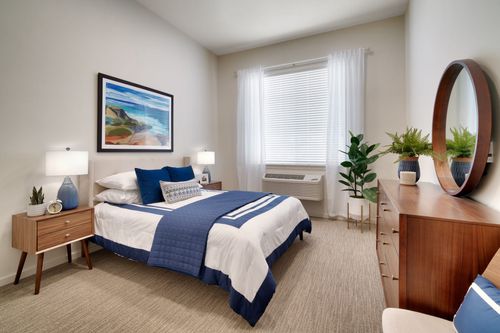
Independent living in the Logan area is housing with the daily chores handled, not medical care. A monthly fee covers a private apartment, prepared meals, housekeeping, building upkeep, a calendar of activities, and usually transportation, which leaves a resident free to live on their own terms while someone else cooks and cleans. It does not include hands-on help with bathing, dressing, or medication, which is the work of assisted living rather than independent living.
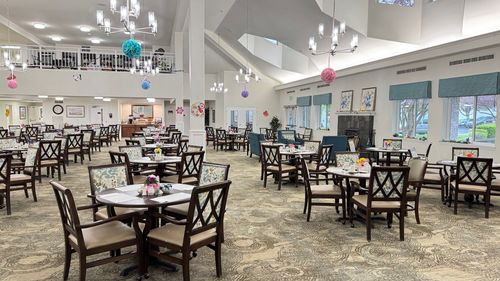
With only two communities, the day-to-day difference comes down to apartment size, the dining setup, and how full the activity calendar runs, rather than choosing between a large metro campus and a small residential home the way Wasatch Front families do. Both communities sit minutes from Logan Regional Hospital, the Intermountain hospital that anchors the valley, so routine appointments and any urgent need stay close to home.
What Two Logan-Area Communities Charge, and Why It Is Private Pay
Monthly pricing across the two communities runs roughly 2,500 to 2,800 dollars. The lower end reflects a smaller apartment and a more basic service package, while the higher end brings larger floor plans, fuller dining, and more extras. The figure covers housing, meals, housekeeping, and activities, not personal or medical care.
Families pay that cost privately, since Medicaid does not fund independent living anywhere in Utah, including Cache County, because it is housing with services rather than a medical setting. Families most often draw on retirement income, personal savings, or the proceeds from selling a home, and some use long-term care insurance or veterans benefits to help offset the monthly fee.
How a University Town Shapes a Small, Logan-Centered Market
Utah State University shapes everything about the county's age profile. Tens of thousands of students hold the median age down and keep the 65-and-older share near 10 percent, below the state's roughly 12 percent. For families, that means demand for independent living is steady but modest, concentrated almost entirely in the Logan and North Logan area where the senior population actually lives rather than spread across the valley's smaller farming towns.
Because the set is small, openings matter. When one of the two communities fills a preferred floor plan, the wait can stretch, so families weighing a move in the next year benefit from starting the conversation early rather than assuming an apartment will be open the week they decide.
Why Families Choose Independent Living in Cache County
Most families choose to stay in Cache Valley because the rest of life is already here. Adult children work at the university or the hospital, grandchildren are in local schools, and the Sunday routine of church and family dinner does not survive a move out of the valley. Independent living lets a parent shed the house without giving up any of that.
Logan Regional Hospital reinforces the case, with cardiology, cancer care, orthopedics, and behavioral health on a single campus minutes from both communities, so a resident's specialists stay local. Add the valley's senior center, its trails and parks, and the short drives between everything, and staying in-county rarely means giving anything up.
What a Local Advisor Brings to Cache County
With only two communities, the value is not a long list to sort through, it is knowing the details that separate them and which one currently has an opening. A local advisor knows how Williamsburg and Pioneer Valley Lodge differ on apartment size, dining, and what each monthly fee actually covers, and can tell you where a given budget lands.
The more important question in a small market is what happens later. An advisor tracks whether a community connects to a higher level of help, so a future move to assisted living does not mean leaving the valley, and can map that step-up path before a family ever signs.
Reach out to talk through both Cache County communities, or browse the communities we have vetted to see them for yourself.