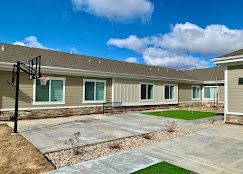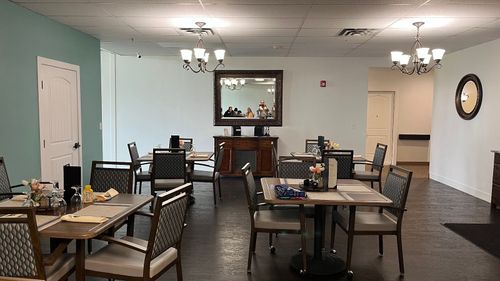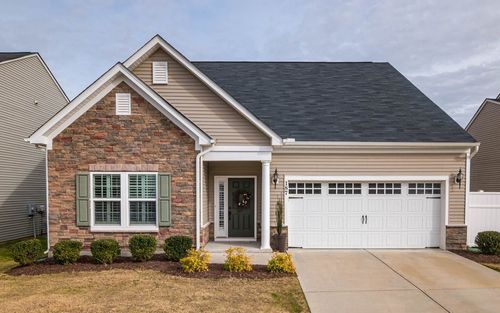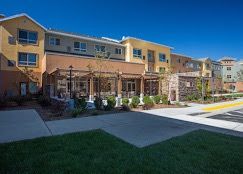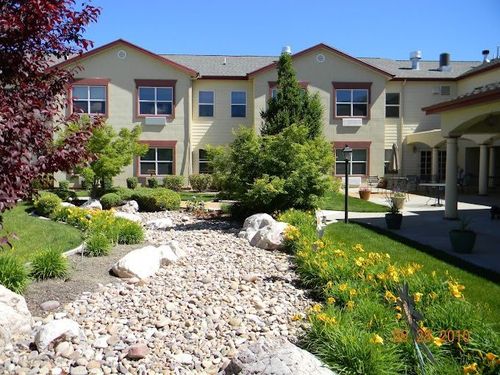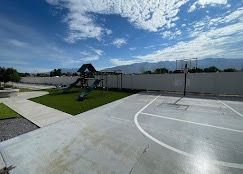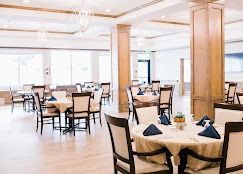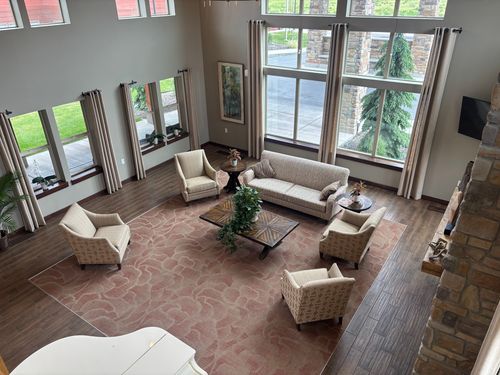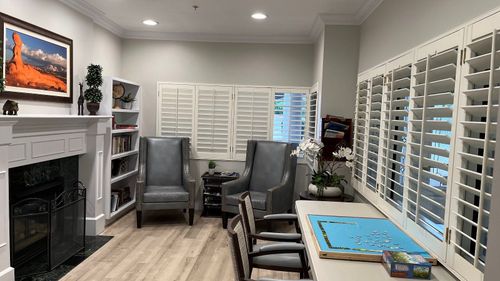
Country Pines Retirement Community on 1748 West 1800 North is the only published retirement-tier option inside Clinton's city limits, with a 66-apartment continuum building that pairs independent living with an assisted-living wing and a 16-apartment secured memory-care neighborhood. Clinton's other senior-living address, The Peaks at Clinton, is a dedicated dementia-only campus and does not run a retirement tier. Families weighing a retirement move locally typically compare Country Pines with the deeper bench of independent-living campuses ten minutes east in Layton along the Davis County corridor.
Three pieces define the retirement-tier package at Country Pines, mirroring what anchors its assisted-living side: pets are welcome, the entry price runs notably below typical Wasatch Front retirement-tier figures, and a future move into assisted living or the secured memory-care neighborhood stays inside the same building. For Hill Air Force Base retirees rooted in Clinton through TRICARE and family proximity, those three pieces tend to matter as a set.
Daily Life and Building Services
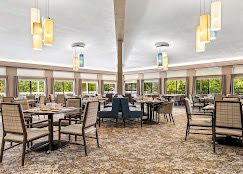
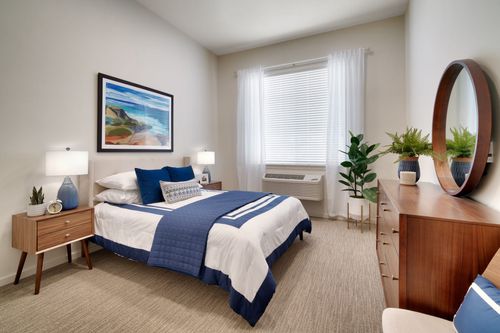
A Country Pines retirement-tier resident keeps their own daily rhythm. Meals flow from the building's kitchen on flexible seating, housekeeping runs weekly inside the apartment, and a shared shuttle handles appointments along with group outings. The activity calendar fits what a mid-sized continuum building can sustain, and pets remain welcome on this tier alongside the rest of the campus.
Dining rooms and common-space activities mix retirement-tier residents with the assisted-living wing and the memory-care neighborhood, which is the structural reality of a 66-apartment continuum. Some Clinton households read that mixed rhythm as the point of the choice; others want a setting where retirement-tier life runs on its own, and the comparison naturally widens toward the larger purpose-built retirement campuses east in Layton or down the Davis corridor.
Pricing and Affordability
Country Pines's retirement-tier monthly rate in 2026 runs roughly $2,000 to $3,200. The starting figure lands well under most Wasatch Front retirement-tier entries because the building's operating model carries the Aging Waiver across other tiers and holds prices accessible throughout. Apartment size accounts for most of the spread, with studios and one-bedrooms at the lower end and two-bedrooms toward the upper.
Move-in fees fall $500 to $2,500 by apartment. Utah's Aging Waiver does not reach the retirement tier, since the program turns on only at nursing-facility clinical need that retirement-tier residents have not reached. VA Aid & Attendance follows the same threshold logic. Most Country Pines retirement-tier households fund the move with pension, Social Security, and household assets, with both benefits coming into play later if and when a tier transition surfaces.
A Hill AFB-Retiree Demand Picture
Clinton's senior population leans heavily on Hill Air Force Base retirees and Department of Defense civilian retirees who anchored here during active-duty years and held on for TRICARE coverage, family ties, and the corridor's military-community fabric. Roughly ten percent of the city's 24,000 residents are 65 or older in 2026. Country Pines's retirement-tier demand reflects that demographic, with many residents arriving once a long-held Clinton property has crossed from manageable into a heavier upkeep load.
Retirement-tier turnover at Country Pines moves slower than on the assisted-living side, since residents typically stay multi-year before crossing into the higher-acuity tiers. Two-bedroom layouts carry the longest waits because couples and singles wanting room for visiting grandchildren both compete for the same floorplans.
Why Families Choose Independent Living in Clinton
The continuum argument carries the most weight over a long horizon. A resident moving into Country Pines's retirement tier in their early-to-mid seventies has the reassurance that future assisted-living or memory-care needs would be handled across the same building rather than triggering a fresh community search. For couples whose multi-year plan should leave room for the spouses' care needs to diverge, the structure handles that without two separate facility decisions.
Affordability runs as a separate argument: Country Pines's retirement-tier entry sits below typical Wasatch Front retirement-housing pricing, which keeps the option open for Hill AFB-retiree households whose pension and Social Security income would not stretch comfortably to the higher-priced dedicated retirement campuses farther east or south. Holy Cross Davis Hospital ten minutes east handles the routine medical care retirement-tier residents still need, with TRICARE coordinating Hill AFB-retiree healthcare alongside the civilian primary-care relationships.
What a Local Advisor Brings to Clinton
A Clinton retirement-tier conversation typically arrives months or years before any clinical pressure surfaces, since the trigger is usually a downsizing decision rather than a hospital call. That longer runway gives an advisor room to read the household's broader plan and clarify whether Country Pines's continuum format fits the family's expectations, or whether the comparison should open up to dedicated retirement campuses along the Davis corridor.
For Hill AFB-retiree households, the planning chat often folds in the eventual VA Aid & Attendance application well before it affects the retirement-tier rate. The VA processes new applications over a three-to-six-month window, so beginning the paperwork during the retirement-tier stay puts the benefit close to active by the time the resident shifts to the assisted-living side and the eligibility threshold opens.
A short call at the planning stage leaves room to weigh Country Pines against the Davis County alternatives on the family's own schedule. Schedule a planning call when independent living begins shaping the family's calendar, or view the directory for the broader Davis County retirement-housing context.