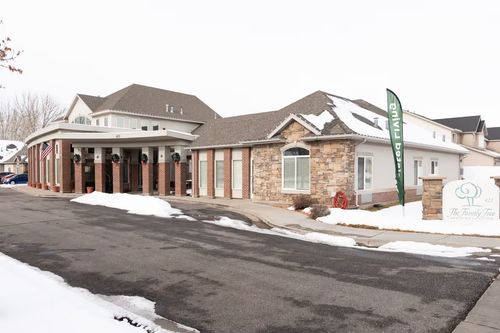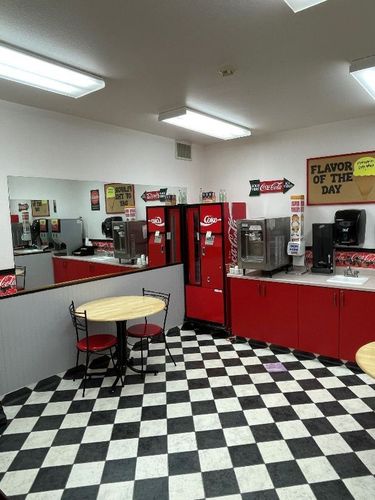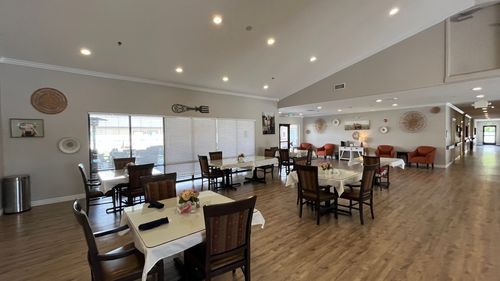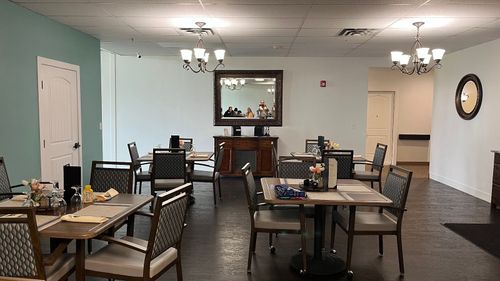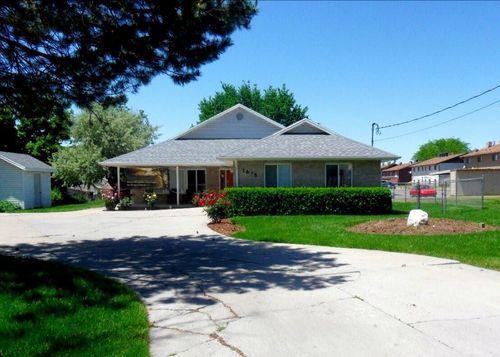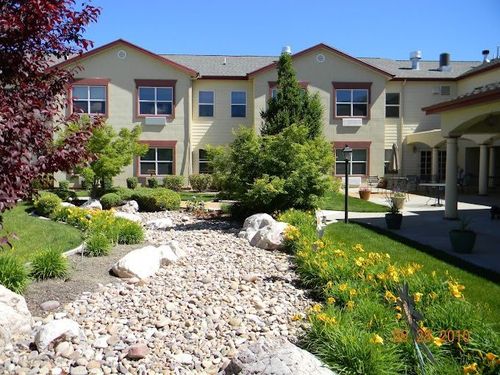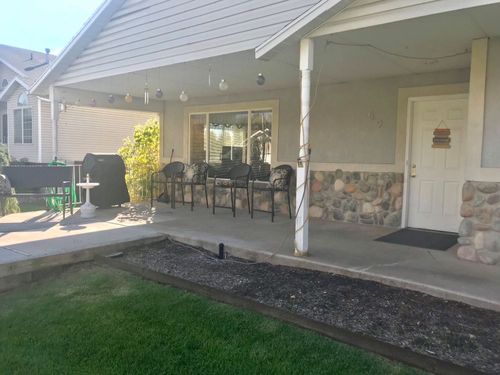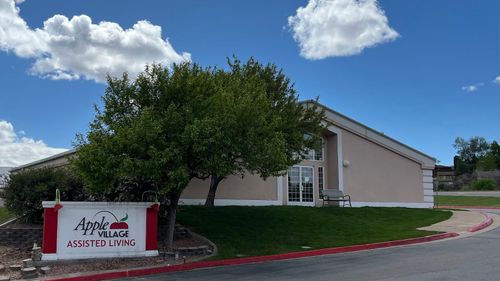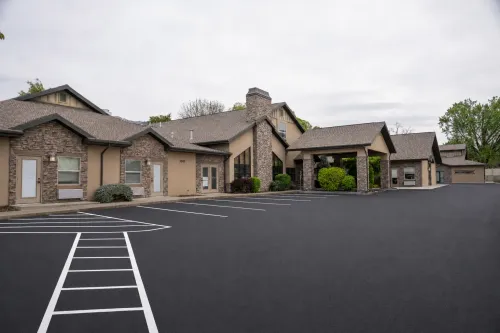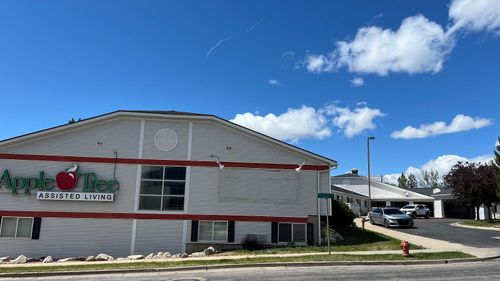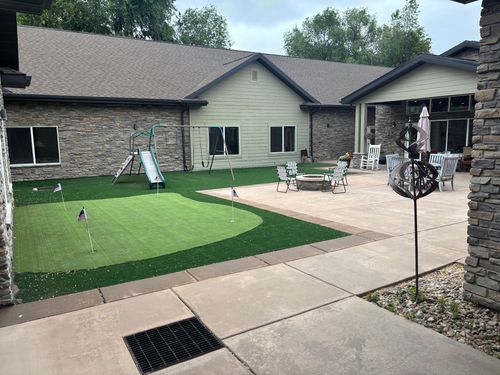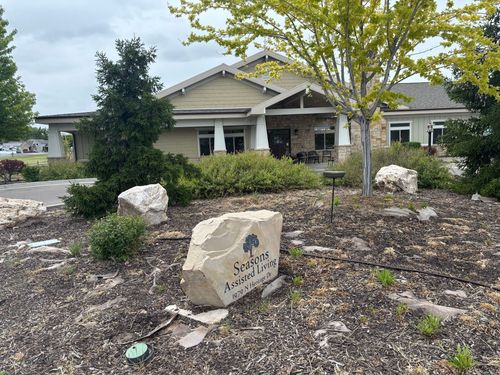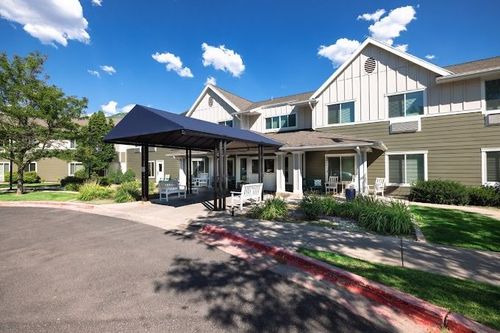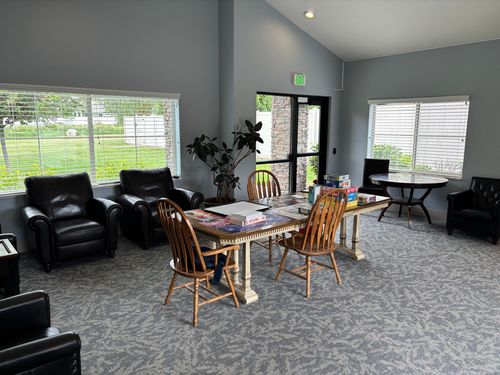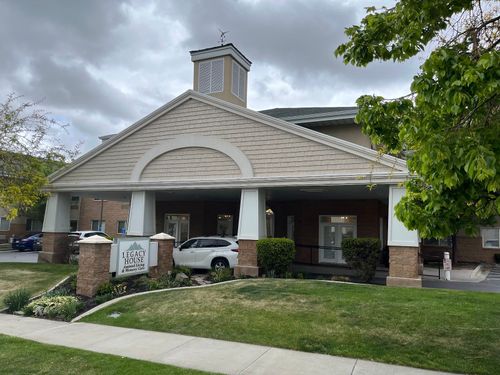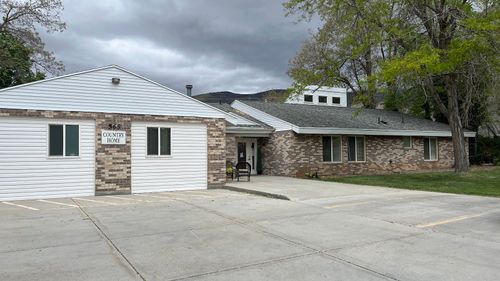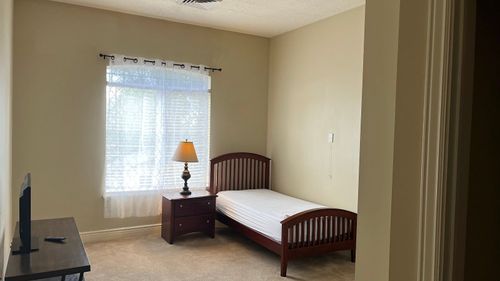

Medicaid-accepting senior living in Clinton runs through a single continuum building, Aspen Alcove at Clinton on 1800 North, which houses independent living, assisted living, and memory care under one roof. That mix matters more than it first appears, because Medicaid reaches the assisted-living and memory-care tiers but never the independent-living one, so which part of the building a resident needs decides whether the waiver can help at all.
Families come to the Medicaid question in Clinton the usual way, when assisted-living or memory-care bills climb past what a fixed monthly income can hold. Aspen Alcove is where that conversation lands locally, and the New Choices Waiver is the program that can carry the care costs once a resident qualifies, keeping the move inside Clinton rather than sending the family searching out of town.
Three Tiers in One Building, and the Two Medicaid Reaches
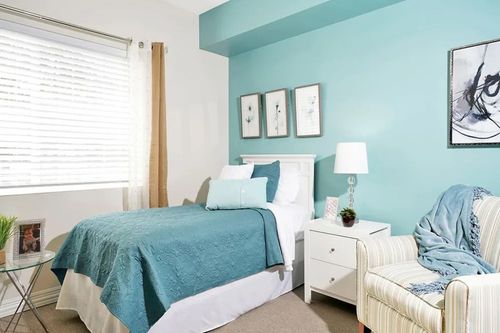
Aspen Alcove runs about 66 beds across its three care levels, with roughly sixteen of them in a secured memory care wing. Independent living sits at one end, for residents who mostly look after themselves; assisted living in the middle, for those who need daily help with bathing, dressing, medications, and meals; and memory care at the other, for residents living with dementia who need a secured setting. Medicaid, through Utah's New Choices Waiver, can fund the care work in the assisted-living and memory-care tiers for a resident whose needs reach a nursing-home level of care. It does nothing for independent living, which carries no care need for the program to pay against.
That is the practical line a Clinton family has to find. A resident who only needs independent living cannot put Medicaid toward it at Aspen Alcove or anywhere else; the waiver turns on only once care needs climb to the assisted-living or memory-care level. Where it does apply, it pays for the care services and leaves the room alone. A waiver-funded resident usually takes a shared room to keep the housing share affordable, while the hands-on care looks the same as it does for a private-pay neighbor down the hall.
How an Aspen Alcove Bill Adds Up With Medicaid
At a continuum building like Aspen Alcove, the price depends entirely on which tier a resident lives in: independent living is cheapest, assisted living costs more, and memory care the most. The listed starting rate, posted around $3,000, reflects the independent-living floor, not what assisted living or memory care actually runs. Assisted living lands around $3,000 a month, with memory care higher, still under Utah's median and below the national figure.
Once care needs reach the assisted-living or memory-care level, the New Choices Waiver steps in on the care portion of the bill for a resident who qualifies. The housing portion, room and board, stays the resident's responsibility, paid out of monthly income. In 2026, a single applicant's income must sit under the state's monthly limit, with countable assets capped at a set ceiling, and Utah reviews 5 years of transfers. Skilled nursing, when that is the need, runs through traditional Medicaid with room and board included. Independent living, again, draws no Medicaid support at any income level.
How Many Clinton Seniors, and How Few Waiver Beds
Clinton is a young family suburb of about 23,000, where roughly one resident in eleven is past 65, near 2,000 older adults. That keeps senior demand modest and tilted toward private-pay buildings, so the city's Medicaid-accepting inventory is concentrated in a single building, and the waiver-funded rooms inside it are a smaller set still. The New Choices Waiver is capped statewide, which means qualifying for it does not promise an open waiver room at Aspen Alcove on the week a family needs one. With only one address in play, knowing its current availability is most of the practical work.
Reasons a Clinton Family Stays Put
For a Clinton family, keeping a Medicaid move in town is partly about the people already nearby. Aspen Alcove sits in the west-side neighborhoods off 1800 North, where a resident's adult children are often a few minutes away and a congregation still checks in, so the routine of an ordinary week holds rather than scattering. There is also an advantage built into a continuum building: a resident who enters in assisted living can step up to memory care later without leaving Aspen Alcove, so a family that qualifies for the waiver in one tier is not forced to start over somewhere new when needs change. For a household already stretched by the money, avoiding a second move and a second search carries real weight.
What an Advisor Settles First at Aspen Alcove
The tier question decides everything in Clinton, because Aspen Alcove also holds an independent-living level Medicaid will not fund. The work is confirming which level a resident actually needs, whether Medicaid covers it, and whether the assisted-living or memory-care side has an open waiver-funded room at the moment. A family that walks in expecting independent living paired with Medicaid needs that corrected early and gently, before time is lost.
On a discharge from Holy Cross Hospital - Davis to the south or McKay-Dee Hospital in Ogden to the north, the timing tightens, because waiver approval can run weeks even as a hospital bed empties in a day or two. An advisor familiar with Aspen Alcove can run the New Choices paperwork and the room check together and plan for a short private-pay stretch if the dates do not line up. Our list of vetted Clinton communities keeps growing into 2026. Reach a local advisor to talk through Medicaid options at Aspen Alcove, or look through the communities we've vetted at your own pace.