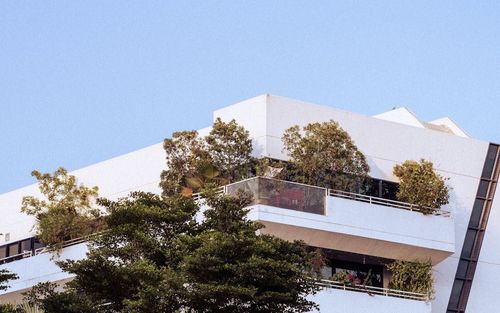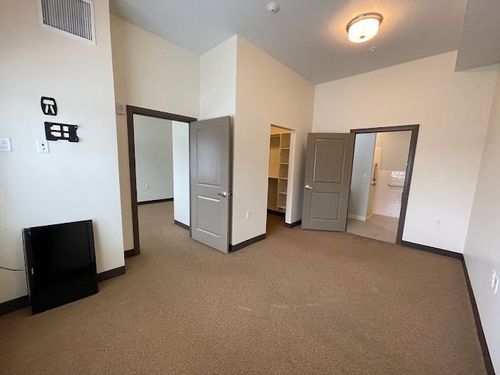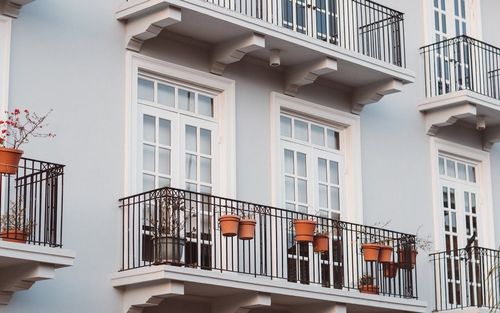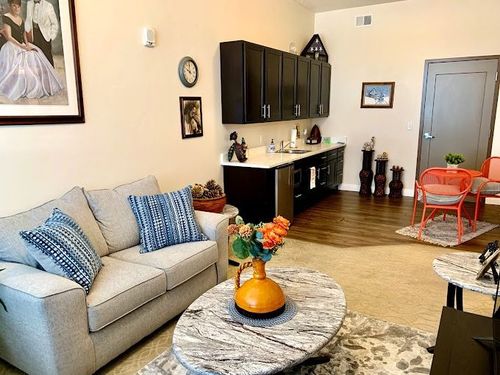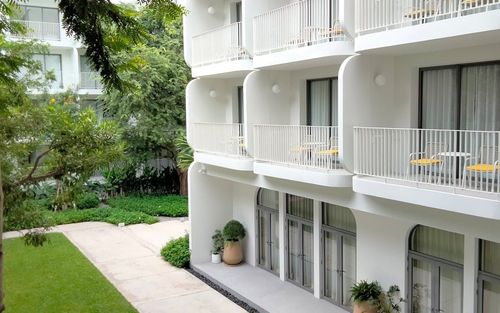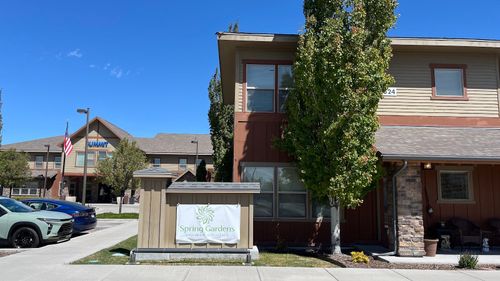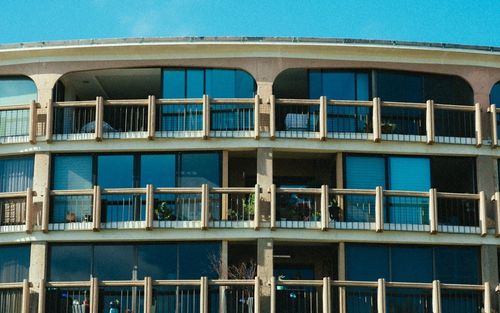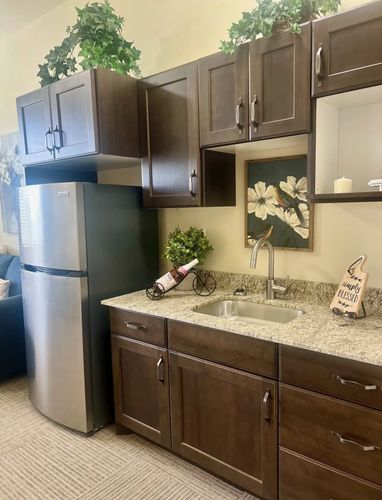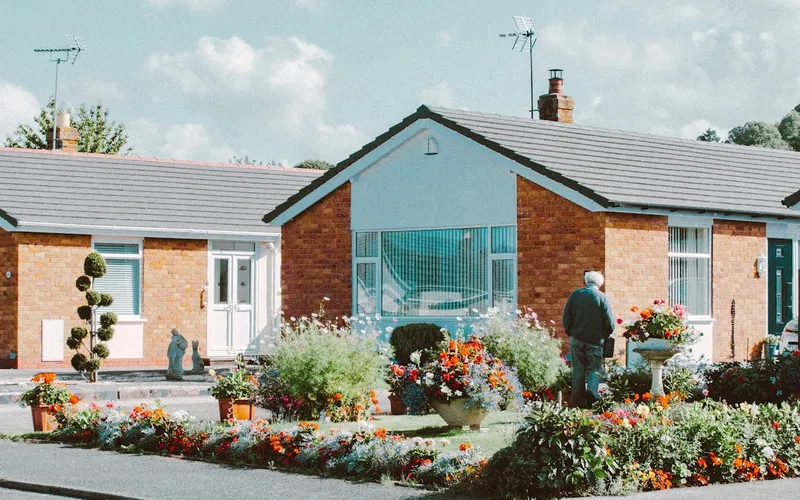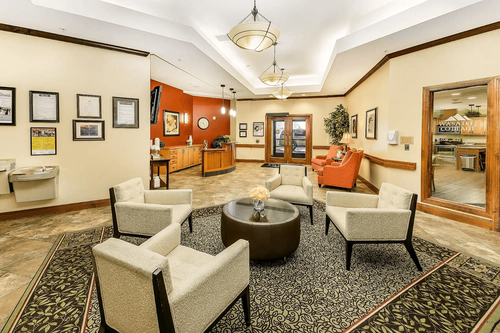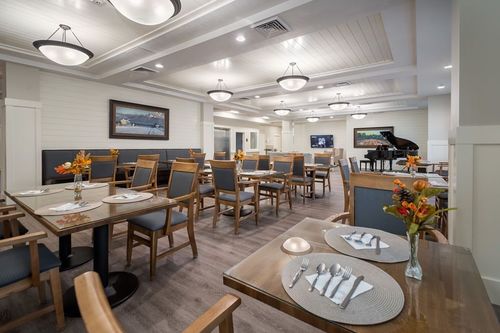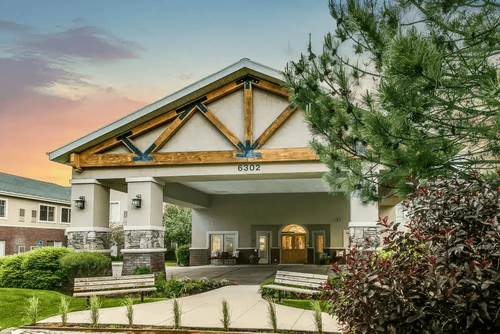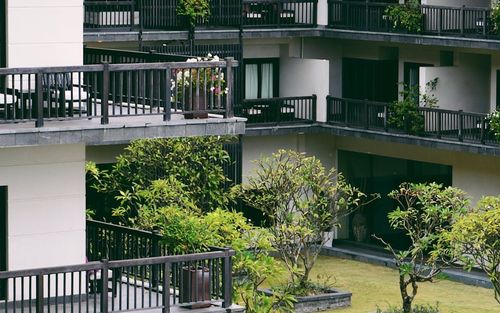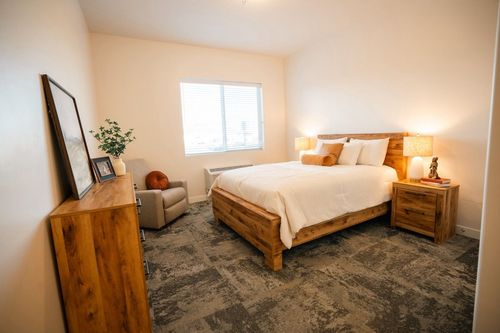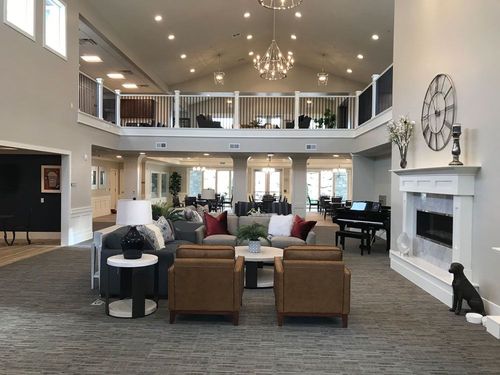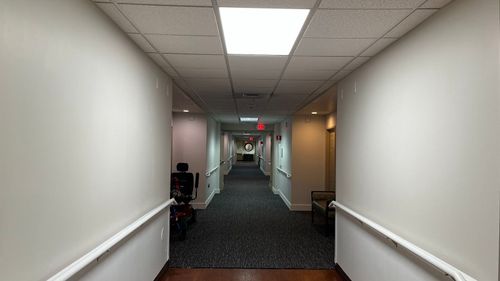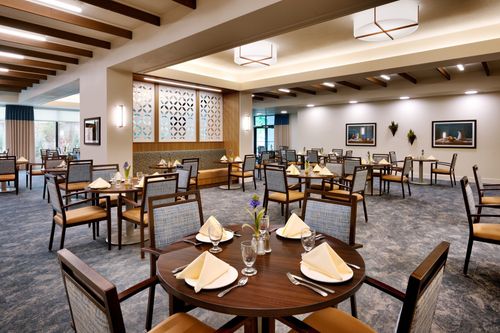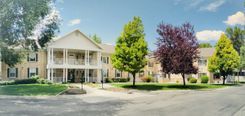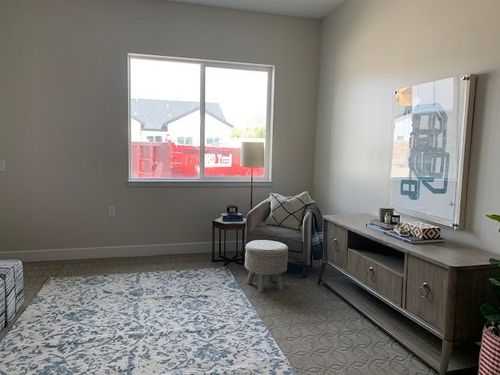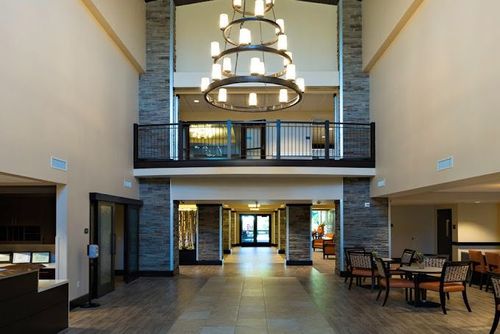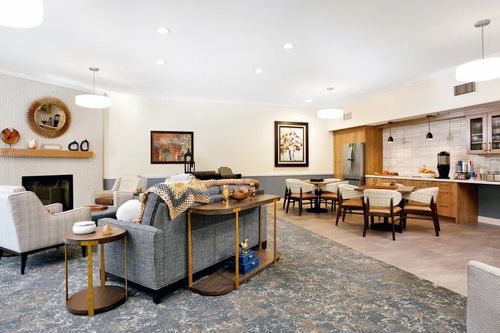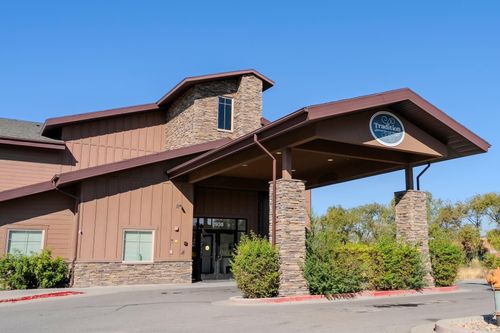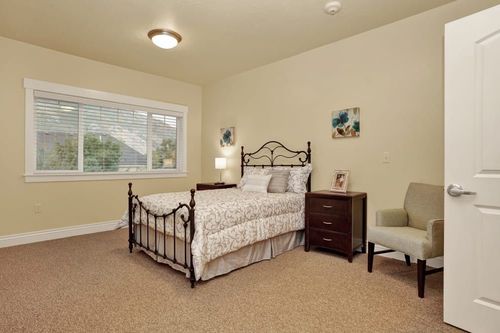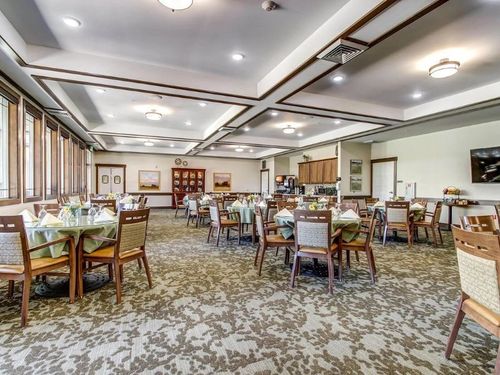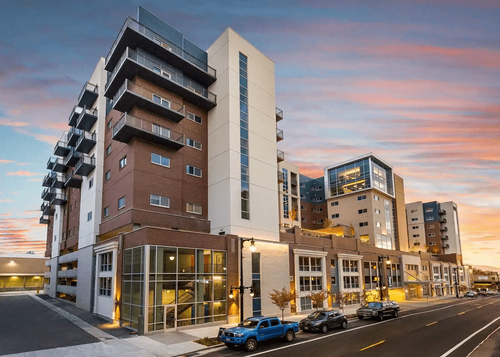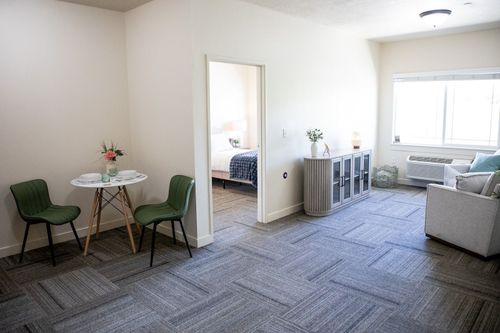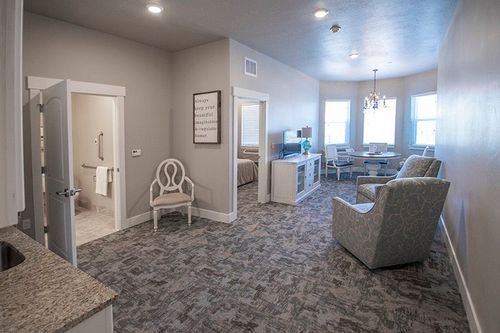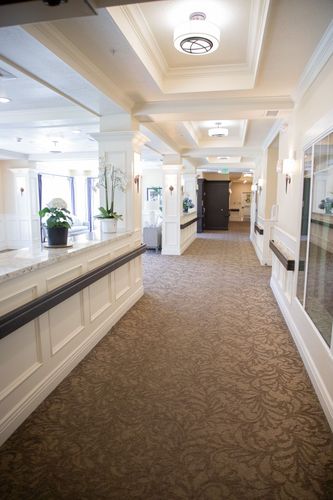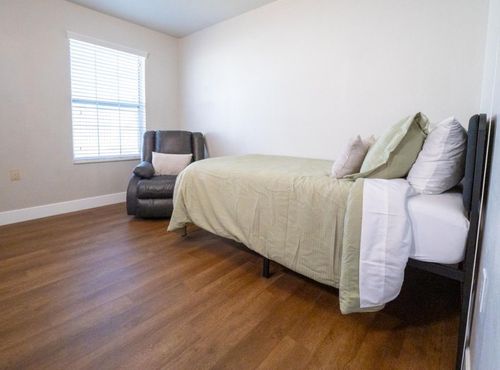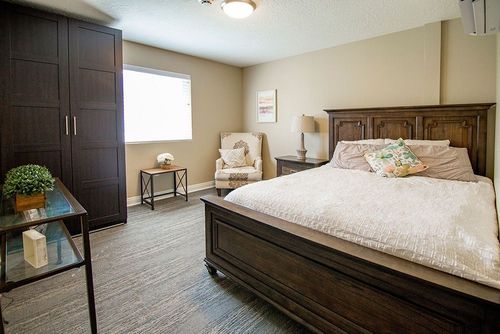
Dementia placement inside Herriman city limits runs through one address: Beehive Homes of Herriman at 6352 West 13100 South, a 24-bedroom residential home with a secured memory-care side under the same roof as the building's assisted-living service. The secured side carries Wanderguard, controlled access doors, a fenced courtyard and walking paths, and certified nursing assistants on the floor around the clock with a registered nurse reachable through the building's on-call line.
For a Herriman household weighing memory care, the choice is whether the small-residential household model fits the resident's current stage, or whether the broader south Salt Lake Valley inventory inside a fifteen-minute drive (Riverton, South Jordan, West Jordan) suits the profile better. Riverton Hospital eight minutes east handles the medical events common in dementia care.
How the Local Dementia-Care House Works
The secured side at Beehive Herriman runs as a structurally separate setting from the building's assisted-living rooms. The day moves through home-cooked meals from the central kitchen, dementia-tuned activity blocks including music and tabletop work, fenced courtyard time during warm weather, and a quieter evening pattern that closes with a second medication pass. Behavioral-care-trained caregivers fill the daytime hours and an awake overnight team holds the secured-side coverage.
The 24-bedroom household scale reads differently than the 30-to-50-resident secured neighborhoods at larger Wasatch Front campuses. For an earlier-to-mid-stage dementia resident who still benefits from a smaller social texture, the format is a natural fit. For a resident whose dementia has progressed to where behaviors call for specialized intervention multiple times a day or where awake-overnight licensed nursing is essential rather than on-call, the household model carries limits the conversation should name early.
Cost and Coverage
Dementia-care bedrooms at Beehive Herriman generally bill $4,500 to $6,500 monthly in 2026. The figure sits above the building's assisted-living rate because the secured side carries higher staffing ratios, the awake-overnight team, and the perimeter supervision Utah Type II licensing requires for dementia service. A community fee at move-in lands between $500 and $2,500, and respite stays on the secured side run $150 to $210 per night.
The Aging Waiver is part of Beehive Herriman's funding picture, which is unusual on the dementia-care side at a 24-bedroom scale on the Wasatch Front. Statewide Waiver funding is capped, so the building rotates Waiver-funded bedrooms through eligible residents on a timing shaped by both vacancies and the state's processing queue.
A Young-Suburb Demand Pattern
Herriman's overall population sits near 65,400 in 2026, with roughly 2,800 residents past sixty-five. The senior share runs below five percent because the city's growth came through young-family subdivisions, but the dementia caseload is climbing as those original build-out households age into the diagnosis curve, which is part of why a single 24-bedroom address keeps a meaningful waitlist on the secured side.
Room turnover on the secured side follows individual resident transitions, and wait times can stretch when Riverton Hospital discharges or south-valley behavioral events surface several placements at once.
Why Families Choose Memory Care in Herriman
Familiar surroundings matter more in dementia care than in any other senior-living tier, because moving a person with cognitive impairment into an environment they cannot read amplifies the disorientation the disease is already producing. At Beehive Herriman, the resident keeps the south-valley fabric within reach: the Wasatch Front mountain backdrop east, the Bingham Creek Reservoir near the building, and longtime ward and family connections from Daybreak, South Jordan, and West Jordan staying part of the weekly visit pattern.
Riverton Hospital eight minutes east handles the medical events common in dementia care, including urinary infections presenting as confusion, post-fall workups, and same-day evaluations for behavioral shifts. The case-management team's familiarity with the building's clinical scope keeps post-discharge handoffs short.
What a Local Advisor Brings to Herriman
Dementia-care calls into Herriman generally arrive after a season where overnight safety has stopped feeling reliable, behavioral shifts have outgrown what hired aides can manage, or the cumulative exhaustion of months of family-and-aide hours has begun to leave gaps the decline keeps finding. The advisor reads the resident's stage against the small-residential household model at Beehive Herriman, checks current secured-side availability, and verifies the Aging Waiver rotation when Medicaid will matter.
When the household model fits, the conversation moves into bedroom specifics, the secured-side care tier, and move-in coordination. When the resident's profile or the timing runs heavier than what the building can hold, the advisor pulls south-valley dementia-care alternatives in including the Riverton, South Jordan, and West Jordan secured neighborhoods inside a fifteen-minute drive. A planning conversation early in the process keeps Beehive Herriman in scope rather than narrowed to whatever opens during a discharge week. Reach out for a planning call when memory care begins shaping the household calendar, or browse our directory for the broader south-valley context.