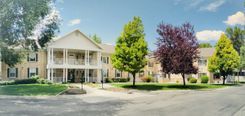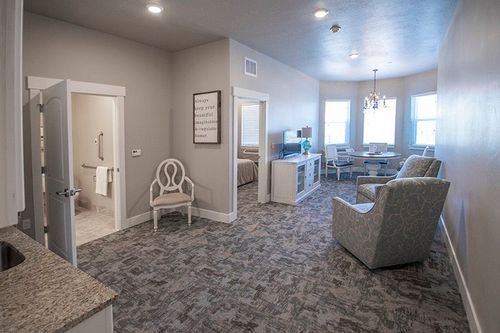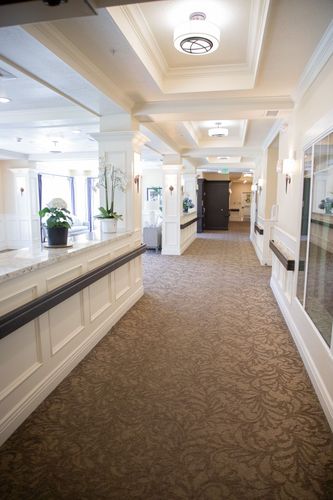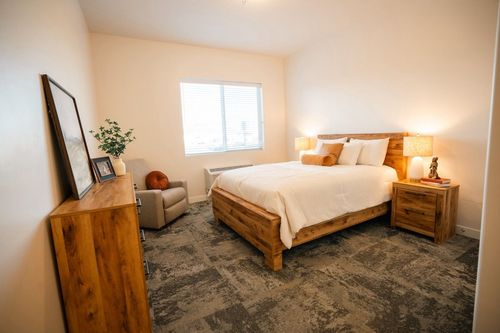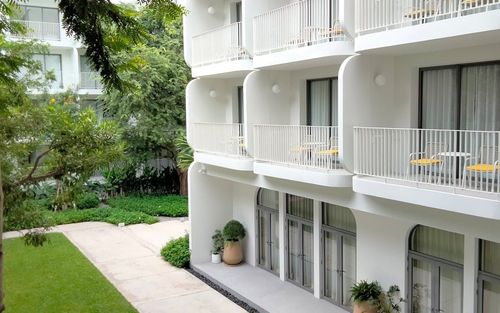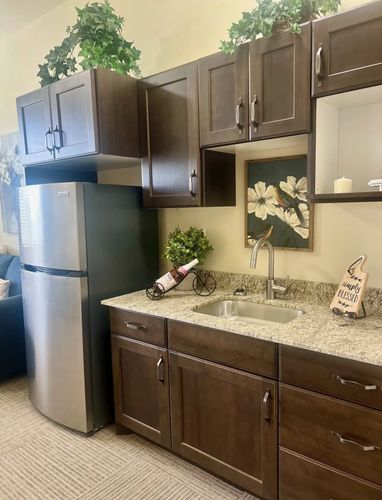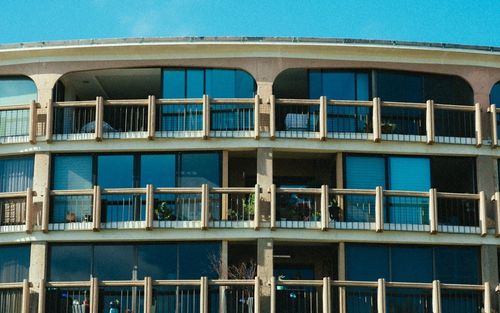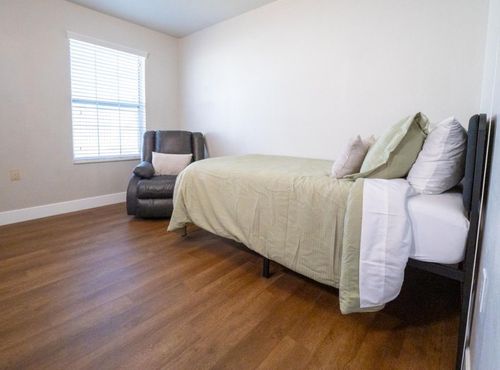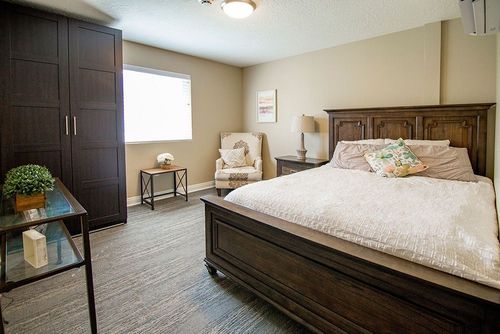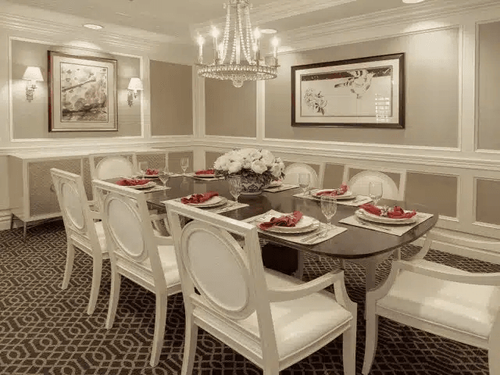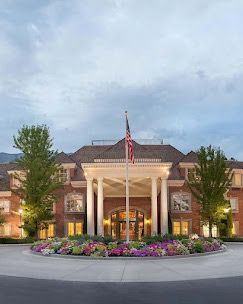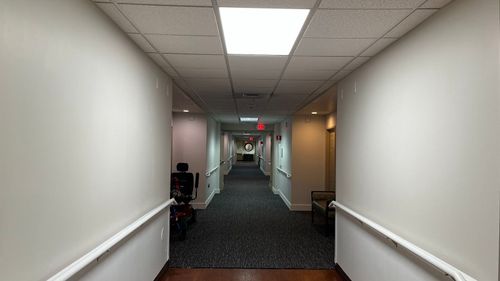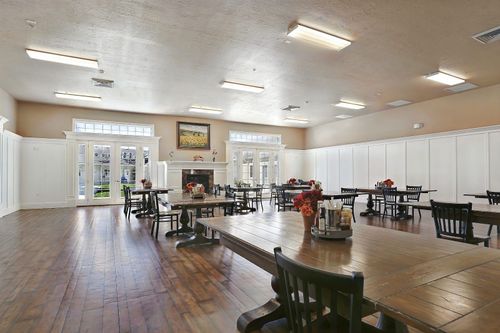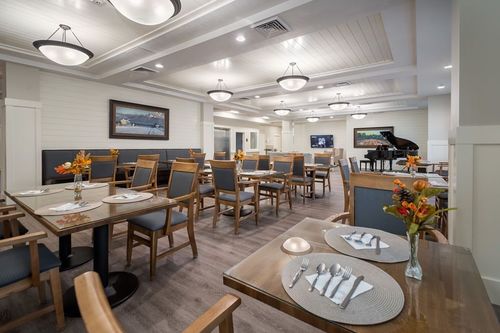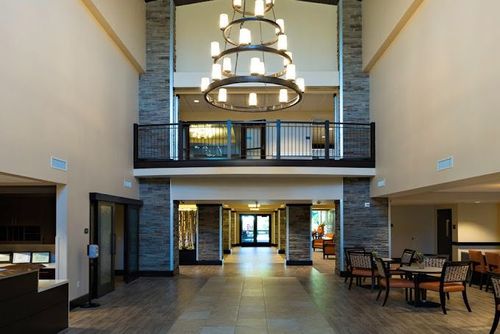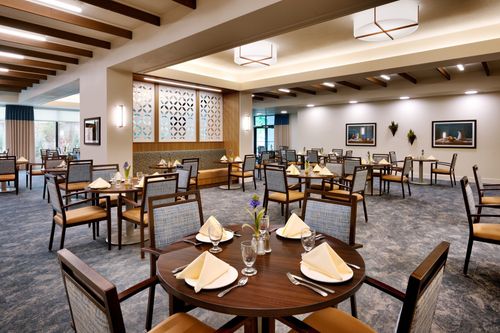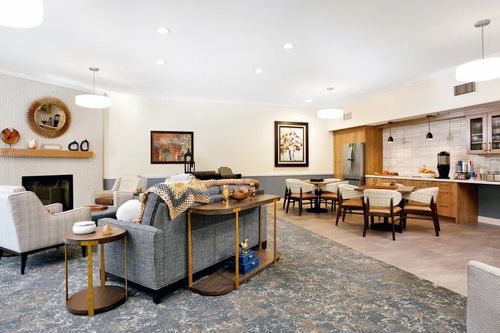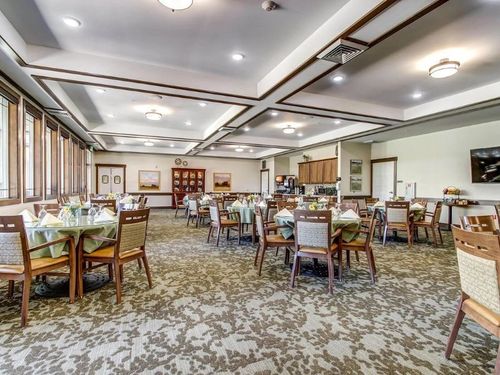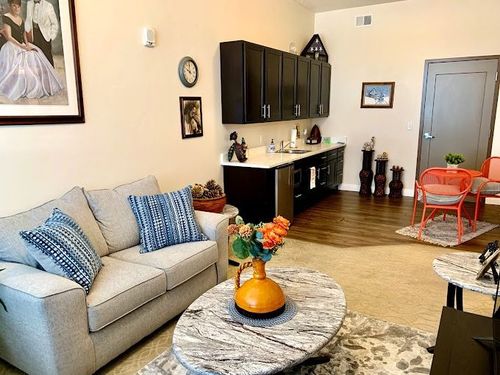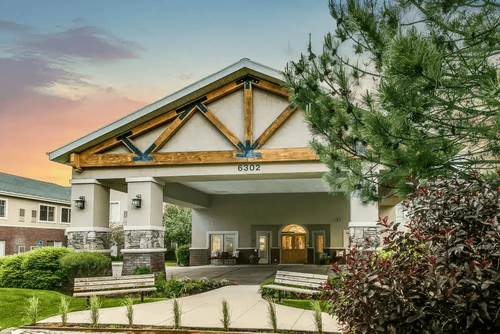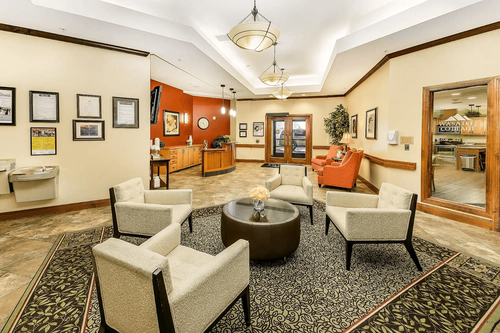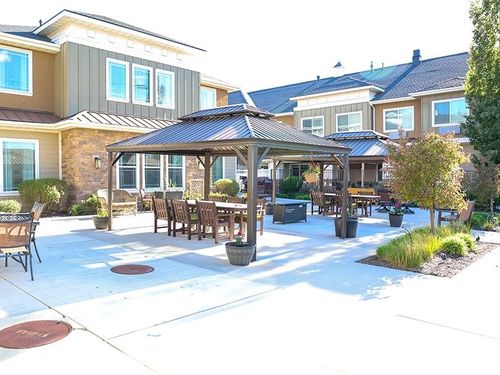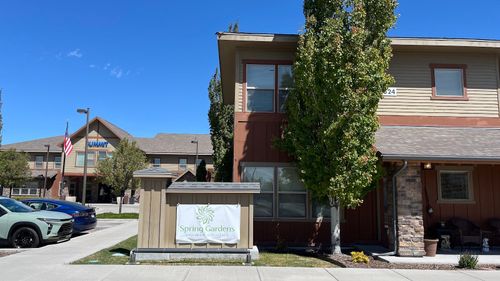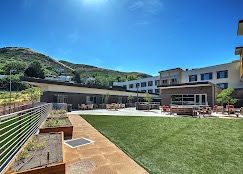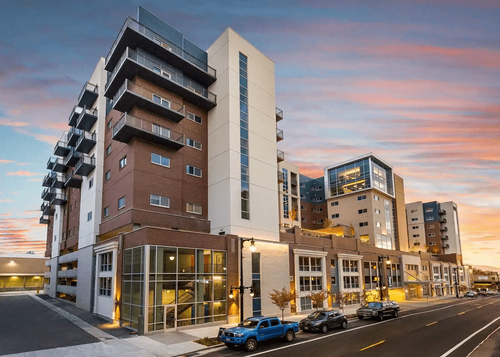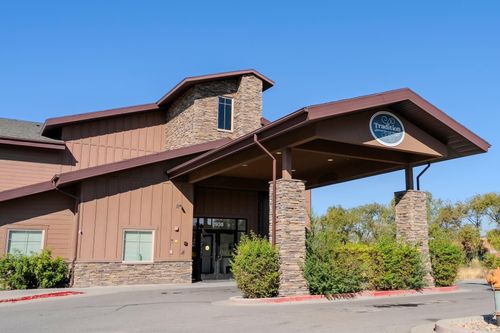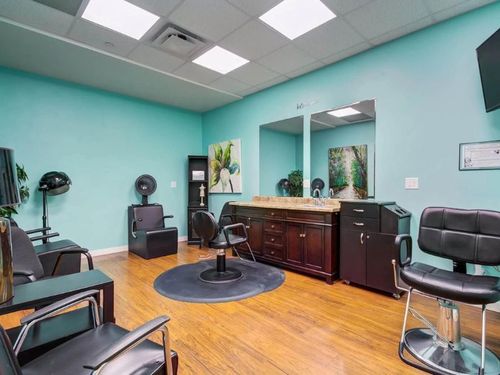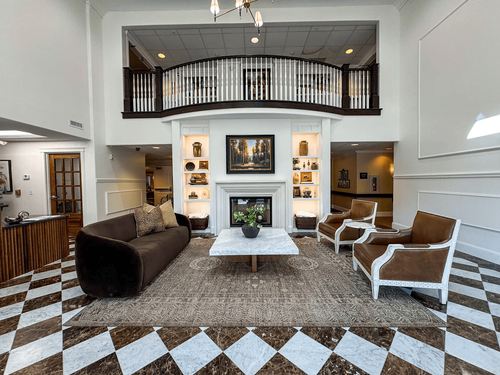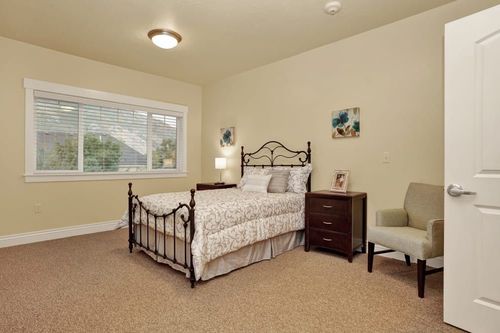

Roughly 1,800 of Highland's 21,100 residents are past sixty-five, and the one-in-nine national dementia rate translates to a local caseload near 200 households. The city's published dementia capacity sits in one place: Highland Glen at 10322 North 4800 West, where MBK Senior Living runs a 32-apartment secured memory-care neighborhood branded Connections for Living inside the 72-apartment building that holds the assisted-living floor.
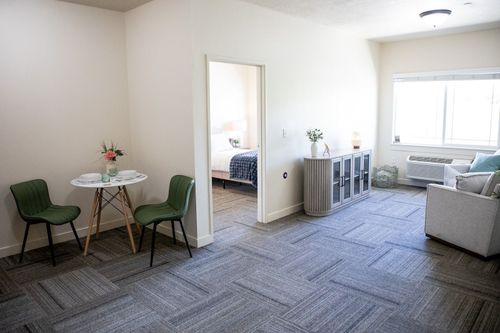
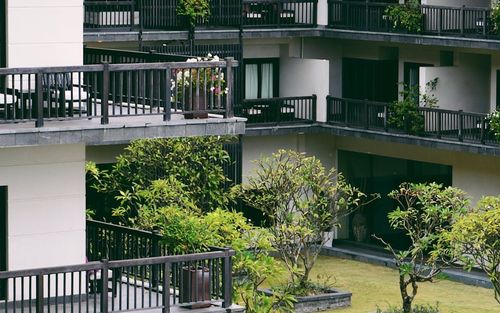
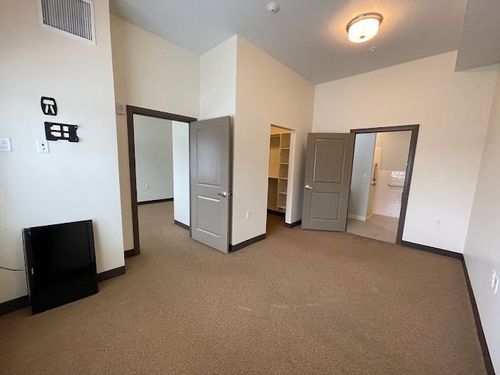
The neighborhood is structurally distinct from the building's assisted-living side, with controlled-entry doors, a dementia-tuned daily calendar, and Dutch-door apartment design that lets caregivers stay connected to residents through the upper half while the lower half holds the perimeter. Intermountain American Fork Hospital ten minutes south on State Route 92 handles the medical events common in dementia care.
Day-to-Day Care
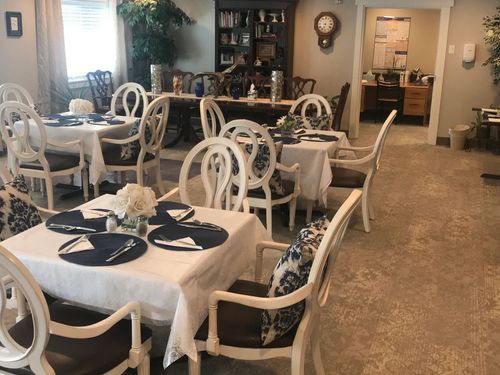
Connections for Living holds its activity calendar separate from the assisted-living calendar on the other side of the building. The day moves through chef-prepared meals plated for the neighborhood, dementia-tuned activity blocks including music therapy, art activities, reminiscence sessions, and Mind-Plus-Body wellness time, with structured rhythms that hold orientation through the late-afternoon stretch where sundowning patterns most often surface. Awake caregivers cover every overnight shift on the secured side, and MBK keeps licensed nurses on the broader building twelve to sixteen hours a day with an on-call physician overnight.
For an earlier-to-mid-stage dementia resident, the neighborhood's specialty suites and the structured visiting hours give a usable daily texture; for a resident whose dementia has progressed to needing extensive physical-care intervention several times a day, the neighborhood's dementia-trained ratios reach but do not match what a 24-hour licensed-nursing campus would carry.
Cost and Coverage
Highland Glen's memory-care monthly rates run roughly $5,800 to $8,200 in 2026, with most secured-side apartments near $6,800. The figure sits above the building's assisted-living rate because the secured side carries higher staffing ratios, awake-overnight coverage, the dementia-tuned activities, and the perimeter design Utah licensing requires. Stepping up from assisted living into the neighborhood typically lifts the figure by $1,200 to $1,800.
Move-in fees fall $1,500 to $4,000, a couple sharing one apartment adds $700 to $1,000 each month, and respite stays on the secured side run $180 to $240 a night. Highland Glen does not currently hold an Aging Waiver contract, so Medicaid-track Utah County families pivot to participating dementia inventory in American Fork, Lehi, or Pleasant Grove inside a fifteen-minute drive.
Local Demand and Healthcare Access
The 32-apartment Connections for Living neighborhood is the deepest secured inventory inside Highland city limits and absorbs most in-city dementia placements alongside referrals from Alpine, Cedar Hills, Lehi, and the broader north-Utah-County corridor. Apartment turnover follows individual resident transitions and discharge flows from Intermountain American Fork Hospital and Lone Peak Hospital, with openings cycling on a roughly month-to-six-week window.
Intermountain American Fork carries primary-care depth and inpatient services close in; Lone Peak Hospital five minutes west adds the other corridor option for acute-care work; Utah Valley Hospital in Provo holds the neurology depth and behavioral-health unit that pace the appointments shaping the first year after a dementia diagnosis.
Why Families Choose Memory Care in Highland
For a dementia resident, the rhythm of family visits matters more than at any other care tier, because the disorientation the disease produces deepens when familiar faces show up on irregular intervals. The Alpine School District corridor keeps adult children working from Silicon Slopes or Lehi within fifteen to thirty minutes of a Connections for Living apartment, which keeps weekly family visits realistic across the longer trajectory dementia care typically follows.
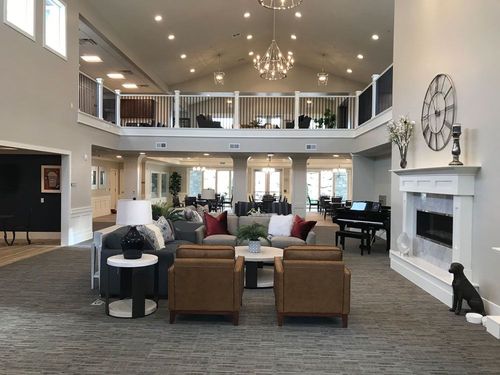
MBK's broader operating depth and the building's structural advantage (the dementia neighborhood sitting inside the larger building with shared dining production and clinical oversight) keeps the daily texture more cohesive than a standalone smaller-residential dementia setting could.
What a Local Advisor Brings to Highland
Dementia-care calls into Highland generally arrive after overnight safety has stopped feeling manageable, behavioral changes have outgrown what home aides can hold, or the cumulative fatigue of layered family schedules has begun to leave gaps the cognition decline keeps finding. The advisor reads the resident's stage against the 32-apartment Connections for Living format, checks current secured-side availability, and pulls the American Fork, Lehi, and Pleasant Grove waiver-friendly dementia inventory in when Medicaid budgeting shapes the path.
When the neighborhood format fits, the conversation moves into apartment specifics, the secured-side care tier, and move-in coordination with the MBK team. When the resident's profile or the timing runs heavier than what the neighborhood holds, the corridor's broader dementia-care options enter the comparison. A short conversation early keeps Highland Glen in scope rather than narrowed to whatever opens after a hospital event. Reach out for a planning call when memory care begins shaping the household calendar, or browse our directory for the broader north-Utah-County context.