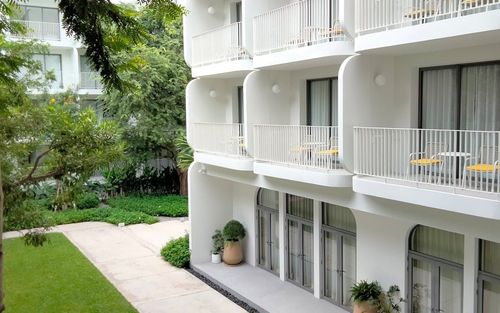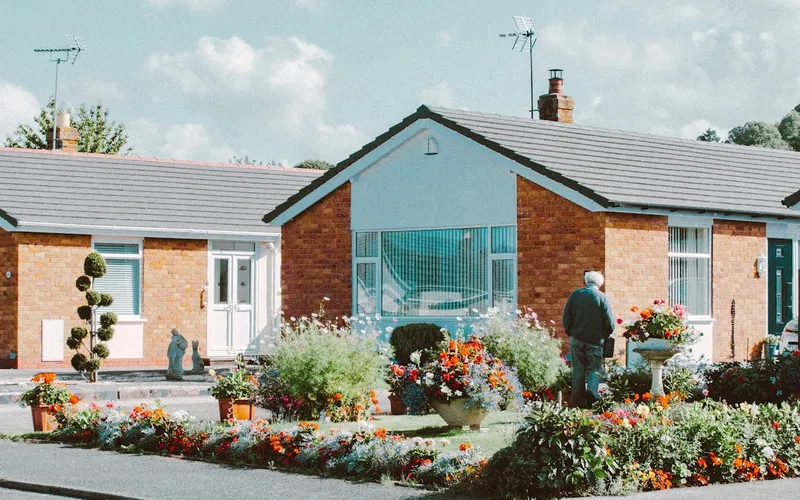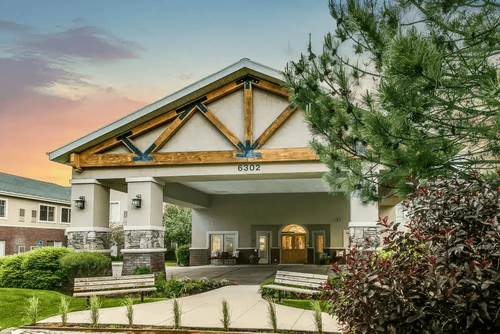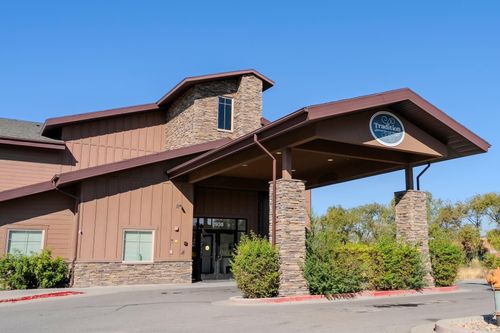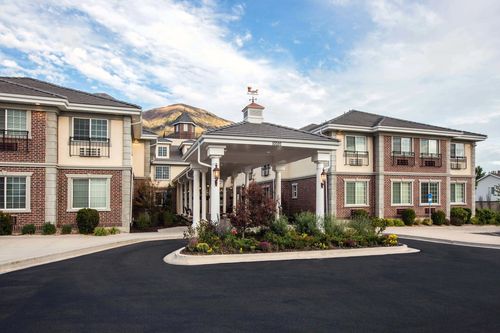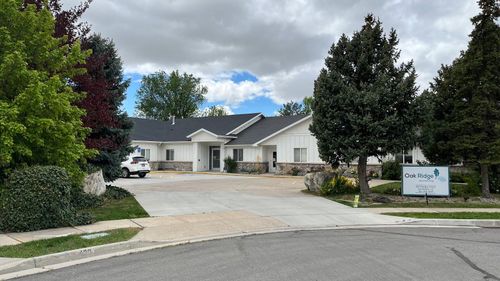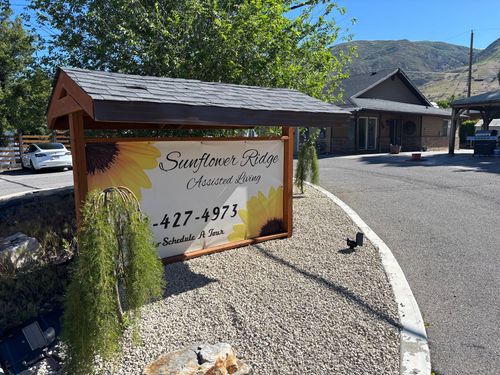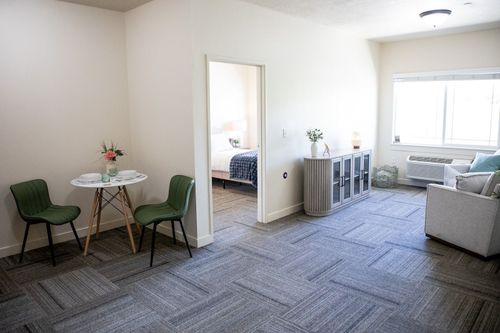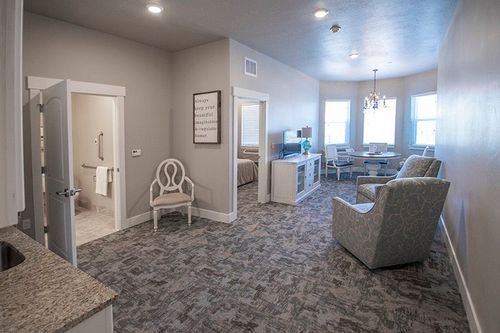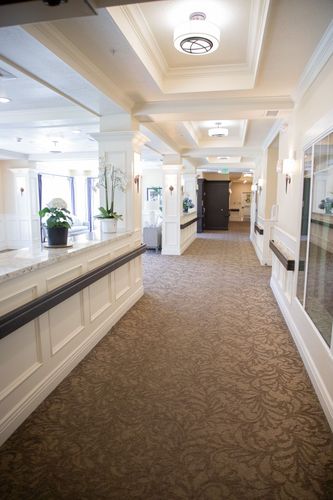
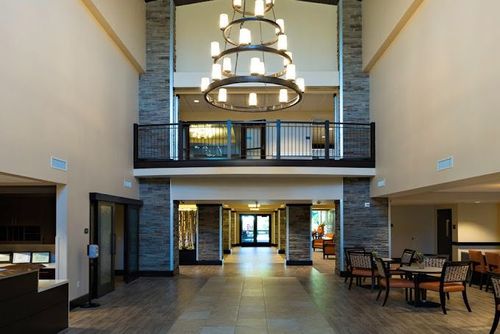

Holladay carries the highest senior share of any city in this directory: nineteen percent of its thirty-two thousand residents are past sixty-five, meaningfully above the broader Salt Lake County average. The city's east-bench affluence and its position abutting the Wasatch National Forest have made it a destination for retirees who want to age in place inside Salt Lake County rather than move to a suburb. Four assisted-living buildings serve that concentrated demographic.
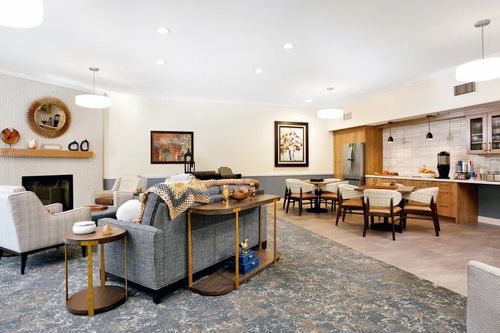
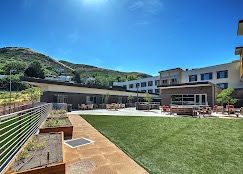
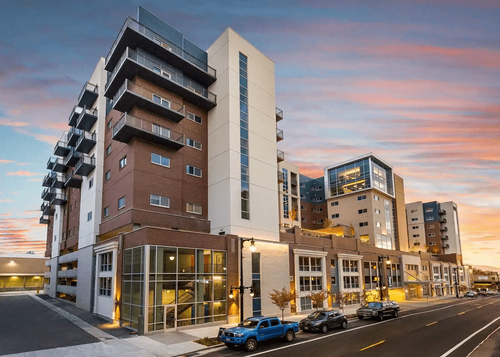
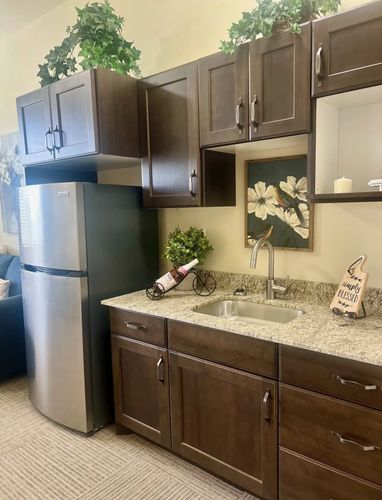
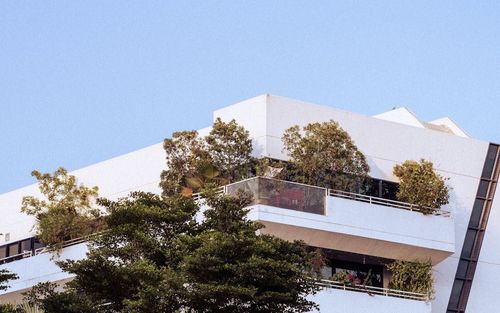
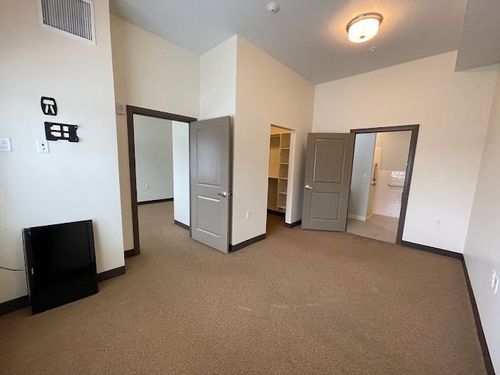
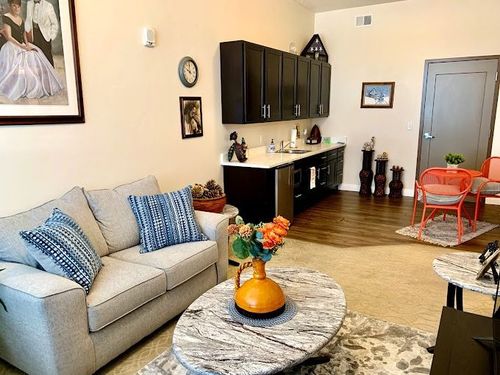
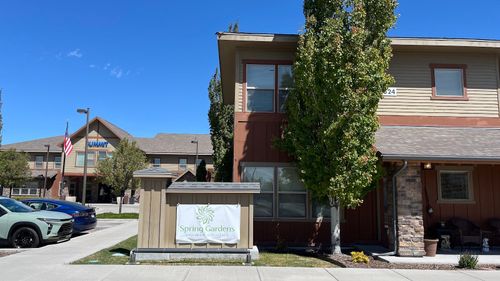
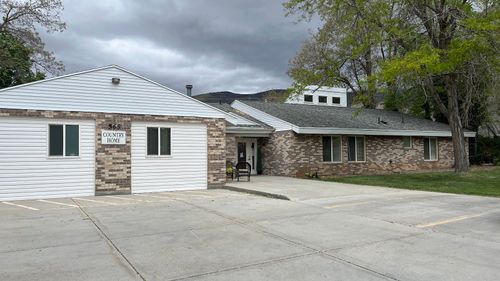
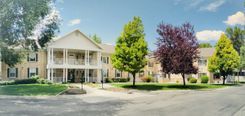
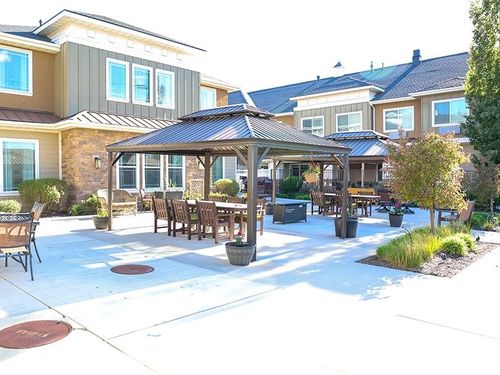
The Ridge at Cottonwood on Highland Drive is the largest at 138 residents, run by The Ridge Senior Living and operating as a continuum-style community with independent living, assisted living, and a 30-apartment secured memory-care neighborhood under one roof. Spring Gardens Holladay on 3900 South takes 83 residents under the Avista Senior Living brand, with a similar continuum format and a 21-apartment secured neighborhood. The Grand Senior Living on Holladay Boulevard runs at 50 residents as a stand-alone assisted-living building with no secured memory-care wing on site. Holladay Home for the Elderly, the smallest at 13 residents on Highland Drive, is the only Medicaid-participating building in the local set, operating as a residential household with an all-inclusive monthly figure.
Daily Support and Resident Independence
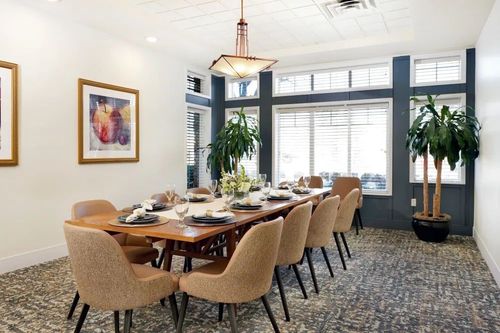
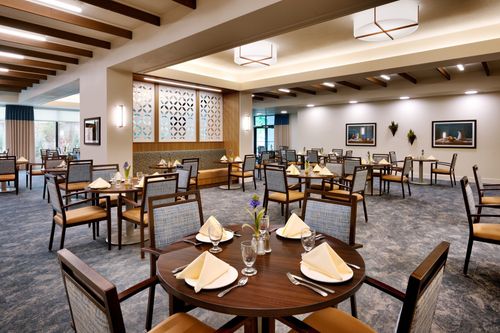
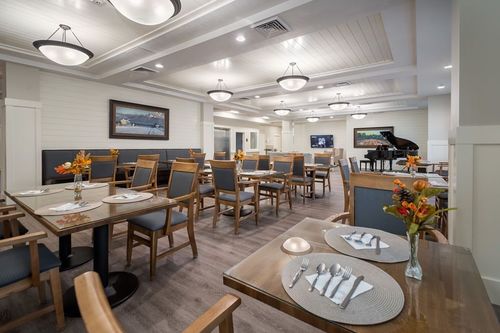
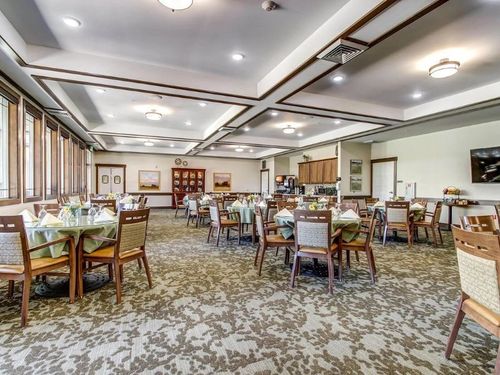
The Ridge at Cottonwood and Spring Gardens Holladay anchor the larger end with restaurant-style dining across multiple seatings, full weekly activities calendars, and licensed nursing during business hours. The Grand Senior Living at 50 residents holds a smaller community format that some Holladay families specifically prefer for the closer staff-to-resident familiarity. Holladay Home for the Elderly at 13 residents functions closer to a household than a community, with family-style meals around a shared table and the tightest caregiver-to-resident ratio in the local set.
Three of the four buildings welcome small pets (Holladay Home, The Ridge at Cottonwood, Spring Gardens Holladay); The Grand Senior Living does not. Murray's Intermountain Medical Center ten minutes south handles trauma, oncology, and cardiac work; the east-bench University of Utah Health geriatric clinic sits the same distance north for specialist follow-ups; St. Mark's Hospital fifteen minutes northwest picks up routine surgical and inpatient cases.
Pricing and Affordability
Holladay assisted-living rates run $2,700 to $5,400 in 2026 across four genuinely different building structures rather than minor variations in the same band. Holladay Home for the Elderly's residential thirteen-resident format anchors the lower end on its Medicaid-participating all-inclusive figure, the only such option in town. The Ridge at Cottonwood and Spring Gardens Holladay run the middle of the range on their larger community structures. The Grand Senior Living holds the upper end on a stand-alone assisted-living format that trades broader campus scale for a tighter, higher-amenity feel.
For Medicaid-track families the local picture is narrow because three of the four buildings operate private-pay only and Holladay Home for the Elderly's 13-resident inventory often does not align with a specific planning window. The first conversation for Medicaid families often extends to neighboring Cottonwood Heights, Millcreek, or central Salt Lake addresses with broader Aging Waiver participation. Move-in fees fall $1,200 to $5,000 across the local set, second-resident pricing adds $700 to $1,200 a month, and short-stay respite at the larger buildings runs $170 to $230 a day.
Who Lives in Holladay as They Age
The high senior share traces to two patterns running in parallel: long-tenure Holladay families who raised children in the city's quiet east-bench neighborhoods and stayed, and east-bench retirees who moved into Holladay specifically for the Wasatch foothill access and proximity to Cottonwood Canyon recreation. The combination produces an above-average senior cohort with above-average financial resources, which is part of why the local assisted-living set skews toward higher-amenity formats rather than larger-scale value buildings.
For the four buildings, that concentrated demand translates to meaningful but not crowded inventory pressure. The Ridge at Cottonwood and Spring Gardens Holladay usually carry standard-tier apartments inside a four-to-six-week window, with secured memory-care neighborhoods running thirty to forty-five days when corridor-wide referrals cluster. The Grand Senior Living moves at a similar mid-scale pace, and Holladay Home for the Elderly's 13-resident format cycles fastest.
Why Families Choose Holladay
Holladay's geographic position keeps families inside the east-bench Salt Lake County orbit they've often spent decades in. Adult children working in central Salt Lake, the U-area, downtown, Cottonwood Heights, or further south on the bench reach a parent's address in ten to twenty minutes. Cottonwood Canyon recreation, the Olympus Hills retail cluster, and the city's quieter residential character give Holladay a different appeal than the west-side suburbs.
Holladay families sit inside the catchment of three hospital networks within fifteen minutes of every address: Intermountain through its Murray flagship for cardiac, oncology, and trauma; St. Mark's Hospital northwest for routine inpatient and surgical work; and University of Utah Health for east-bench geriatric specialist consults. Which network a family wants the move to preserve is often part of the early planning conversation.
What a Local Advisor Brings to Holladay
Holladay's set divides cleanly into three private-pay continuum-or-stand-alone addresses and one 13-resident Medicaid-participating household, which means the financial path is essentially predetermined before any tour gets scheduled. For private-pay households, the advisor reads The Ridge at Cottonwood (the broadest continuum option), Spring Gardens Holladay (similar continuum, slightly smaller scale), and The Grand Senior Living (premium stand-alone assisted living) against the family's preference for scale and longer-horizon care planning. For Medicaid households, the local conversation shifts immediately to Cottonwood Heights, Millcreek, or central Salt Lake City because Holladay Home for the Elderly's 13-resident capacity rarely aligns with a specific planning window.
The pre-crisis call often arrives through a long-tenure primary-care relationship: the Holladay-office physician has seen hired-caregiver hours climb past part-time, watched a recent appointment surface a medication-tracking gap, or noticed an active spouse arriving alone for a follow-up that used to be a couple's visit. Families who reach the advisor at that stage hold a full four-to-six-week window to compare the three private-pay buildings side by side. The crisis-mode call compresses to matching real-time openings against the clinical profile and confirming which of the three networks the move should preserve.
The Holladay directory continues to grow through 2026 as we evaluate providers for quality and alignment. Start the conversation when you're ready to talk through assisted living in Holladay, or look through our directory on your own schedule.