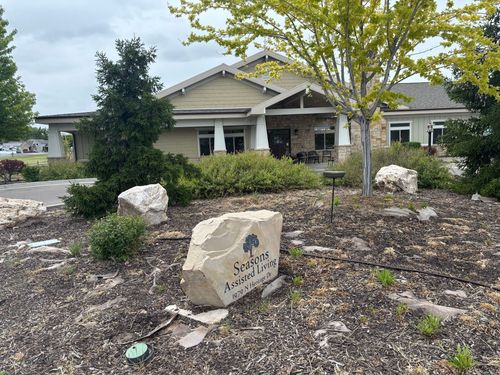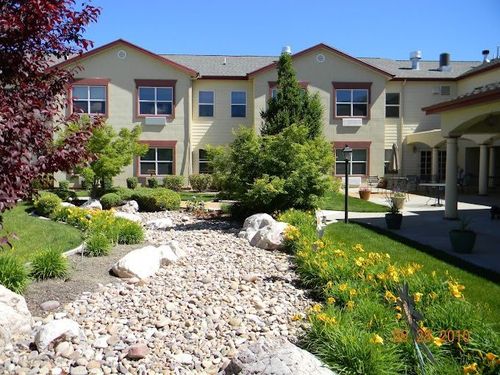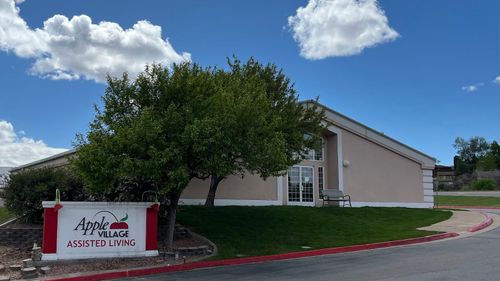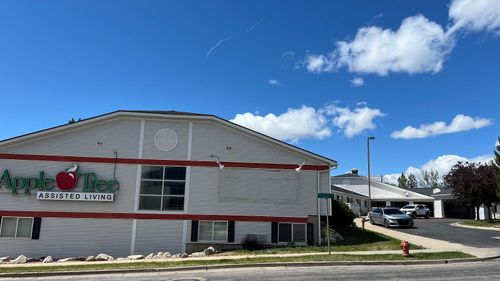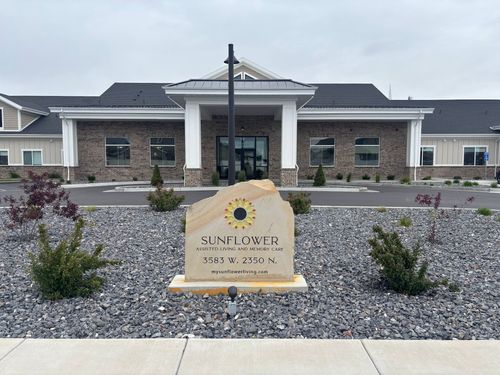

West of downtown on a two-acre parcel at 3583 West 2350 North, Sunflower Assisted Living & Memory Care anchors the only published dementia-care service inside Plain City. The 40-resident Wasatch Senior Living building holds the secured wing behind pass-code doors and around a continuously monitored courtyard, with caregivers trained in Teepa Snow's Positive Approach to Care, validation therapy, and redirection technique on top of the certified-nursing-assistant rotation shared across the building. A full-time registered nurse manages care plans and medication reviews on both sides, and continuous caregiver coverage runs every night on the dementia side.
Day-to-Day Care on the Secured Wing
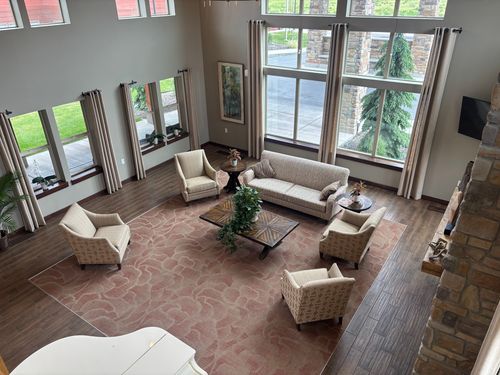
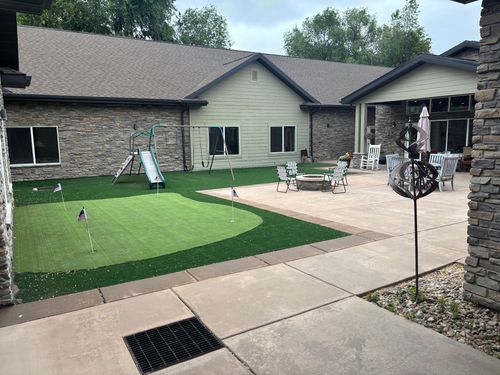
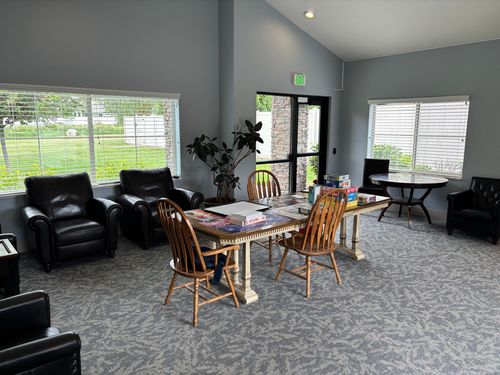
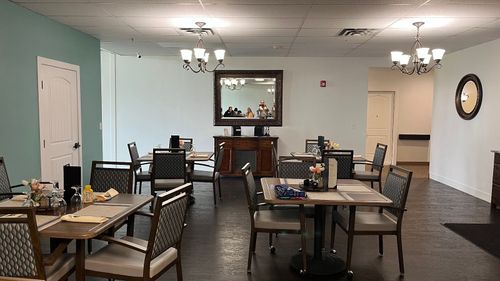
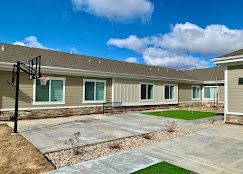
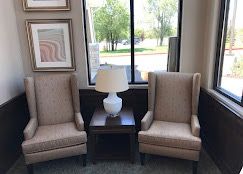
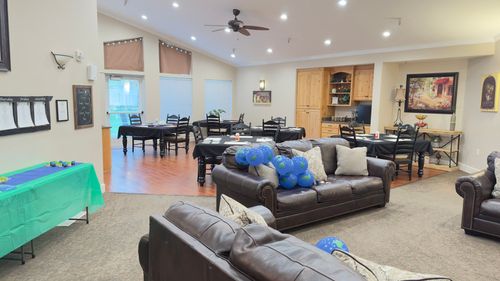
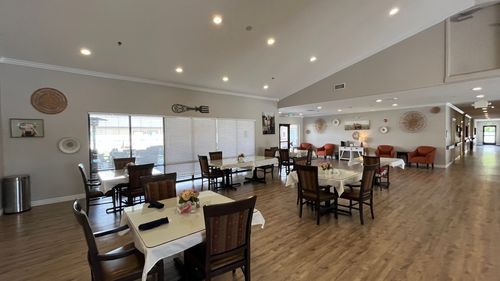
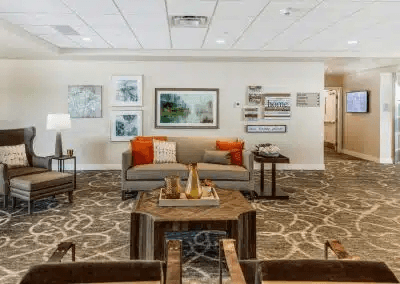
The secured side is laid out as its own contained space. Pass-code doors close the perimeter, the monitored courtyard with walking paths, shaded seating, and a putting green gives residents outdoor time without unsupervised-exterior risk, and the dining and lounge footprint stays purposely small so residents whose orientation has shifted can read the room.
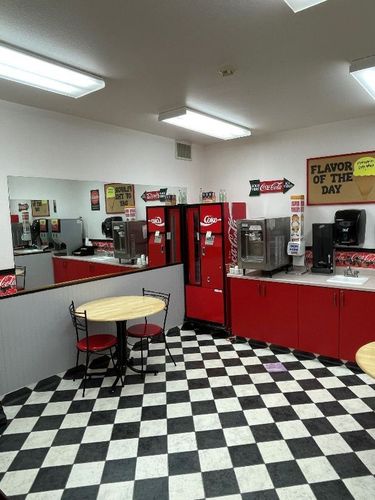
Activities is what the wing leans on hardest. Hand-under-hand support, validation when a resident searches for a deceased spouse, and gentle redirection that meets them in their present moment rather than correcting it are practiced daily, with small-group reminiscence, music sessions, sensory tabletop work, and supervised outdoor time filling the calendar. For workups beyond the wing's scope, urinary infection evaluation, fall assessment, medication-interaction review, and sundowning consults route fifteen minutes south to McKay-Dee Hospital, whose geriatric clinic, Heart and Vascular Institute, and Level II Trauma Center cover the clinical depth small-building secured care does not.
Cost and Coverage
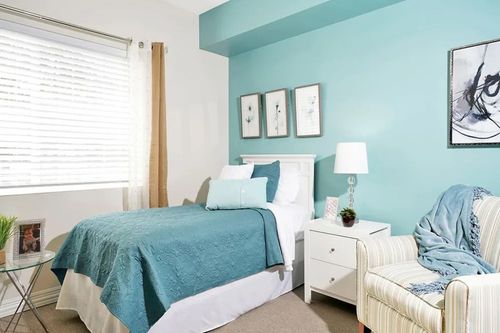
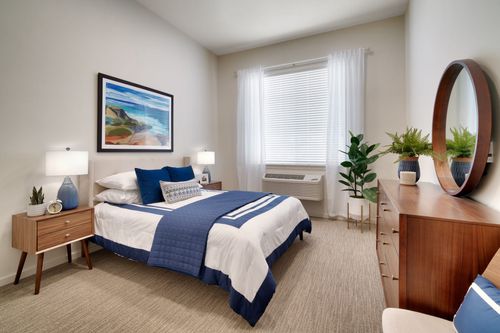
Secured-wing apartments at Sunflower generally bill $5,400 to $6,200 in 2026, with most landing near $5,800. Sitting above Sunflower's own assisted-living rate, that figure reflects what Utah licensing requires on the dementia side: dementia-trained caregiver hours across day and night, perimeter and door supervision, and interior choices that keep residents oriented. Moving from Sunflower's assisted-living side into the secured wing usually adds $700 to $1,000 to the prior monthly rate.
An Aging Waiver contract is not currently confirmed on Sunflower's brand materials, so any Medicaid-track conversation should open with an advisor check on current intake before state paperwork begins. Once the resident is clinically rated at the program's care threshold (a level most dementia diagnoses reach inside their first twelve months) and the household qualifies financially under Utah's income and asset rules, the Waiver covers part of the personal-care line at contracted buildings. If local intake does not fit the household's finances, waiver-participating addresses ten to fifteen minutes south through the Ogden corridor come into the planning call. Configuration sets the move-in fee at $1,500 to $3,500; respite runs $170 to $230 per night.
Local Demand and Healthcare
Plain City's population sits near 8,400 in 2026, with roughly 920 residents over sixty-five anchored in long-tenured north-Weber households whose ties reach back to the 1858 LDS settlement era. The local dementia caseload tracks the share a multi-generational farming-heritage town typically carries, and Sunflower pulls referrals from inside town and from Pleasant View, Farr West, and the wider north-Weber blocks.
When McKay-Dee referrals and corridor-wide placements bunch up, openings on the secured side usually cycle inside a thirty-to-forty-five-day window. At forty residents total, every transition reshapes availability visibly at the town level, which is why families who reach out before a hospital event compresses their calendar tend to land an apartment matched to the resident's stage rather than narrowed by a discharge clock.
Why Families Choose Memory Care in Plain City
Keeping surroundings familiar matters more in dementia care than at any other tier of senior living, because moving a person with cognitive impairment into a setting they can no longer interpret only amplifies the disorientation already underway. At Sunflower's secured wing, the landscaped grounds and the monitored courtyard stay within daily reach, the farming-heritage texture of north-Weber holds as the visual backdrop, longtime ward connections drop by for porch visits in warmer months, and the primary-care relationships at McKay-Dee that managed the cognitive workups stay inside an easy drive.
Clinical depth is the second draw: across the broader Wasatch Front, secured-wing activities vary widely in quality, and Sunflower's published commitment to Positive Approach to Care training on every dementia-side caregiver gives families a concrete program to point at rather than a generic memory-care promise. Adult children driving in from Pleasant View, Farr West, North Ogden, or the wider Ogden corridor reach the wing in ten to twenty minutes.
What a Local Advisor Brings to Plain City
Dementia-care calls into Plain City usually arrive after a stretch where overnight safety has started failing, behavior shifts have outgrown the family rotation, or paid-aide coverage has stopped holding together. A confused partner is found at the back door at three in the morning; a hired caregiver calls in sick with no replacement; behavioral patterns appear between weekly visits that the gaps between caregivers cannot bridge. No single signal forces the move; what shifts the household is the cluster across a few weeks.
The advisor opens by reading Sunflower's current secured-side availability against the family's calendar, with Aging Waiver intake flagged for building-level verification before financial planning begins. When the wing matches the resident's stage and the family's window, the next step moves into apartment specifics and coordination; when timing or capacity does not line up, broader Ogden corridor alternatives ten to fifteen minutes south enter the comparison. Starting the conversation before a McKay-Dee event tightens the calendar keeps Sunflower genuinely on the shortlist. A short call early on usually opens more of the planning runway than waiting for the situation to force a faster decision. Reach the advisor when dementia care arrives on the household's planning list, or browse our directory for the wider north-Weber set.