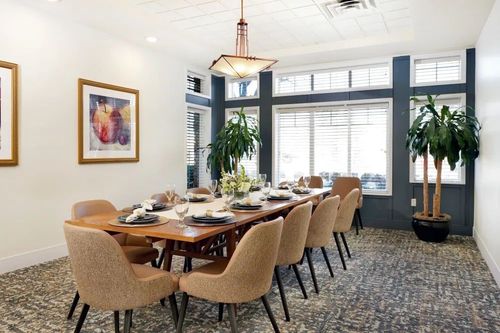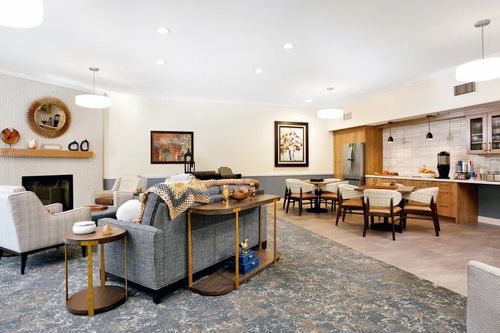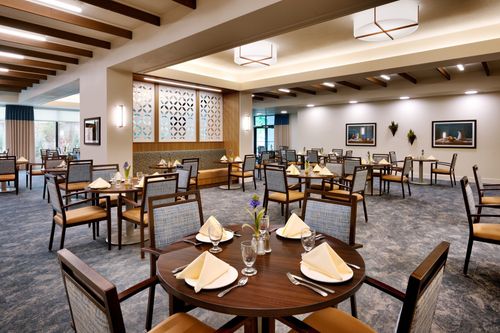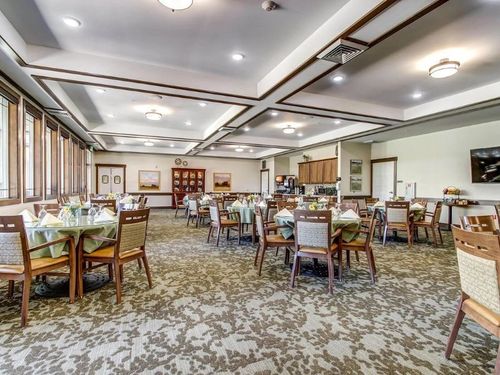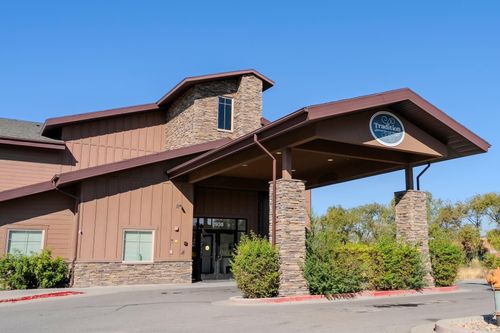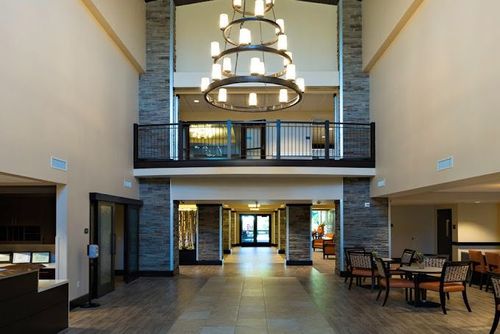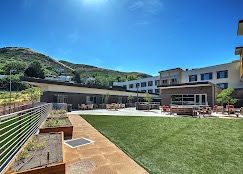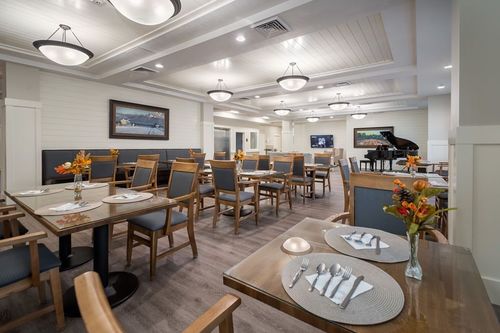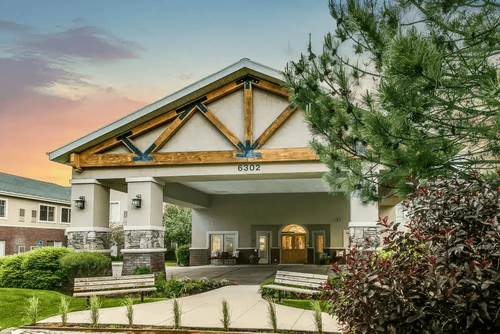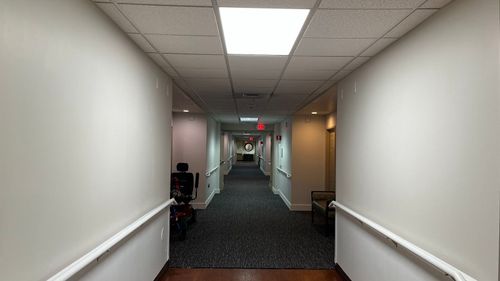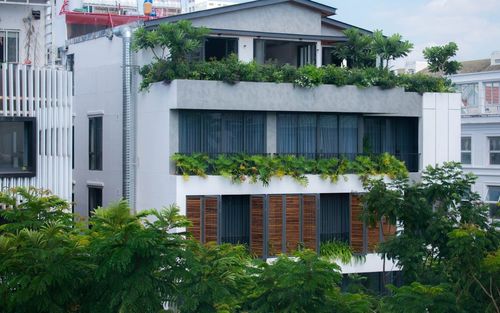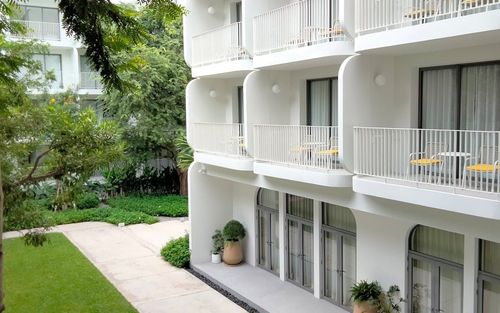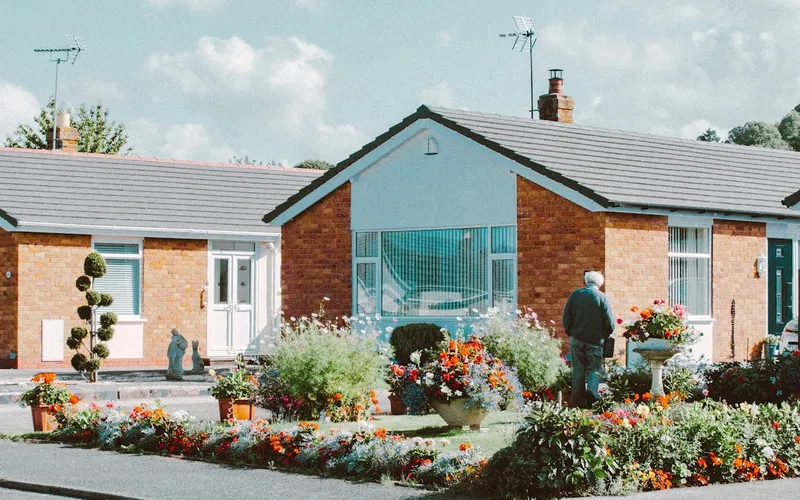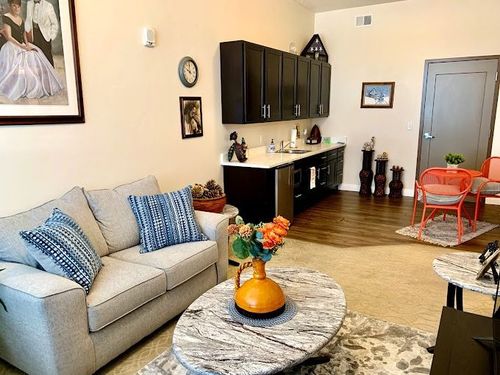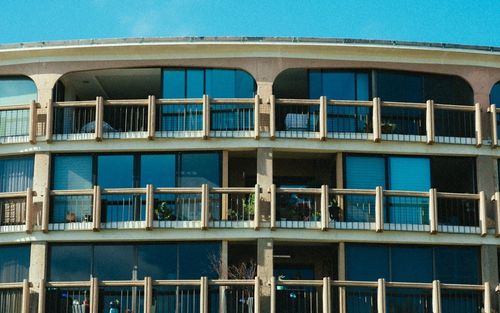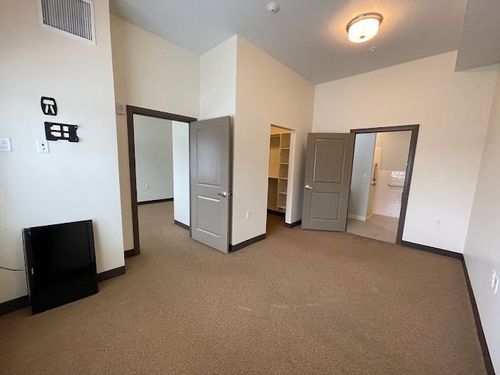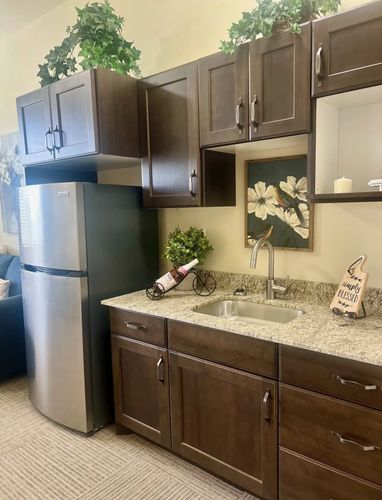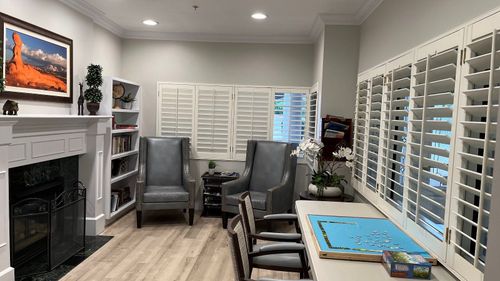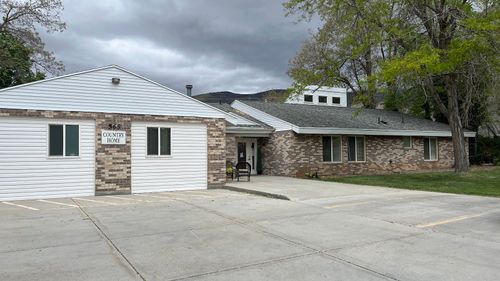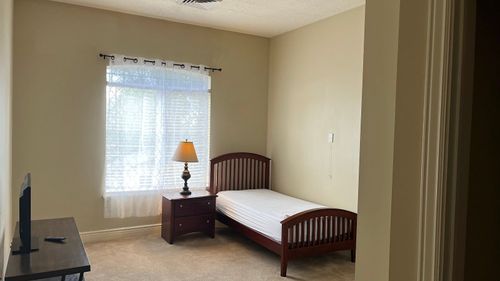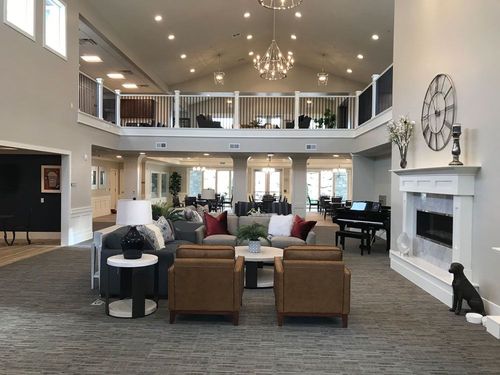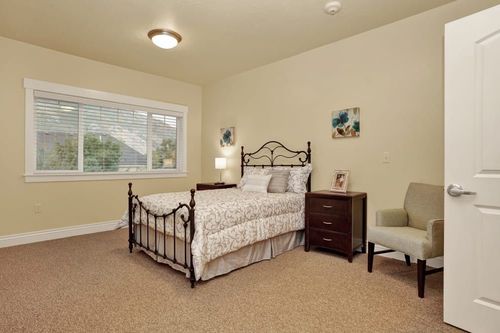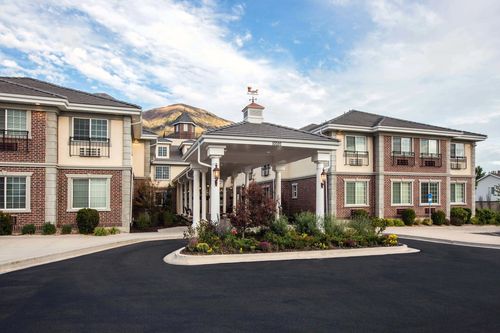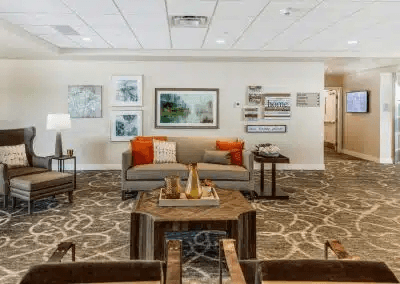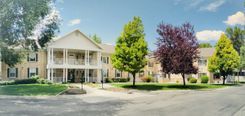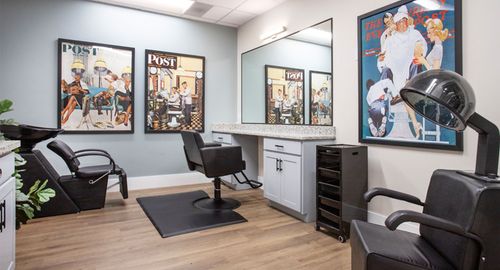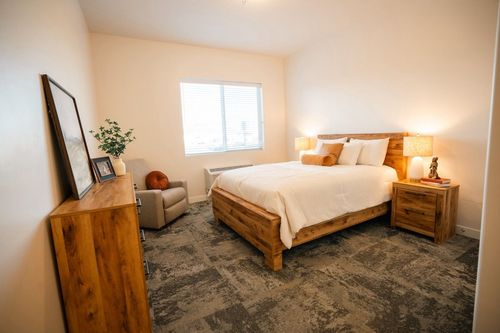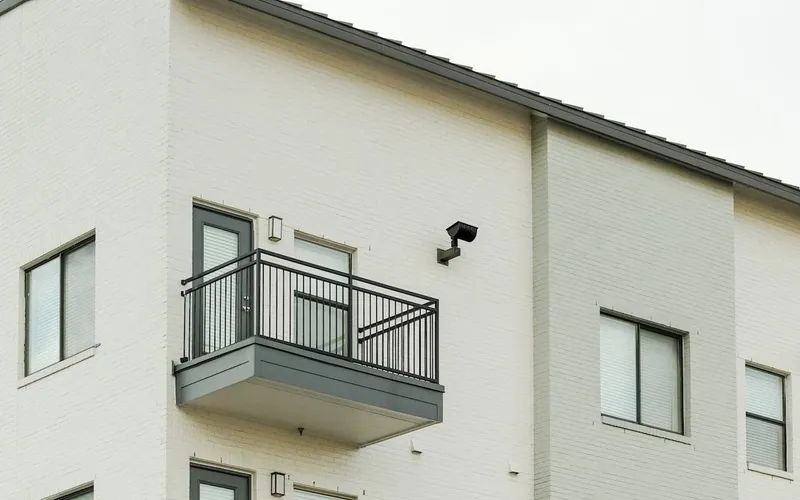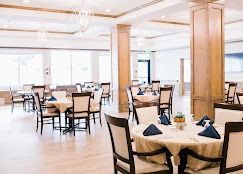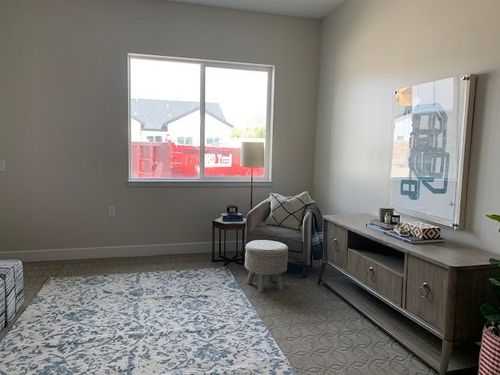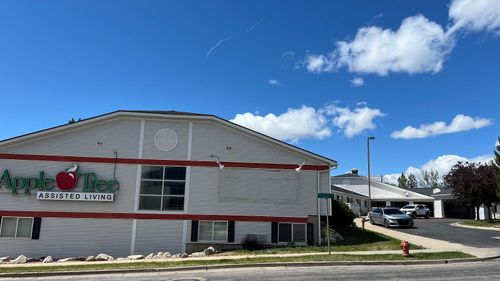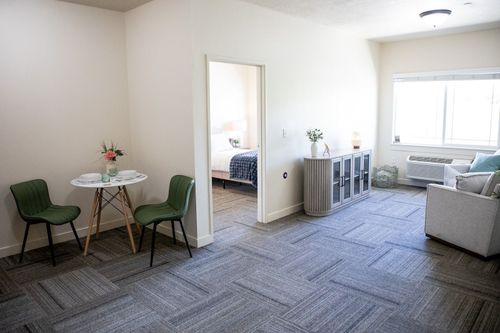
Rosewood Assisted Care at 464 East 3700 South holds South Salt Lake's published assisted-living capacity inside a 29-bed Type II Utah license, the higher-care tier Utah's two-tier residential structure publishes for buildings handling more clinically complex residents. Wasatch Senior Living runs the address on a small-residential model: a mix of studio, one-bedroom, and two-bedroom layouts arranged around shared dining and living spaces, with private bathrooms, half refrigerators, and microwaves in each room.
What distinguishes the local conversation is the building's scale alongside its central Salt Lake County location. Rosewood reads as a small home rather than a campus, but it sits inside a city corridor where Intermountain Medical Center in Murray, the broader Sugar House and Millcreek dining strips, and the central Salt Lake City specialty network are all inside fifteen minutes. The combination of a household-scale daily rhythm and a major medical corridor on the doorstep is a structural advantage for families who want personalized scale without the trade-off of a longer drive for clinical follow-up.
Daily Support at a Small-Residential Scale
A day at Rosewood holds together at a household pace. Three meals come from the in-house kitchen on a from-scratch approach featuring seasonal fruits and vegetables, with personalized requests accommodated and dietary needs handled across the resident population. The morning settles into a shared activity block, the afternoon rests, and evenings close with the second medication round and a quieter pre-bed routine. The 29-bed scale means the same caregiver faces show up across most shifts, which is the practical advantage of the format and a recurring reason long-term residents stay.
Care-team coverage handles what has crossed from manageable into draining: medication management, bathing paced to the resident's energy, dressing or transfer help when balance has begun to shift, and ongoing attention to appetite, hydration, and the household-management pieces. Registered nurses run regular wellness checks. The Type II license supports the higher level of care more medically complex residents need, including dementia-aware support woven into the building's broader service rather than carved out as a separate secured wing.
Pricing and Affordability
A 2026 monthly statement at Rosewood typically lands between $3,500 and $4,500 for studios and one-bedroom configurations, with two-bedroom layouts pushing higher. The figure runs below the Salt Lake County median for comparable Type II addresses because the small-residential model carries lower per-resident overhead than a 100-bed building. Apartment configuration drives most of the spread inside the band, with the care-services tier set at the move-in clinical assessment and any opt-in services climbing the figure further.
Move-in fees fall $500 to $2,500 depending on the apartment, second-occupant pricing for a shared room adds $400 to $700 each month, and short-stay respite bills $150 to $200 a night. The building participates in Aging Waiver coverage, which is meaningful for Medicaid-track households since the Waiver combination at a 29-bed Type II urban scale is unusual in the central Salt Lake County corridor where most contracted inventory sits at larger campus formats.
An Aging Inner-Suburb Senior Pattern
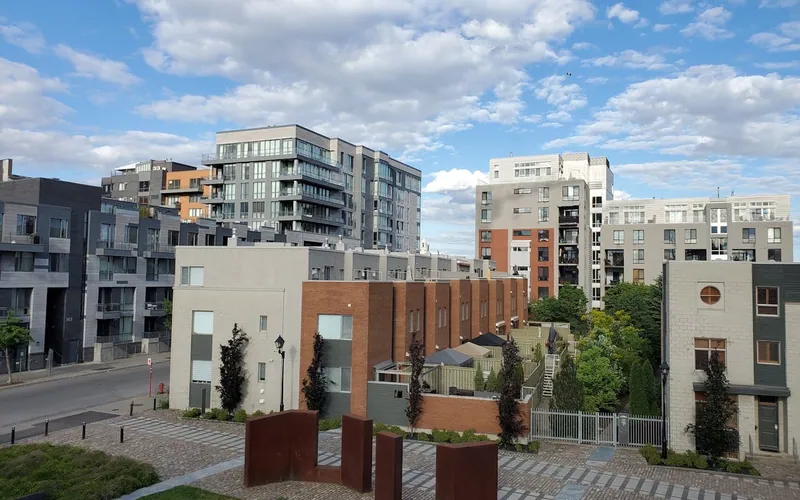
South Salt Lake's population sits near 26,500 in 2026, an inner-suburb city whose demographic mix reflects its position between central Salt Lake City and the southern valley corridor. Roughly 2,000 residents are past sixty-five, with the senior share running below the Salt Lake County average because the city's demographic profile skews younger than the suburban neighborhoods further south. The senior count has held relatively stable as the city's population has plateaued near its current level.
Apartment turnover at Rosewood tracks individual resident transitions rather than a steady monthly cycle, and the 29-bed scale means each opening reshapes local availability noticeably. The Salt Lake County corridor's deep alternative inventory inside fifteen minutes (Millcreek, Murray, Cottonwood Heights, Holladay, central Salt Lake City) means a planning call usually identifies multiple options within a short drive when Rosewood does not have a fit.
Why Families Choose South Salt Lake
The pull of the central Salt Lake County location matters specifically because the alternative is either a smaller-home setting further out where the medical corridor sits at a distance, or a larger-campus setting where the daily rhythm runs differently than the household-scale model the family wants. Rosewood holds both threads at once: the small-home pace and the central corridor inside fifteen minutes.
Adult children working in central Salt Lake City, Murray, Holladay, or the southern valley reach Rosewood inside fifteen minutes during most traffic windows. The Wasatch Mountains rising east, the Sugar House and Millcreek dining corridors a short drive south, and the medical-corridor access keep the resident inside the geography adult children navigate every day.
What a Local Advisor Brings to South Salt Lake
South Salt Lake assisted-living calls typically open through one of two patterns. The first is a slow accumulation over months, where the weekly pill organizer ends with leftovers, the household-management load drains a spouse, and the family rotation begins feeling thin. The second is a discharge from one of the corridor's hospitals (Intermountain Medical Center in Murray, Salt Lake Regional in central Salt Lake City, or another corridor address) where the post-acute plan calls for an assisted-living setting rather than a return home alone.
The advisor's first move is reading current availability at Rosewood against the family's window and the apartment configuration the household prefers. The Aging Waiver participation matters specifically because the combination of Waiver coverage at a 29-bed Type II urban building keeps the local-scale option open without requiring a move to a larger campus elsewhere in the valley. When Rosewood does not have a fit, the advisor pulls the broader central Salt Lake County corridor's deep alternative inventory into the comparison inside fifteen minutes.
Reaching out before a hospital event narrows the planning window keeps Rosewood genuinely on the family's shortlist. Reach out for a planning conversation when assisted-living timing shapes the household's calendar, or browse the buildings we cover for the broader central Salt Lake County context.